Introduction to Proximity Sensing
Proximity sensors are indispensable components in modern industrial automation, robotics, and consumer electronics. Their primary function is to detect the presence or absence of an object within a specified range without any physical contact. This non-contact detection capability ensures reliability, longevity, and high-speed operation. At the heart of every proximity sensor lies its sensing element, the critical component responsible for converting a physical phenomenon into a usable electrical signal. The performance, accuracy, and application suitability of a sensor are fundamentally determined by the design and characteristics of this sensing element. This article delves into the technical intricacies of various sensing element technologies, exploring their operating principles, material compositions, and typical industrial applications.

Inductive Sensing Elements
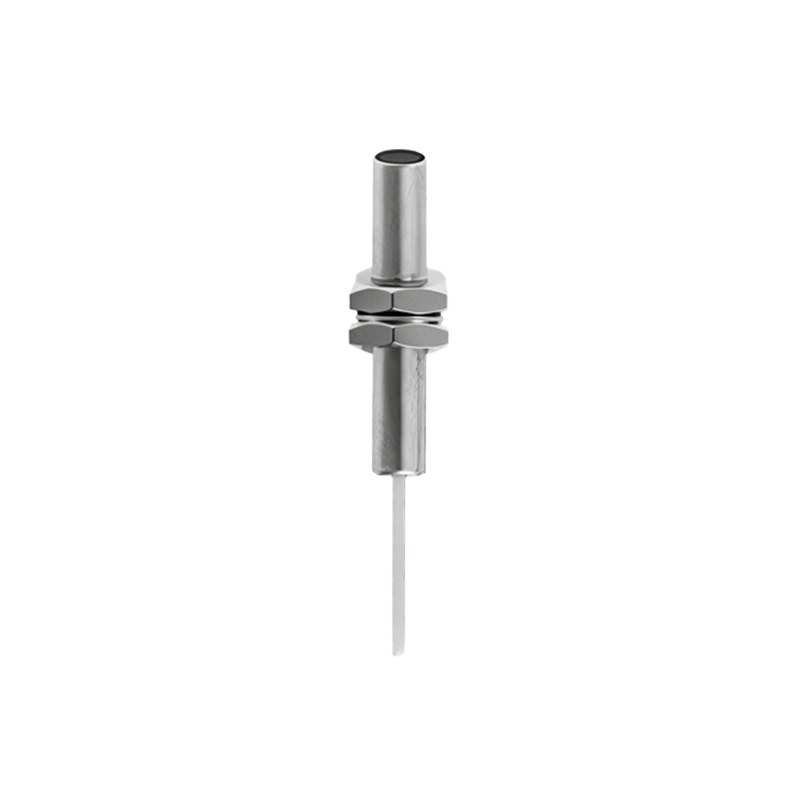
Inductive proximity sensors are the workhorses of metal detection in industrial environments. The sensing element here is a coil wound around a ferrite core, forming an oscillator circuit. When an AC current passes through this coil, it generates an alternating electromagnetic field at the sensor's active face. When a metallic object enters this field, eddy currents are induced on the surface of the target. These eddy currents draw energy from the oscillator, causing a change in its amplitude or frequency. This change is detected by a subsequent evaluation circuit, which triggers the sensor's output switch. The sensing element's sensitivity is influenced by factors like the coil's geometry, the number of windings, and the oscillator frequency. Typical sensing distances range from a few millimeters to several centimeters, and these elements are particularly effective for detecting ferrous metals like steel and iron, with reduced range for non-ferrous metals.
Capacitive Sensing Elements
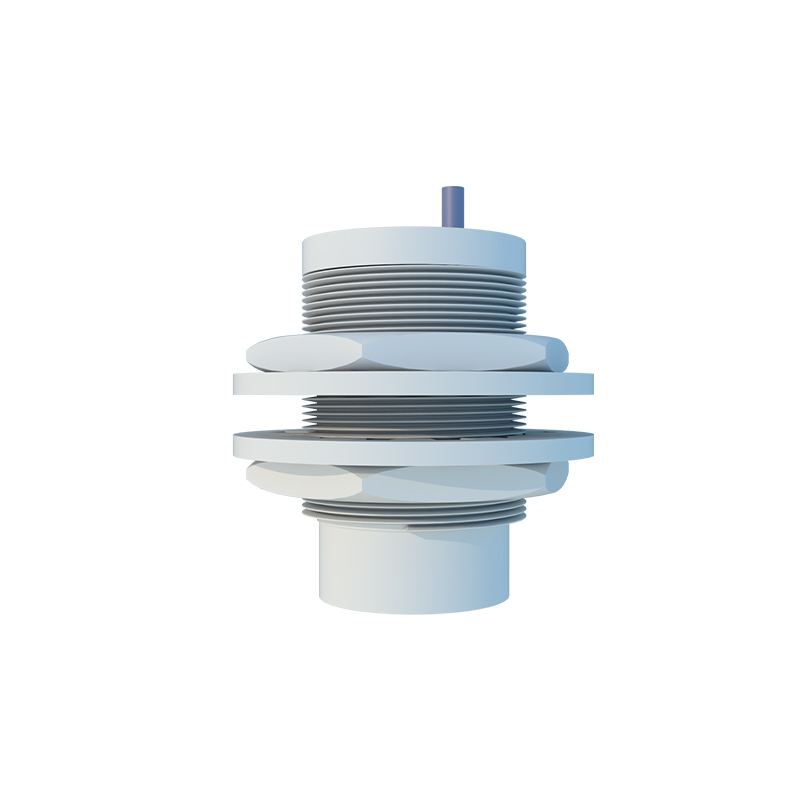
Capacitive sensing elements operate on the principle of capacitance change. The element essentially forms one plate of a capacitor, with the target object acting as the other plate, and the intervening space as the dielectric. The sensing element typically consists of two concentric metal electrodes or a single electrode with the device's housing acting as the second plate. An oscillating circuit charges this capacitor. When any material—be it metal, plastic, wood, liquid, or granular substance—approaches the sensing face, it alters the dielectric constant and thus the capacitance of the system. This change in capacitance affects the oscillator's characteristics, which is then processed to produce an output signal. The sensing element is often surrounded by a guard ring to focus the electrostatic field and minimize the influence of surrounding materials, allowing for precise level detection or material presence sensing.
Photoelectric Sensing Elements
The sensing element in a photoelectric sensor is a photodetector, commonly a phototransistor or a photodiode. It works in tandem with a light-emitting element, usually an LED (for visible red, infrared, or laser light). The core principle involves the interruption or reflection of a light beam. When the emitted light strikes an object, it may be reflected back to the photodetector (in a reflective or diffuse mode) or be blocked from reaching a separate receiver (in a through-beam mode). The photodetector converts the received light intensity into a proportional electrical current. Key characteristics of this sensing element include its spectral response (sensitivity to specific light wavelengths), response speed, and signal-to-noise ratio. Advanced elements may incorporate lenses or fiber optics to shape the light beam, enabling long-range detection, precise positioning, or operation in harsh environments.
Ultrasonic Sensing Elements
Ultrasonic sensors utilize a piezoelectric ceramic element as both the transmitter and receiver. This piezoelectric element vibrates at ultrasonic frequencies (typically between 40 kHz and 400 kHz) when an electrical signal is applied, emitting sound waves. When these waves hit an object, they are reflected back to the sensor. The same piezoelectric element then acts as a receiver, converting the returning sound pressure waves back into an electrical signal. The time interval between emission and reception (time-of-flight) is measured to calculate the distance to the object. The sensing element's performance is critical for the sensor's resolution, blind zone, and beam angle. Its robustness allows it to detect objects regardless of color, transparency, or material, making it ideal for distance measurement, level control of liquids or bulk solids, and presence detection in dusty or steamy conditions.
Material and Design Considerations
The choice of materials for the sensing element is paramount for reliability and durability. Inductive coil elements require high-quality, temperature-stable wire and ferrite cores. Capacitive electrodes are often made from corrosion-resistant metals or coated with protective layers. Photodetectors are housed in packages that shield them from ambient light interference. Piezoelectric ceramics must maintain stable vibrational characteristics over wide temperature ranges. Furthermore, the physical design of the sensing element—its size, shape, and encapsulation—directly