In the world of industrial automation and machine control, the ability to detect the presence or absence of an object without physical contact is paramount. Among the various technologies that enable this capability, inductive proximity sensors stand out for their robustness, reliability, and precision in metallic environments. These non-contact electronic devices are workhorses on factory floors, seamlessly integrating into systems that require accurate position sensing, counting, or end-of-travel detection.
At its core, an inductive proximity sensor operates on the principle of electromagnetic induction. The sensor generates a high-frequency oscillating electromagnetic field from its active face, typically via a coil wound around a ferrite core. When a metallic object enters this field, eddy currents are induced on the surface of the target. These currents draw energy from the oscillator circuit within the sensor, causing a change in its amplitude. An evaluation circuit continuously monitors this oscillation amplitude. Once the amplitude drop reaches a predetermined threshold—signifying that an object is within the specified sensing range—the sensor's output state switches, sending a signal to the connected controller, such as a PLC.
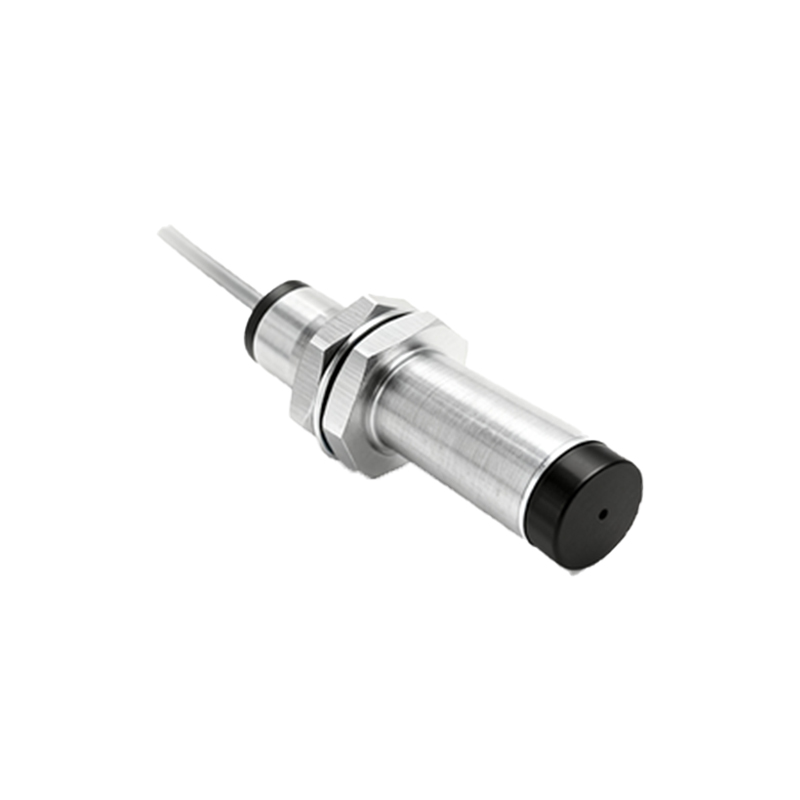
This fundamental operating principle grants inductive sensors several defining characteristics. First, they are inherently target-specific, responding only to conductive metals, primarily ferrous metals like steel and iron, which cause the strongest eddy current effect. Non-ferrous metals like aluminum or copper have a reduced sensing range. Non-metallic materials such as plastic, wood, or liquids are completely undetectable, which can be a significant advantage in applications where only metal parts need to be sensed amidst other materials. Second, they are known for their exceptional durability. With no moving parts and a sensing element protected behind a robust housing (often made of nickel-plated brass, stainless steel, or PBT plastic), they are immune to wear and tear, resistant to dirt, dust, oils, and coolants, and can withstand significant mechanical shock and vibration.
The applications for inductive proximity sensors are vast and varied. A common use is in machining centers for tool position verification or pallet detection. On assembly lines, they count metal components, verify the presence of parts like bearings or bolts, and control the positioning of robotic arms. In material handling, they detect the position of metal doors, elevators, or crane hooks. They are also integral to safety systems, acting as interlock sensors on guards to ensure machinery only operates when protective doors are securely closed. Their fast switching speed, often in the kilohertz range, makes them suitable for high-speed counting tasks on rotating shafts or conveyor belts.
Selecting the right inductive sensor for an application requires careful consideration of several key parameters. The sensing distance, or nominal range (Sn), is crucial and is defined for a standard target of mild steel. It's vital to note that the effective sensing distance can vary with the target's material, size, and shape. Mounting style is another critical choice; cylindrical threaded barrels (e.g., M8, M12, M18, M30) are common for easy installation, while rectangular block-style sensors offer different mounting options. The output type must match the control system: a 3-wire DC sensor providing a PNP (sourcing) or NPN (sinking) transistor output is standard, while 2-wire AC/DC and analog output versions are available for specific needs. Environmental factors like temperature ratings, ingress protection (IP67/IP68 for washdown or outdoor use), and the presence of strong electromagnetic fields must also be evaluated.
Modern advancements continue to enhance their capabilities. Factor-1 cylindrical sensors, for instance, have a sensing distance equal to their housing diameter, allowing for flush mounting in metal without a reduction in range. Analog output sensors provide a continuous signal proportional to the distance to the target, enabling precise position monitoring. Furthermore, specialized models are designed to ignore the background, such as a metal machine bed, focusing only on the target in front.
In conclusion, inductive proximity sensors are a foundational technology in industrial sensing. Their simple yet effective operating principle, combined with rugged construction and versatile configurations, ensures they remain a preferred solution for reliable, non-contact detection of metallic objects. By understanding their working mechanics, key features, and selection criteria, engineers and technicians can effectively deploy these sensors to enhance automation efficiency, improve safety, and ensure the smooth operation of complex machinery.