Introduction to Photoelectric Sensor Fundamentals
Photoelectric sensors are indispensable components in modern industrial automation, operating on the principle of converting light signals into electrical signals. These devices typically consist of an emitter (light source) and a receiver. The emitter projects a beam of light, which is then detected by the receiver. Any interruption or change in this light beam, caused by the presence, absence, or specific characteristics of an object, triggers a change in the receiver's output state. This fundamental principle enables precise, non-contact detection of objects, making photoelectric sensors superior to mechanical limit switches in countless applications. Common light sources include LEDs, with red, green, blue, and infrared being prevalent, and laser diodes for high-precision tasks. The choice of light source directly impacts sensing range, environmental resistance, and application suitability.
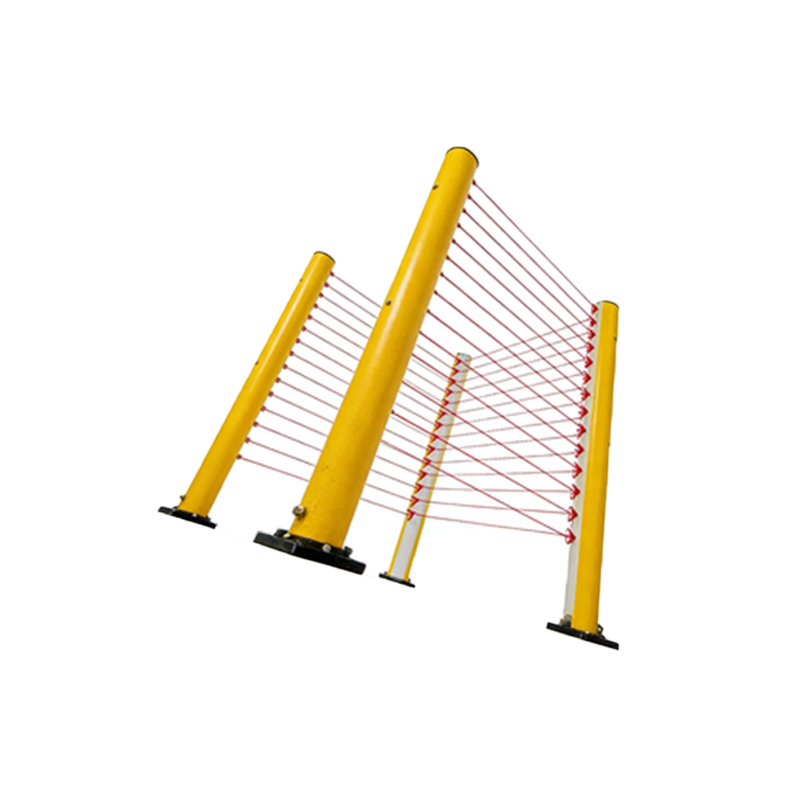
Core Operating Modes and Selection Criteria
Understanding the three primary operating modes is crucial for correct sensor selection. Through-beam sensors, with separate emitter and receiver units, offer the longest sensing ranges and highest reliability, ideal for detecting opaque objects over distances. Retro-reflective sensors house both emitter and receiver in one unit, using a reflector to bounce the light beam back. They provide a good balance of range and ease of installation but can be fooled by shiny objects. Diffuse (proximity) sensors also have a combined emitter and receiver, detecting light reflected directly from the target object. They are compact and easy to install but have shorter ranges and are sensitive to the object's color and surface texture. Key selection parameters include sensing distance, response time, light source type, output configuration (PNP/NPN, NO/NC), and environmental protection ratings (IP67, IP69K).
Advanced Application Solutions in Manufacturing
On high-speed packaging lines, through-beam or focused diffuse sensors provide reliable detection of product presence, ensuring correct filling levels and triggering sealing mechanisms. In assembly robotics, miniature diffuse sensors verify the correct placement of tiny components, such as chips on circuit boards, with micron-level precision. Color registration sensors, a specialized type, use RGB LEDs to detect color marks on printing or labeling machines, ensuring perfect alignment. In palletizing systems, arrays of photoelectric sensors define pallet layers and guide robotic arms for accurate stacking. For transparent object detection, such as glass bottles, sensors using polarized light or high-frequency modulated beams eliminate false triggers from reflections or clear materials.
Overcoming Challenging Environmental Conditions
Industrial environments present significant challenges like dust, steam, vibration, and ambient light interference. For dusty or foggy conditions, sensors with powerful infrared beams and background suppression technology are essential. This technology allows the sensor to ignore reflections from distant surfaces, detecting only objects within a precise, adjustable range. In environments with strong ambient light (e.g., sunlight in warehouses), sensors using modulated pulsed light and synchronous detection circuits reject constant ambient light, ensuring stable operation. For washdown areas in food & beverage or pharmaceutical plants, sensors with stainless steel housings and IP69K ratings withstand high-pressure, high-temperature cleaning. Robust housings and vibration-resistant designs are mandatory for mounting on heavy machinery.
Integration with Control Systems and Industry 4.0
Modern photoelectric sensors are intelligent network nodes. Analog output sensors provide continuous distance or intensity data for precision positioning. Sensors with IO-Link communication transmit detailed diagnostic data (like lens contamination, temperature, signal strength) to PLCs, enabling predictive maintenance and reducing downtime. This aligns with Industry 4.0 and IoT paradigms. In complex systems, sensors with teach-in functions simplify setup, allowing technicians to set detection thresholds by simply presenting the target object. For safety applications, certified Type 4 safety light curtains and laser scanners create invisible protective fields around hazardous machinery, instantly stopping operation when breached.
Future Trends and Maintenance Best Practices
The future points towards miniaturization, increased intelligence, and enhanced connectivity. Sensors will integrate more processing power for edge computing, making preliminary decisions before sending data upstream. Multi-function sensors capable of simultaneous distance, color, and contrast measurement are emerging. For reliable operation, regular maintenance is key. This includes periodic lens cleaning to prevent false signals from dirt accumulation, verification of alignment for through-beam and retro-reflective types, and monitoring of diagnostic signals via HMI or SCADA systems. Ensuring stable power supply and proper shielding of cables in electrically noisy environments prevents erratic behavior.