Introduction to Photoelectric Sensors
Photoelectric sensors are indispensable devices in modern industrial automation, playing a critical role in object detection, positioning, and inspection. These sensors operate on the principle of using light to detect the presence, absence, or distance of an object. Their non-contact nature, high speed, and reliability make them superior to many mechanical sensing methods. The core functionality hinges on the interaction between an emitted light beam and a target. When this beam is interrupted or reflected, the sensor's receiver detects the change and converts it into an electrical signal for processing. This fundamental operation is enabled by a sophisticated integration of several key components, each contributing to the sensor's accuracy, range, and environmental robustness. From simple presence detection in packaging lines to complex dimensional gauging, the versatility of photoelectric sensors is a direct result of their well-engineered internal architecture.
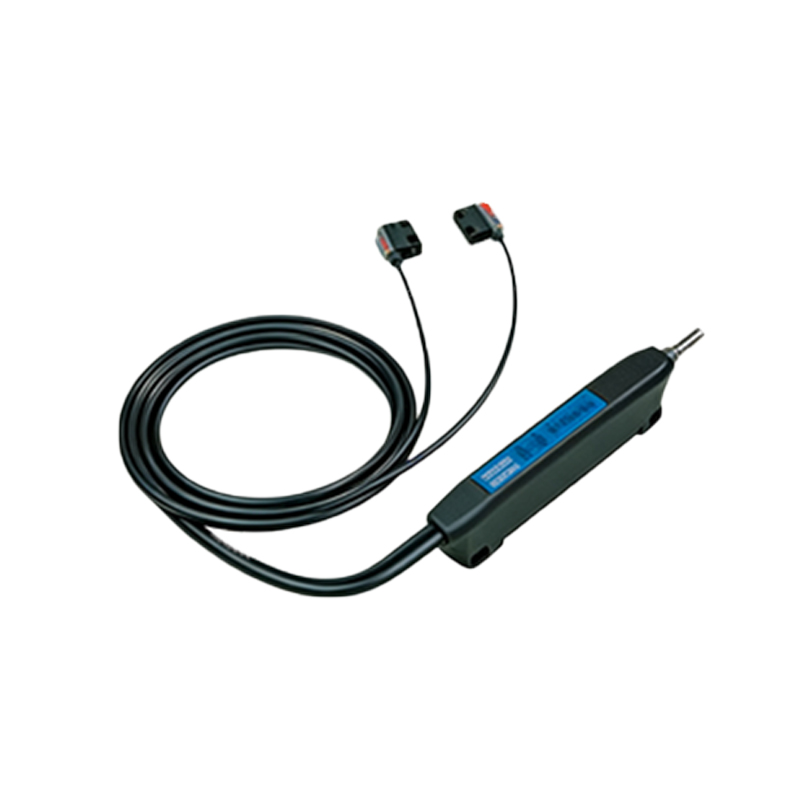
Light Emitting Element: The Source
At the heart of every photoelectric sensor is the light emitting element. This component generates the optical signal that will be projected toward the target. The most common types are Light Emitting Diodes (LEDs) and Laser Diodes. LEDs, particularly infrared, red, and now increasingly green and blue, are favored for their long life, low cost, and resistance to shock. They produce a modulated beam, typically pulsed at a specific frequency, to enhance immunity to ambient light interference. Laser diodes, on the other hand, emit a highly focused, coherent beam of light. This allows for extremely precise detection of small objects or for applications requiring long sensing distances and a very small spot size. The choice of emitter wavelength directly impacts the sensor's performance in different environments; for instance, infrared is less affected by visible ambient light, while green light is highly effective for detecting transparent objects.
Optical System: Lenses and Apertures
The light generated by the emitter does not travel efficiently without proper direction. This is the role of the optical system, comprising lenses and apertures. A lens, often made of acrylic or glass, is placed in front of the light-emitting element to collimate or focus the light beam. In the emitter section, the lens shapes the light into a tight, controlled beam, defining the sensor's sensing range and spot size. In the receiver section, another lens collects the reflected or transmitted light and focuses it onto the photodetector. Apertures are used to physically limit the field of view of the receiver, which is crucial for reducing unwanted detection of background objects or stray light. This precise optical engineering determines the sensor's sensing window, beam pattern, and overall immunity to optical noise.
Photodetector: The Receiver
The counterpart to the emitter is the photodetector, the component that converts incoming light energy back into an electrical signal. The most prevalent type is the phototransistor, valued for its high sensitivity and fast response time. Photodiodes are also commonly used. This component is tuned to be sensitive to the specific wavelength of light emitted by the paired LED or laser. When the projected light beam reaches the receiver—either directly (in through-beam sensors) or via reflection from a target (in retro-reflective or diffuse sensors)—the photodetector's conductivity changes. This minute change in current is the primary signal indicating the presence or absence of the target. The receiver's circuitry is often designed to only respond to the modulated frequency of its paired emitter, a feature that dramatically enhances stability in environments with fluctuating ambient light from sources like sunlight or factory lamps.
Signal Processing Circuitry: The Brain
The raw electrical signal from the photodetector is weak and requires conditioning. The signal processing circuitry is the "brain" of the sensor. It typically includes an amplifier to boost the weak signal, filters to isolate the specific modulation frequency from noise, and a comparator. The comparator evaluates the amplified signal against a preset threshold level. If the signal strength exceeds this threshold, the circuitry determines that the beam is unbroken (or reflected sufficiently) and outputs a logic "ON" signal. If the signal is below the threshold, it outputs an "OFF" signal. Modern sensors incorporate microprocessors for advanced functions like digital filtering, automatic sensitivity adjustment (teach-in function), background suppression, and diagnostic communication via IO-Link or other industrial protocols. This intelligent processing is key to stable operation despite contamination on the lens or varying target reflectivity.
Output Stage and Housing
The processed signal is delivered to the control system through the output stage. Common output types include discrete transistor outputs (NPN or PNP sourcing/sinking), analog current (4-20 mA) or voltage (0-10 V) outputs for distance measurement, and relay outputs. These components are built to handle the required load currents and voltages for interfacing with PLCs, controllers, or other devices. All these internal components are housed within a rugged enclosure designed for industrial duty. The housing, often made of metal or high-grade plastic, provides protection against dust, moisture (with IP ratings like IP67 or IP69K), mechanical impact, and chemical exposure. The design also incorporates mounting features, alignment indicators, and status LEDs to facilitate installation and maintenance in harsh factory environments.
Conclusion and Application Synergy
The seamless interaction of the light emitter, optical system, photodetector, signal processor, and output stage defines the performance envelope of a photoelectric sensor. Understanding these components allows engineers to select the correct sensor type—through-beam, retro-reflective, or diffuse—for a given application. For example, a through-beam sensor, with separate emitter and receiver units, offers the longest range and highest reliability for clear object detection. A diffuse sensor with background suppression, leveraging sophisticated optics and processing, can precisely detect an object at a set distance while ignoring objects beyond it. The ongoing evolution in component technology, such as brighter LEDs, more sensitive detectors, and smarter chips, continues to expand the capabilities of photoelectric sensors, solidifying their role as a cornerstone of industrial sensing and automation.