In the world of industrial automation and electronic control, proximity sensors are indispensable components. Among the various types available, the NPN proximity sensor stands out for its specific operational characteristics and widespread application. This guide delves into the fundamentals, working principles, and practical considerations of NPN proximity sensors, providing a clear understanding for engineers, technicians, and enthusiasts.
At its core, a proximity sensor is a device that detects the presence or absence of an object within a specified range without physical contact. NPN refers to the type of transistor output used within the sensor's switching circuit. An NPN transistor is a bipolar junction transistor where a small current flowing into the base controls a larger current flowing from the collector to the emitter. In the context of a sensor, this configuration dictates how the sensor interacts with the connected load, typically a programmable logic controller (PLC), relay, or other input module.
The fundamental operation of an NPN proximity sensor is based on electromagnetic principles. Inductive sensors, the most common type for detecting metallic objects, contain an oscillator circuit that generates a high-frequency electromagnetic field at the sensing face. When a metal target enters this field, eddy currents are induced in the target, causing a change in the oscillation amplitude. This change is detected by the sensor's circuitry, which then triggers a change in the state of the NPN output transistor. Similarly, capacitive NPN sensors can detect both metallic and non-metallic objects by sensing changes in capacitance.
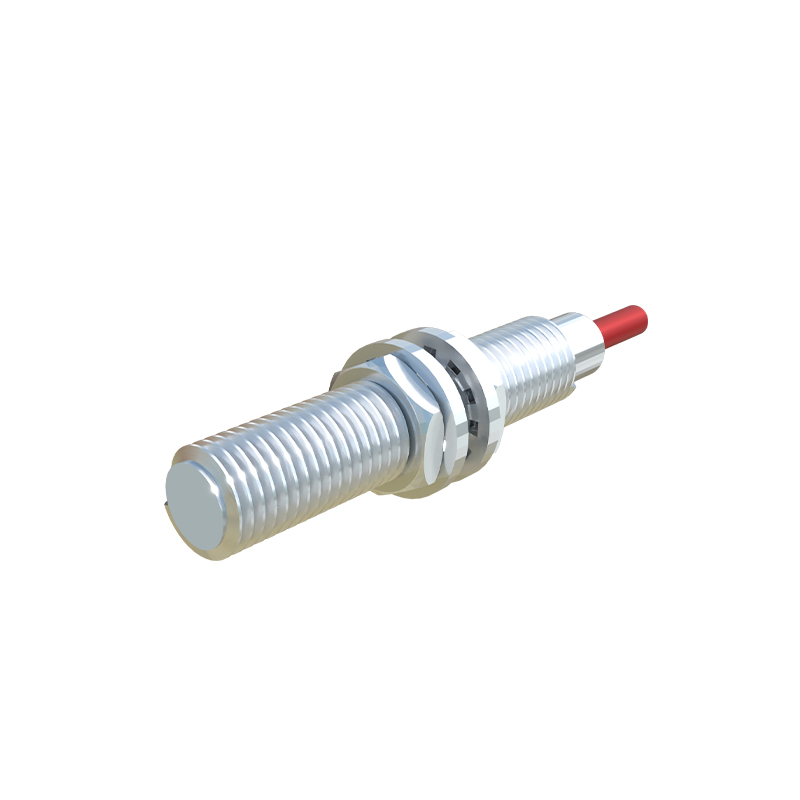
The defining characteristic of an NPN output is its switching behavior concerning the common or ground wire. An NPN sensor is often described as a "sinking" sensor. In its normal state (no target detected), the output transistor is off, and the output signal wire is effectively disconnected. When the sensor detects a target, the NPN transistor turns on, connecting the output signal wire to the negative voltage supply (0V or ground). This action "sinks" current from the load into the sensor. Therefore, to complete the circuit, the load must be connected between the positive voltage supply and the sensor's output wire. When the sensor activates, it provides a path to ground, allowing current to flow through the load and energize it.
This is in direct contrast to PNP sensors, which are "sourcing" sensors. A PNP sensor provides a positive voltage on its output wire when activated. Understanding this distinction is critical for proper system integration. Connecting an NPN sensor to a PLC input module designed for PNP sourcing signals will result in malfunction. Most modern PLCs have configurable inputs that can accept either sinking (NPN) or sourcing (PNP) signals, but the wiring must be correct.
The choice between NPN and PNP often depends on regional conventions and the specific control system architecture. NPN sensors are traditionally more common in European and Asian markets and in systems where it is preferable to switch the negative or ground side of the load. They offer certain advantages in safety-related circuits where it is desirable to have an "active low" signal—a situation where a fault (like a wire break) results in a low (0V) signal, which can be interpreted as a safe state by the controller.
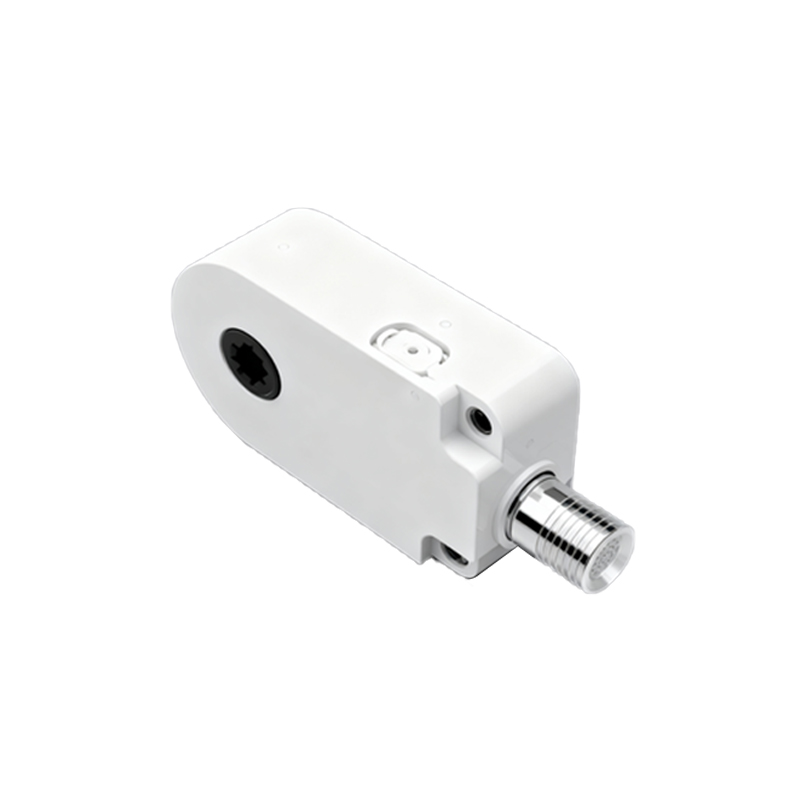
When selecting and applying an NPN proximity sensor, several key specifications must be considered. The sensing distance, or nominal range, indicates how far away a standard target can be reliably detected. It is crucial to note that this distance can be affected by the target material, size, and shape. For inductive sensors, ferrous metals like steel are detected at the full nominal range, while non-ferrous metals like aluminum or copper have a reduced effective sensing distance. The housing material is another important factor; sensors come in cylindrical (threaded) barrels, rectangular, or ring-shaped housings to suit different mounting requirements. Environmental factors such as temperature, humidity, and the presence of dust, oils, or coolants must also be matched to the sensor's ingress protection (IP) rating.
Wiring an NPN sensor typically involves three wires: a brown wire for the positive DC supply voltage (often +12V or +24V), a blue wire for the negative or common (0V), and a black wire for the output signal. When the sensor is active, the black wire is switched to the same potential as the blue wire (0V). A two-wire AC/DC variant also exists, but the three-wire DC version is standard for precise switching.
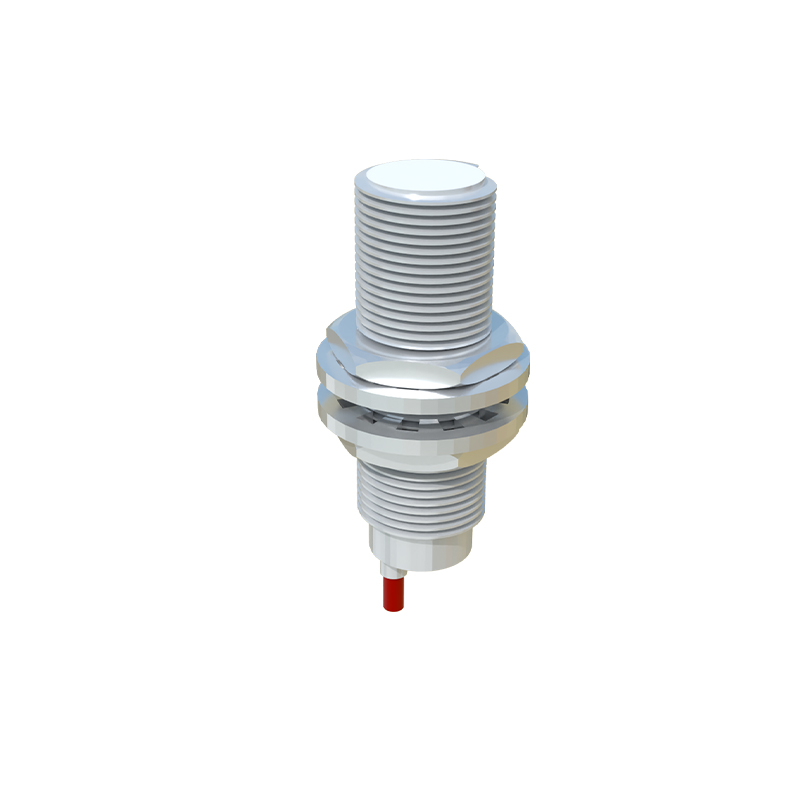
In practical applications, NPN proximity sensors are ubiquitous. They are used for object detection on conveyor lines, counting products, monitoring the position of machine parts (like cylinder rods), ensuring safety door closures, and providing end-of-travel limits. Their non-contact nature ensures long operational life and high reliability, as there is no mechanical wear from repeated physical contact.
Troubleshooting usually involves checking the power supply voltage, verifying the target is