Introduction to Photoelectric Sensors
Photoelectric sensors are widely used in industrial automation for detecting objects, measuring distances, and monitoring processes. They operate by emitting light, typically from an LED or laser, and measuring the reflected or interrupted light to determine the presence or characteristics of an object. However, environmental factors such as vibration, mechanical shock, or rapid movement can introduce noise and instability into the sensor's output, leading to false readings or reduced accuracy. Anti-shake technology addresses these challenges by stabilizing the sensor's signal, ensuring reliable performance in dynamic conditions. This article explores the principles behind anti-shake mechanisms in photoelectric sensors, detailing the methods and components involved.
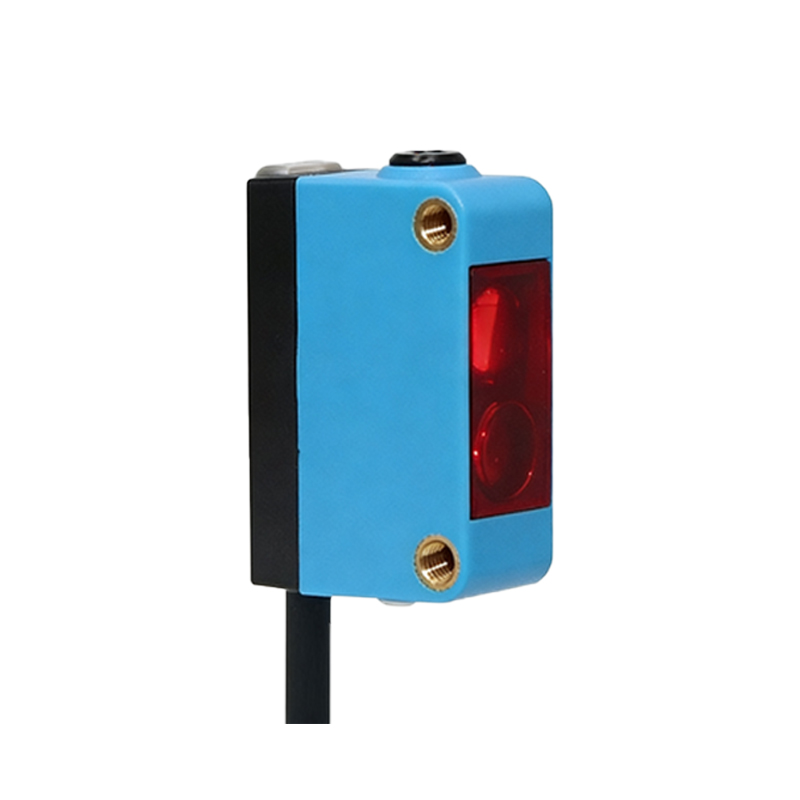
Sources of Vibration and Noise
In industrial settings, photoelectric sensors are often exposed to various sources of vibration, including machinery operation, conveyor belt movements, and external impacts. These vibrations can cause the sensor's housing or internal components to shift slightly, altering the light path and resulting in signal fluctuations. Additionally, ambient light interference, dust, or temperature changes can contribute to noise. Without proper stabilization, these factors may lead to erroneous detections, such as missed objects or false triggers, compromising system efficiency and safety. Understanding these sources is crucial for designing effective anti-shake solutions.
Mechanical Stabilization Techniques
One fundamental approach to anti-shake involves mechanical design enhancements. Sensors may incorporate shock-absorbing materials, such as rubber gaskets or dampers, to isolate the internal components from external vibrations. The housing can be reinforced with rigid structures to minimize flexing, while mounting brackets are engineered to secure the sensor firmly in place. Some advanced models use gimbal-like mechanisms that allow slight adjustments to maintain alignment. These mechanical methods reduce physical displacement, ensuring that the light emitter and receiver remain stable relative to each other, which is essential for consistent signal generation.
Electronic Signal Processing Methods
Beyond mechanical fixes, electronic signal processing plays a key role in anti-shake technology. Photoelectric sensors often integrate microcontrollers or dedicated circuits that filter out noise from the raw signal. Techniques like averaging multiple readings over time can smooth out transient fluctuations caused by vibration. Digital filters, such as low-pass filters, are employed to block high-frequency noise while preserving the relevant signal components. Additionally, adaptive threshold algorithms dynamically adjust detection levels based on environmental conditions, reducing false positives. These electronic methods enhance signal integrity without requiring physical modifications.
Optical Design Considerations
The optical design of a photoelectric sensor also contributes to anti-shake performance. Using collimated light beams, such as those from lasers, can minimize dispersion and maintain a focused path even under minor vibrations. Lenses and mirrors may be coated with anti-reflective materials to reduce stray light interference. Some sensors employ redundant optical channels or array-based receivers to cross-verify signals, providing redundancy in case one channel is affected by shake. By optimizing the light transmission and reception, these design choices improve resilience against environmental disturbances.
Software-Based Compensation Algorithms
Modern photoelectric sensors often leverage software algorithms for advanced anti-shake capabilities. Machine learning models can be trained to recognize patterns associated with vibration-induced noise, allowing the sensor to distinguish between genuine object detections and false signals. Real-time calibration routines continuously monitor sensor performance and adjust parameters accordingly. For instance, if a sensor detects consistent background vibration, it might increase its sampling rate or apply predictive filtering to anticipate and counteract effects. These intelligent algorithms enable adaptive responses to changing conditions, boosting reliability.
Applications in Industry
Anti-shake technology is critical in various industrial applications where precision is paramount. In automotive assembly lines, photoelectric sensors with anti-shake features ensure accurate part detection despite vibrations from robots and machinery. Packaging systems rely on them to count items on fast-moving conveyors without errors. In robotics, stabilized sensors enable precise positioning and obstacle avoidance. By mitigating shake-related issues, these sensors enhance operational efficiency, reduce downtime, and improve safety across sectors like manufacturing, logistics, and aerospace.
Future Trends and Innovations
The evolution of anti-shake technology in photoelectric sensors continues with emerging trends. Integration of MEMS (Micro-Electro-Mechanical Systems) allows for miniaturized inertial sensors that detect and compensate for movement in real-time. Wireless connectivity enables remote monitoring and adjustment of anti-shake settings via IoT platforms. Advances in materials science may lead to lighter, more durable components that inherently resist vibration. As industries demand higher speeds and accuracy, ongoing research focuses on hybrid approaches combining mechanical, electronic, and software solutions for optimal performance.
Conclusion
Anti-shake technology in photoelectric sensors is a multifaceted field that addresses the challenges posed by vibration and noise in industrial environments. Through mechanical stabilization, electronic signal processing, optical design, and software algorithms, sensors achieve greater reliability and accuracy. As applications grow more demanding, innovations in this area will continue to drive improvements, ensuring that photoelectric sensors remain indispensable tools for automation. By understanding these principles, engineers can select and implement sensors that meet specific operational needs, fostering efficiency and innovation in their projects.