Defining the Input Quantity of Proximity Sensors
A proximity sensor is a non-contact electronic device designed to detect the presence or absence of an object within its sensing range. The fundamental question, "What is the input quantity for a proximity sensor?" can be answered by examining its core operating principle. Unlike sensors that measure physical properties like temperature or pressure directly, the primary input quantity for a standard proximity sensor is the physical presence and position of a target object relative to the sensor's active face. This presence alters a local field or energy pattern, which the sensor interprets as an input signal. The sensor does not measure the object's properties but reacts to its existence within a predefined detection zone. This makes the input an event-driven spatial quantity, translating the binary state of "object present" or "object absent" into an electrical output signal.
Underlying Physical Principles as Input Modifiers
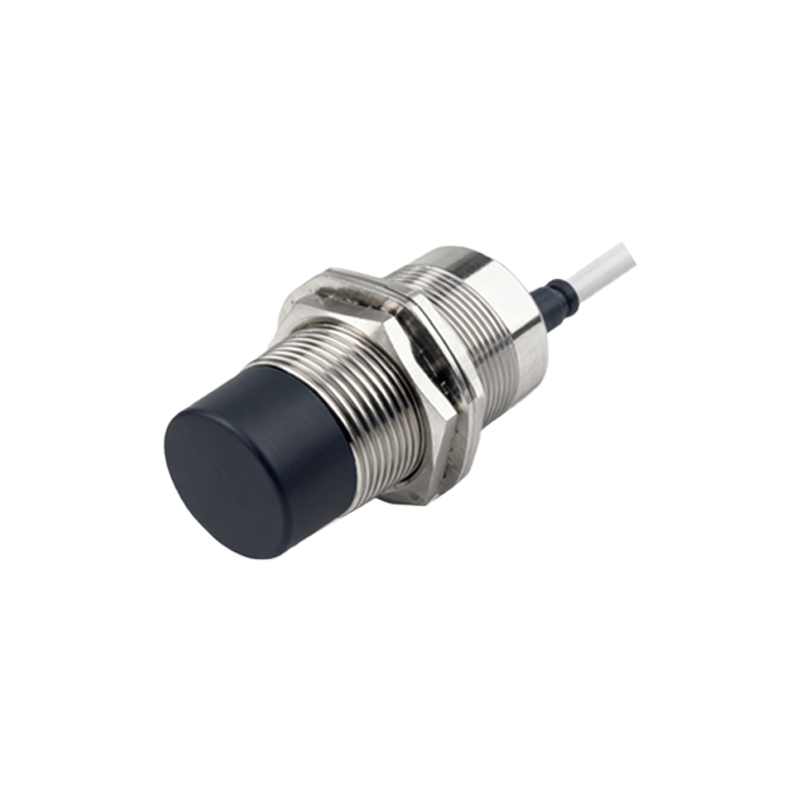
While the presence of an target is the triggering event, the specific physical principle employed defines how that presence is quantified as an input. For inductive proximity sensors, the input is the disturbance caused by a metallic target entering the oscillating electromagnetic field generated by the sensor's coil. The target induces eddy currents, which load the oscillator circuit. This loading effect is the measurable input quantity that the sensor's electronics process. For capacitive proximity sensors, the input is the change in capacitance caused by any material (metal, plastic, wood, liquid) altering the dielectric constant of the field between the sensor's electrode and ground. The presence of the object increases the capacitance, which is detected as the input signal. Photoelectric sensors use light, where the input quantity is the modulation (blocking, reflection, or retro-reflection) of a light beam by the target object.
The Role of Target Characteristics on Effective Input
The effectiveness of the input signal is heavily dependent on target characteristics, which act as secondary input modifiers. For inductive sensors, the key target property is its material's electrical conductivity and permeability. Ferrous metals like steel provide a stronger input signal (longer sensing distance) compared to non-ferrous metals like aluminum or copper. The target's size, shape, and thickness also influence the magnitude of the field disturbance. For capacitive sensors, the target's dielectric constant, size, and the presence of contaminants (like moisture) significantly affect the capacitance change sensed as input. In photoelectric sensing, surface color, reflectivity, texture, and opacity determine how effectively the light beam is modulated. Therefore, while the primary input is presence, the sensor's response is calibrated to specific target material properties.
Distance as a Critical Input Parameter
A crucial aspect of the input quantity is the spatial relationship, specifically the distance between the sensor and the target. This is defined by the sensor's rated operating distance (Sn). The input is not merely "object present," but "object present within the nominal sensing range." The sensor is designed to provide a stable output switch when the target enters this specified zone. Some analog or distance-measuring proximity sensors provide a continuous output proportional to the distance, making the precise gap the primary input quantity. For standard binary-output sensors, the distance determines the timing and reliability of the detection event, making it a critical parameter in system design and sensor selection.
Environmental Factors as Unwanted Input Noise
In practical industrial environments, the desired input (target presence) can be confounded by unwanted environmental inputs, or noise. For inductive sensors, nearby motors, welding equipment, or other sensors can generate electromagnetic interference that may falsely trigger the sensor. Capacitive sensors can be influenced by ambient humidity, temperature fluctuations, or the presence of non-target materials in the background. Photoelectric sensors are susceptible to ambient light (sunlight, factory lighting), dust, fog, or dirt on the lens. Effective sensor design includes shielding, filtering, and compensation circuits to reject these parasitic inputs, ensuring that only the intended target presence is registered as a valid signal.
Electrical and Signal Conditioning of the Raw Input
The raw physical input (field disturbance, capacitance change, light modulation) is converted into an electrical quantity within the sensor's integrated circuitry. An inductive sensor's oscillator amplitude change is converted into a voltage threshold. A capacitive sensor's capacitance shift alters the frequency of an RC oscillator. A photoelectric receiver converts light intensity into a current. This conditioned electrical signal is then compared to a predefined threshold by a Schmitt trigger or comparator circuit. The final output is a clean, switched DC voltage (e.g., PNP/NPN) or a current signal (e.g., 4-20mA). This entire process translates the non-electrical input quantity of "presence" into a standardized, noise-immune electrical signal usable by Programmable Logic Controllers