Understanding Photoelectric Sensor Fundamentals
At the core of modern industrial automation, photoelectric sensors stand as indispensable components for detection, positioning, and inspection tasks. Their operation is elegantly simple yet profoundly effective: they emit a beam of light (visible red, infrared, or laser) and detect changes in the received light signal caused by the presence or absence of a target object. The primary technologies are through-beam, retro-reflective, and diffuse reflective sensing modes. Each mode offers distinct advantages in terms of sensing range, environmental immunity, and installation complexity. The fundamental quality of any sensor begins with the precision and stability of its optical system—the light emitter and receiver. High-grade lenses and precisely aligned components ensure a consistent, focused beam, which is the first critical determinant of reliable performance and long-term accuracy in demanding applications.
Key Quality Indicators for Industrial Applications
Evaluating the quality of a photoelectric sensor extends far beyond basic functionality. For industrial environments, several key performance indicators are paramount. Sensing range and excess gain are crucial; a high-quality sensor maintains a stable sensing margin even in the presence of dust, mist, or target surface variations. Response time is another critical factor, especially in high-speed production lines, where microseconds count. The construction quality, typically indicated by an IP (Ingress Protection) rating like IP67 or IP69K, defines its resilience against water, dust, oils, and chemicals. Electrical robustness, including protection against short-circuits, reverse polarity, and voltage spikes, ensures longevity and reduces downtime. Finally, temperature stability is essential, allowing consistent operation across a wide range, from freezing cold storage to hot manufacturing floors.
Material and Construction: The Foundation of Durability
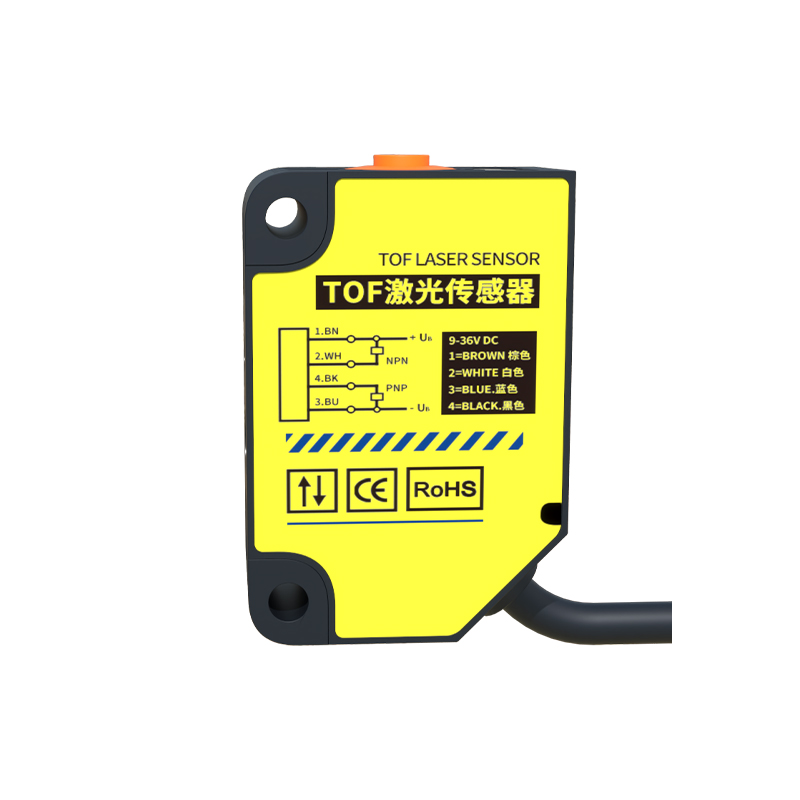
The external housing and internal build of a sensor directly dictate its lifespan in harsh conditions. Top-tier manufacturers use high-performance engineering plastics, such as PBT or PVDF, and stainless-steel casings for the housing. These materials resist corrosion, impact, and degradation from UV exposure or cleaning agents. The sealing methodology, including high-quality O-rings and potting compounds, is what achieves the high IP ratings. Internally, the PCB should be conformally coated to protect against humidity and conductive contaminants. The quality of the cable strain relief and connector (typically M8 or M12) is often overlooked but vital; a robust mechanical connection prevents wire breakage and connection faults, which are common failure points in vibrating environments.
Optical Performance and Advanced Features
Superior optical performance separates premium sensors from standard ones. This includes features like background suppression technology in diffuse sensors, which allows reliable detection of an object regardless of its color or reflectivity by ignoring distant backgrounds. Precision laser sensors offer extremely small, precise spot sizes for detecting minute parts or edges. Advanced models incorporate teach-in functions for easy setup, IO-Link communication for digital parameter setting and diagnostic data exchange, and programmable logic functions (like timers and counters) directly within the sensor. The consistency of the light source's intensity over its operational life and its immunity to ambient light interference (from sunlight or factory lighting) are also hallmarks of a well-designed, high-quality device.
Reliability and Mean Time Between Failures (MTBF)
In industrial settings, reliability is synonymous with productivity. Quality is quantitatively measured by metrics like Mean Time Between Failures (MTBF). Reputable manufacturers rigorously test their sensors under accelerated life conditions—subjecting them to extreme temperatures, humidity cycles, mechanical shock, and continuous switching—to predict and publish a high MTBF figure. A quality sensor is designed for millions, even hundreds of millions, of reliable switching cycles. This reliability stems from using industrial-grade electronic components, conservative circuit design that avoids thermal stress, and comprehensive quality control during manufacturing. Consistent output performance over time, with minimal drift, is the ultimate testament to a sensor's build quality.
Leading Brands and Comparative Analysis
The market for photoelectric sensors is populated by several established leaders, each with strengths. Brands like Banner Engineering, Sick, and Keyence are often at the forefront of innovation and premium performance, offering exceptional precision, robust construction, and advanced smart features. Omron, Pepperl+Fuchs, and Allen-Bradley (Rockwell Automation) provide extremely reliable, industry-proven sensors with vast global support networks. While these top-tier brands command a higher price, they justify it through unparalleled reliability, technical support, and often a longer warranty. The choice for "best quality" is application-dependent: for ultra-precise, cutting-edge tasks, innovators may lead; for harsh, high-volume environments, the most rugged and reliable traditional brands might be optimal.
Making the Right Choice for Your Application
Selecting the highest quality sensor is not about finding the most expensive one, but the most suitable and reliable for the specific task. Begin by thoroughly defining the application requirements: target material, size, and color; required sensing distance; environmental challenges (dust, washdown, temperature); required response speed; and connectivity needs. Cross-reference these needs with the sensor's specifications, prioritizing the key quality indicators discussed. Often, investing in a sensor with higher performance margins (more excess gain, wider temperature rating) than strictly necessary pays dividends in long-term stability and reduced maintenance. Consulting technical datasheets and, when possible, requesting a sample for real-world testing are the final, crucial steps in ensuring you select a photoelectric sensor of truly superior quality for your operation.