Introduction to Cylindrical Proximity Sensors
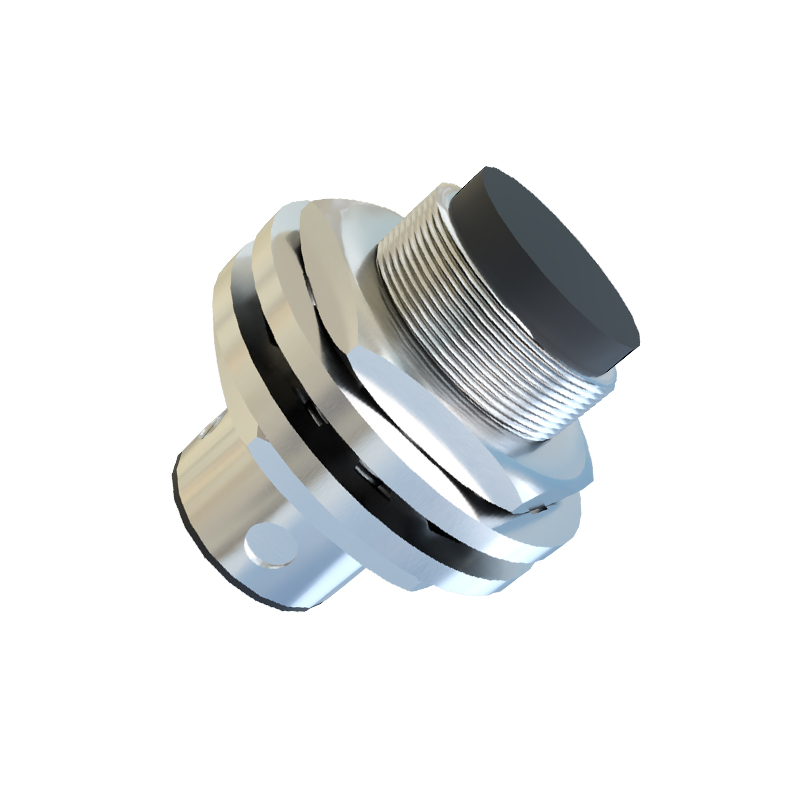
Cylindrical proximity sensors are fundamental components in modern industrial automation and control systems. These non-contact sensing devices detect the presence or absence of metallic objects within their sensing range without any physical contact. Characterized by their robust, tubular metal housing, they are designed for easy installation in standard mounting holes, offering high resistance to environmental factors like dust, oil, and coolant splashes. Their primary function is to provide a reliable switching signal when a target enters their detection field, making them indispensable for tasks such as object counting, position verification, and end-of-travel detection in machinery. The cylindrical form factor is one of the most common and versatile designs, suitable for a vast array of applications across manufacturing, packaging, and material handling industries.
Core Operating Principles
The operation of a basic cylindrical proximity sensor hinges on electromagnetic field interaction. The most prevalent type is the inductive proximity sensor. Inside the cylindrical housing, a coil is fed with a high-frequency oscillating current, generating an alternating electromagnetic field at the active face of the sensor. When a conductive metal target enters this field, eddy currents are induced on the target's surface. This causes a change in the oscillation amplitude within the sensor's coil. An internal circuit monitors this change and triggers a solid-state output switch when the amplitude drops below a predetermined threshold. For sensing non-metallic objects, capacitive cylindrical sensors are used, which detect changes in capacitance caused by the target material. Another variant, the magnetic (reed or Hall effect) cylindrical sensor, specifically detects permanent magnets.
Key Technical Specifications and Selection Criteria
Selecting the correct cylindrical proximity sensor requires careful analysis of several key parameters. The sensing distance, or nominal range, is critical and is typically specified for a standard mild steel target. It is important to note that the effective sensing distance can vary with different metals; for instance, it reduces for stainless steel and aluminum. The housing material, usually nickel-plated brass or stainless steel, determines environmental robustness. The diameter of the cylinder is a primary dimension, with common sizes being M8, M12, M18, and M30. Engineers must also consider the output type: NPN (sinking) or PNP (sourcing) transistor outputs, or occasionally a relay output. Other vital specs include the operating voltage range (commonly 10-30V DC), output current capacity, switching frequency (response speed), and protection ratings like IP67 or IP69K for resistance to liquids and solids.
Installation and Mounting Considerations
Proper installation is paramount for reliable sensor performance. The cylindrical design allows for straightforward flush mounting in a drilled or tapped hole. However, the sensing characteristics are influenced by the surrounding metal. For optimal performance, manufacturers specify a non-flush (or free) mounting distance from any surrounding metal. Ignoring these guidelines can significantly reduce the effective sensing range. It is also crucial to ensure the target approaches the sensor's active face perpendicularly for the most consistent detection point. When installing multiple sensors side-by-side, maintaining a minimum separation distance is necessary to prevent mutual interference between their electromagnetic fields. Always follow the manufacturer's wiring diagram, ensuring correct polarity for DC sensors and proper shielding of cables in electrically noisy environments.
Common Applications in Industrial Settings
The applications for cylindrical proximity sensors are virtually limitless in automation. They are extensively used on machine tools to confirm the position of slides, turrets, or tool holders. In assembly lines, they detect the presence of parts on pallets or conveyors for process control. They serve as limit switches to prevent over-travel in actuators and cylinders, offering a longer lifespan than mechanical limit switches. Within robotic cells, they provide precise position feedback for arm movement. Cylindrical sensors are also integral in material handling for counting bottles, cans, or boxes, and in packaging machinery to verify flap closure or label presence. Their robustness makes them ideal for harsh environments found in metalworking, stamping, and automotive plants.
Troubleshooting and Maintenance Practices
While known for durability, cylindrical proximity sensors can encounter issues. Common problems include failure to detect targets, which may stem from an insufficient sensing distance, an incorrect target material, or a buildup of debris on the sensor face. Intermittent operation often points to loose wiring connections, voltage fluctuations, or electrical noise interference. A systematic approach to troubleshooting involves verifying the power supply, checking the sensor's output with a voltmeter or indicator, and inspecting the target's approach and material. Maintenance is generally minimal but should include regular cleaning of the sensing face to remove contaminants like metal chips or oil film. Periodically checking mounting integrity and cable condition can prevent unexpected downtime. Understanding the sensor's LED indicator