Introduction to Proximity Sensing
In the realm of industrial automation, robotics, and smart devices, the ability to detect the presence or absence of an object without physical contact is paramount. This is the domain of proximity sensors. While the sensor itself—be it inductive, capacitive, ultrasonic, or optical—is the frontline component, its intelligence and functionality are almost entirely governed by a dedicated microcontroller. A proximity sensor microcontroller is not merely a passive receiver of signals; it is the sophisticated brain that manages signal processing, decision-making, communication, and power management, transforming raw detection into actionable data.
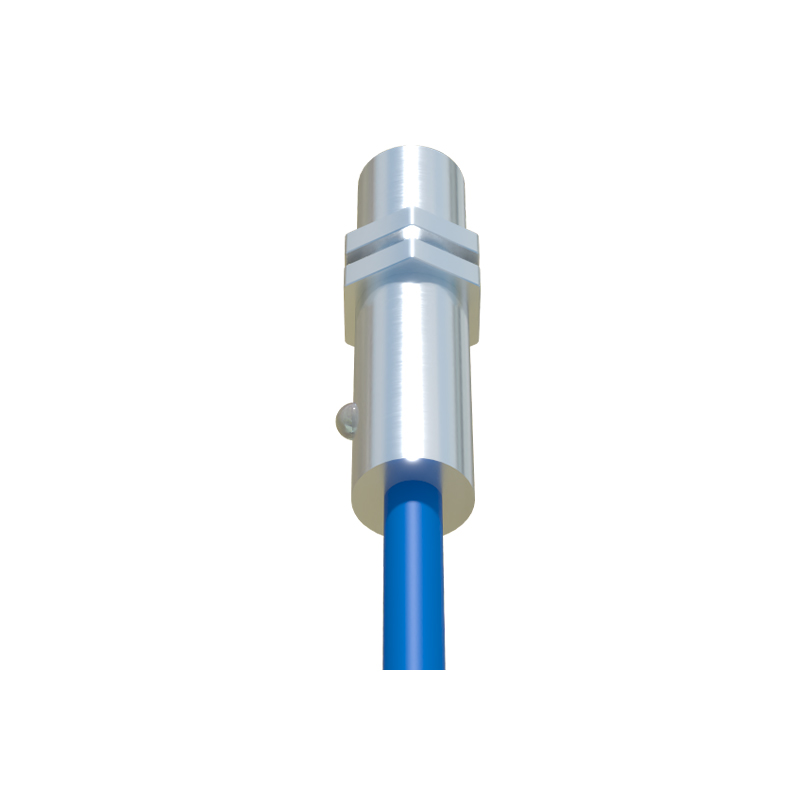
Architectural Demands on the Microcontroller
The architecture of a microcontroller (MCU) for proximity sensing is tailored to specific, demanding requirements. At its core, it must feature high-performance Analog-to-Digital Converters (ADCs) to accurately digitize the often subtle analog signals from the sensor element. For inductive and capacitive sensors, the MCU frequently integrates specialized front-end modules, such as capacitive touch sensing units or analog comparators with programmable hysteresis. Timers and Pulse Width Modulation (PWM) units are crucial for generating excitation signals for the sensor and controlling output drivers. Furthermore, low-power operational modes are essential for battery-powered applications, allowing the sensor system to sleep and wake only when necessary, thereby extending operational life significantly.
Signal Processing and Algorithm Implementation
Once the sensor signal is digitized, the real work of the microcontroller begins. Advanced signal processing algorithms are implemented in firmware to distinguish a true target from environmental noise or interference. This involves digital filtering (e.g., moving average, IIR/FIR filters), baseline tracking, and threshold calibration. For instance, in a capacitive proximity sensor, the MCU continuously monitors minute changes in capacitance. Algorithms compensate for temperature drift and humidity changes that could cause false triggers. The ability to run these complex, real-time algorithms efficiently demands an MCU with sufficient computational power, often provided by ARM Cortex-M cores, and adequate memory (Flash and RAM).
Communication Interfaces and System Integration
Modern proximity sensors are nodes in larger networked systems. Therefore, the microcontroller must be equipped with robust communication peripherals. Common industrial interfaces include IO-Link, which provides detailed parameterization and diagnostic data alongside the standard switching signal, and standard digital outputs (PNP/NPN). For more complex systems, serial interfaces like UART, SPI, and I2C are used to connect to host controllers or other sensors. Wireless connectivity via Bluetooth Low Energy (BLE) or proprietary sub-GHz radios is also becoming prevalent for IoT-enabled sensors. The MCU's role is to package sensor data, status information, and diagnostic messages into the appropriate protocol format for seamless upstream communication.
Reliability and Diagnostic Features
In harsh industrial environments, reliability is non-negotiable. Proximity sensor microcontrollers are designed with this in mind. Features include built-in self-test (BIST) routines that can verify the integrity of the analog front-end and signal chain. Watchdog timers ensure the firmware does not hang. Many MCUs offer hardware-based over-voltage and reverse-polarity protection on I/O pins. Diagnostic capabilities, managed by the MCU, allow the sensor to report conditions such as short-circuit, overload, contamination, or sensor degradation. This predictive maintenance data, communicated via interfaces like IO-Link, is invaluable for minimizing system downtime.
Power Management Strategies
Power efficiency is a critical design constraint, especially for wireless and portable sensors. The microcontroller orchestrates sophisticated power management. It dynamically switches between active, low-power run, sleep, and deep-sleep modes based on the application's needs. For example, an ultrasonic proximity sensor might power its transducer and high-speed ADC only during a brief measurement burst, managed by the MCU's timers, before returning to a microamp-level sleep state. Integrated voltage regulators and low-power oscillators on the MCU chip itself help minimize the overall system's power footprint.
Development Ecosystem and Future Trends
The development of firmware for these specialized MCUs is supported by comprehensive ecosystems from semiconductor vendors. These include software development kits (SDKs), libraries for sensor signal processing, code examples, and integrated development environments (IDEs). Looking forward, trends point toward greater integration. We are seeing System-on-Chip (SoC) solutions that combine the sensor front-end, MCU core, and communication PHY on a single die. Furthermore, the integration of tiny machine learning (TinyML) engines on microcontrollers will enable smarter proximity sensors capable of pattern recognition—distinguishing between different materials or object shapes directly at the edge, with minimal latency and power consumption.