The Need for Speed in Sensing
In the high-stakes world of industrial automation, response time is not just a specification—it's a critical determinant of throughput, quality, and safety. Traditional sensors operating in the tens of milliseconds range are increasingly inadequate for modern, high-speed production lines. This is where the 1ms photoelectric sensor emerges as a game-changer. By achieving a response time of one millisecond or less, these sensors provide the ultra-fast detection necessary for the most demanding applications, from packaging and robotics to semiconductor manufacturing. The shift to 1ms response represents a fundamental leap, enabling machinery to operate at unprecedented speeds while maintaining, or even improving, accuracy and reliability.
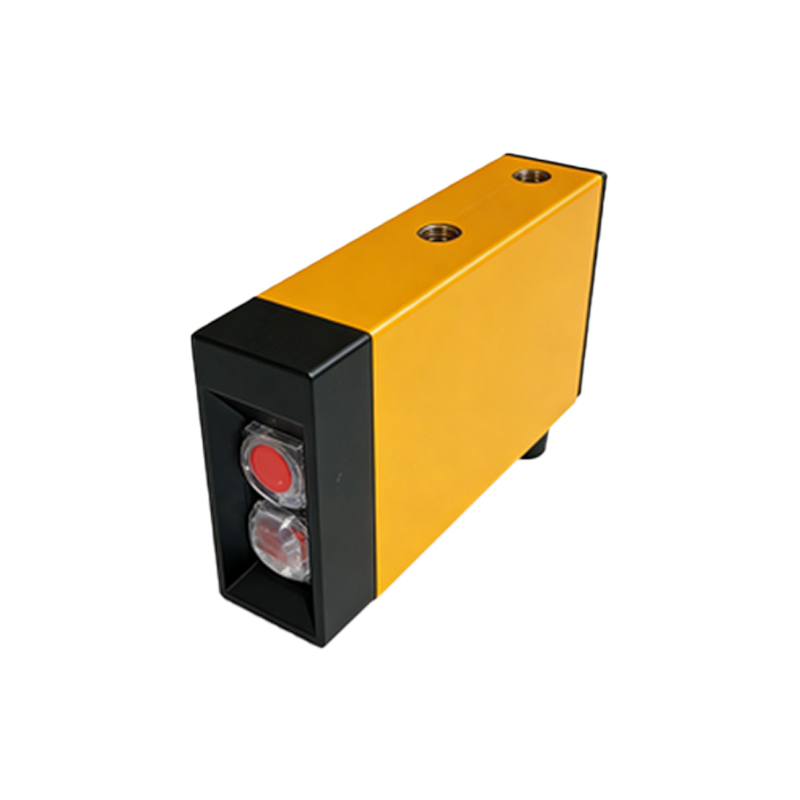
Core Technology Behind 1ms Response
Achieving a consistent 1ms response time requires sophisticated engineering across the sensor's entire signal chain. It begins with a high-speed, high-sensitivity photodetector, often using advanced semiconductor materials for rapid light-to-current conversion. The emitted light pulse from the LED or laser diode is modulated at a very high frequency. The real magic happens in the integrated circuitry, where high-speed amplifiers and advanced digital signal processing (DSP) chips filter out ambient light noise and instantly evaluate the received signal. This processing must distinguish a true target signal from background interference in a fraction of the time it takes to blink, all while consuming minimal power to prevent overheating that could destabilize performance.
Key Types and Sensing Modes
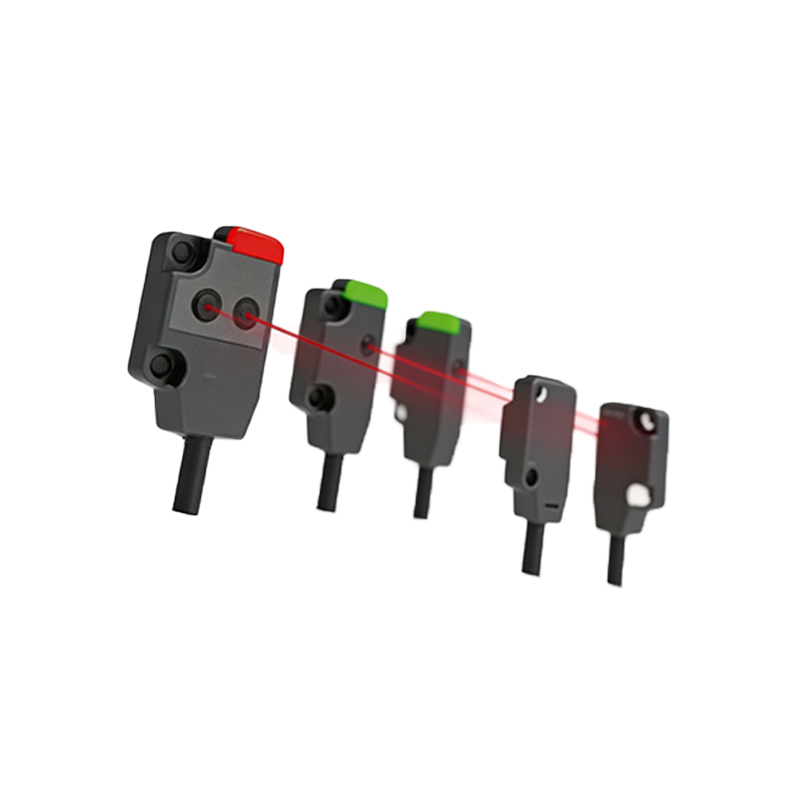
1ms photoelectric sensors are available in all standard configurations, each optimized for speed. Through-beam sensors, with a separate emitter and receiver, offer the longest sensing range and highest reliability for 1ms timing, ideal for counting rapidly passing objects on a conveyor. Diffuse reflective sensors, which house both emitter and receiver in one unit, use advanced algorithms to quickly analyze the reflected light from a target, perfect for high-speed presence detection at close range. Retro-reflective models, utilizing a reflector, provide a robust middle-ground solution. Furthermore, background suppression and true background suppression (BGS) types can achieve 1ms response while intelligently ignoring objects beyond a set distance, crucial for precise positioning.
Critical Applications Driving Adoption
The application spectrum for 1ms sensors is vast and growing. In electronics assembly, they detect microscopic components on feeders moving at blistering speeds. On bottling and canning lines, they ensure precise fill-level detection and cap placement for containers whizzing by. Robotics, particularly in collaborative and high-speed delta robots, rely on them for instantaneous part verification and positional feedback. Perhaps one of the most demanding uses is in printing and converting machinery, where sensors must detect registration marks on paper or film traveling at several meters per second to ensure perfect print alignment. In automated warehousing, they enable the accurate sorting and routing of packages on high-speed sorter systems.
Installation and Optimization Considerations
Deploying a sensor at the limits of its speed capability demands careful attention to installation. Alignment is paramount; even a slight misalignment in a through-beam system can cause intermittent failures at high speeds. The sensing environment must be evaluated for potential optical interference, such as ambient light from welding arcs or high-bay lighting, which might require sensors with special spectral filters. Cable length and quality become significant factors, as capacitance in long cables can slow down signal edges. Utilizing fast-response output modes (like NPN/PNP solid-state switching) and ensuring the connected programmable logic controller (PLC) has an input card capable of handling such fast pulses are essential steps in the integration process.
Evaluating Performance and Specifications
When selecting a 1ms photoelectric sensor, looking beyond the headline response time is crucial. Key specifications include repeatability, which should be a tiny fraction of the response time, and the sensor's minimum detectable object size at its operational speed. The on/off delay differential (hysteresis) should be minimal and stable. Environmental ratings like IP67 or IP69K for washdown environments are often required. Additionally, features like built-in diagnostics via IO-Link communication can be invaluable. IO-Link not only allows for parameter adjustments on-the-fly but also provides real-time data on signal strength, operating temperature, and supply voltage, enabling predictive maintenance and ensuring the sensor maintains its 1ms performance over its lifetime.
The Future of High-Speed Sensing
The trajectory for photoelectric sensors points toward even faster, smarter, and more integrated solutions. We are seeing the convergence of ultra-high-speed sensing with embedded intelligence. Future 1ms sensors will likely incorporate more advanced pre-processing, capable of making simple decisions (like pass/fail based on size or reflectivity) at the edge, further reducing latency in the control loop. Integration with vision sensor capabilities for basic shape recognition at high speed is another frontier. As Industrial Internet of Things (IIoT) architectures mature, the data from these sensors will feed into larger analytics platforms, optimizing entire production processes based on real-time, microsecond-accurate event data.