Introduction to Cylindrical Proximity Sensors
Cylindrical proximity sensors are indispensable components in modern industrial automation, designed to detect the presence or absence of objects without physical contact. These sensors typically feature a robust, cylindrical metal housing that provides durability in harsh environments such as manufacturing floors, assembly lines, and material handling systems. Operating on principles like inductive, capacitive, or magnetic sensing, they offer reliable performance in detecting metals, liquids, plastics, and other materials. Their non-contact nature minimizes wear and tear, ensuring long-term operational efficiency and reducing maintenance costs. Industries rely on these sensors for precise positioning, object counting, and safety interlocks, making them a cornerstone of automated processes.
Key Operating Principles and Technologies
The functionality of cylindrical proximity sensors hinges on advanced sensing technologies. Inductive sensors, the most common type, generate an electromagnetic field to detect metallic objects, with detection ranges varying from a few millimeters to several centimeters. Capacitive sensors, on the other hand, sense both metallic and non-metallic materials by measuring changes in capacitance caused by the target's dielectric properties. Magnetic sensors utilize reed switches or Hall effect components to detect magnetic fields, often used in applications involving permanent magnets. Each technology offers distinct advantages: inductive sensors excel in dirty or wet conditions, capacitive sensors handle diverse materials, and magnetic sensors provide high precision in position sensing. Understanding these principles helps engineers select the right sensor for specific operational needs.
Design Features and Construction
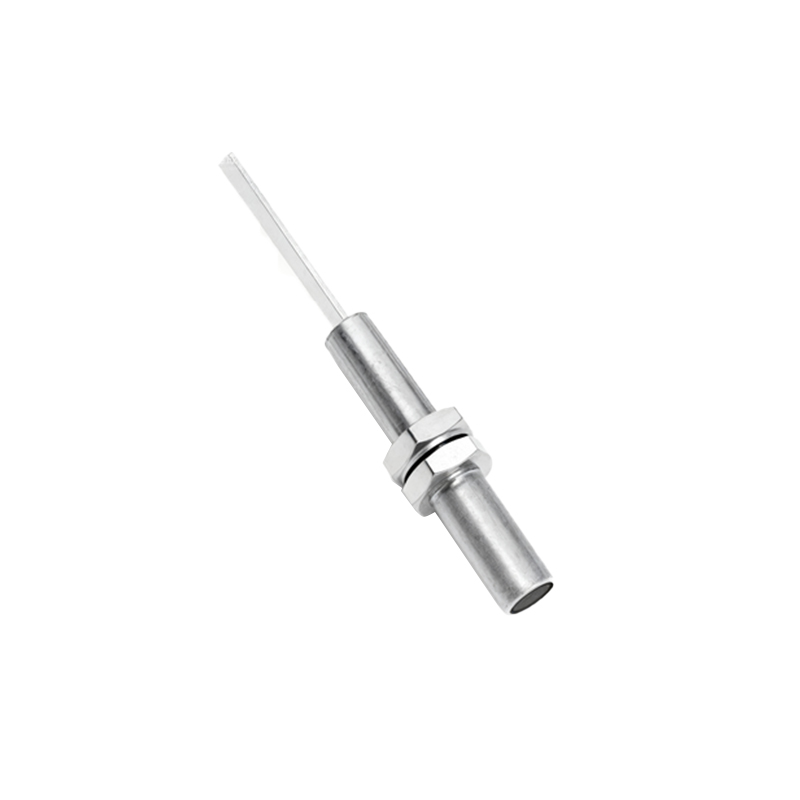
Cylindrical proximity sensors are engineered with a focus on ruggedness and versatility. The housing is typically made of stainless steel or nickel-plated brass, offering resistance to corrosion, impacts, and temperature extremes. Standard diameters range from M8 to M30, with threaded designs for easy installation into machinery. Internally, they incorporate oscillator circuits, signal amplifiers, and output switches (e.g., NPN or PNP transistors) that provide digital signals to control systems. Many models feature LED indicators for status monitoring and adjustable sensing ranges for fine-tuning. Sealing ratings like IP67 or IP69K ensure protection against dust, water, and chemicals, enabling use in washdown environments. These design elements contribute to their reliability in demanding industrial settings.
Applications Across Industries
In industrial automation, cylindrical proximity sensors serve critical roles across various sectors. In automotive manufacturing, they monitor part presence on conveyor belts, detect piston positions in engines, and ensure safety in robotic welding cells. The packaging industry employs them for bottle cap detection, fill level control, and label verification. In metalworking, sensors facilitate tool breakage detection and workpiece positioning on CNC machines. Additionally, they enhance safety by implementing emergency stop circuits and guarding hazardous machinery. Their adaptability extends to food processing, where hygienic designs prevent contamination, and logistics, where they track inventory on automated guided vehicles (AGVs). These applications underscore their versatility in improving productivity and safety.
Selection Criteria and Installation Best Practices
Choosing the right cylindrical proximity sensor requires careful consideration of several factors. Engineers must evaluate the target material, required sensing distance, environmental conditions (e.g., temperature, humidity), and output compatibility with control systems. For instance, inductive sensors suit metallic targets, while capacitive versions are better for plastics or liquids. Installation involves mounting the sensor securely, aligning it properly with the target to avoid false triggers, and shielding it from electromagnetic interference. Wiring should follow manufacturer guidelines, with attention to voltage ratings and cable management. Regular testing and calibration ensure optimal performance. Adhering to these practices minimizes downtime and extends sensor lifespan, supporting efficient plant operations.
Advantages and Limitations
Cylindrical proximity sensors offer numerous benefits, including high switching speeds, resistance to environmental factors, and minimal maintenance due to non-contact operation. They provide accurate detection even in challenging conditions like vibration or contamination. However, limitations exist: sensing ranges are relatively short compared to photoelectric sensors, and material composition can affect performance (e.g., inductive sensors may not detect non-metals). Cost considerations also arise, with advanced models being more expensive. Despite these drawbacks, their robustness and reliability make them a preferred choice for many industrial applications, where their advantages far outweigh the limitations.
Future Trends and Innovations
The evolution of cylindrical proximity sensors is driven by Industry 4.0 and smart manufacturing trends. Innovations include integrated IO-Link communication for real-time data exchange, enabling predictive maintenance and remote configuration. Miniaturization efforts are producing smaller sensors with enhanced capabilities for compact machinery. Enhanced materials, such as chemical-resistant coatings, are expanding their use in aggressive environments. Additionally, advancements in sensing technology are improving accuracy and reducing energy consumption. As industries embrace automation and IoT connectivity, these