Introduction to Photoelectric Sensing Technology
Photoelectric sensors are a cornerstone of modern industrial automation, providing non-contact detection of objects based on the modulation of light. The fundamental principle involves an emitter, which projects a beam of light, and a receiver, which detects the presence or absence of that beam. When an object interrupts or reflects this light beam, it triggers a change in the sensor's output state. This technology offers significant advantages over mechanical limit switches, including faster response times, longer operational life due to lack of physical contact, and the ability to detect a wide variety of materials, including glass, plastic, metal, and liquids. The versatility and reliability of photoelectric sensors make them indispensable in applications ranging from packaging and material handling to automotive assembly and food processing.
Overview of the QS18 Series
The QS18 series represents a robust and highly adaptable family of cylindrical photoelectric sensors designed for demanding industrial environments. Known for their durability and consistent performance, these sensors are built to withstand common challenges such as vibration, moisture, and airborne contaminants. The series typically includes a range of sensing modes—diffuse, retro-reflective, and through-beam—within a standardized 18mm diameter housing. This modularity allows engineers to select the optimal model for a specific application without redesigning the mounting infrastructure. Key construction features often include nickel-plated brass barrels, epoxy-sealed electronics, and tempered glass lenses, ensuring longevity even in harsh conditions. The QS18's design prioritizes ease of installation and maintenance, with clear status indicators and straightforward wiring configurations.
Key Sensing Modes and Their Applications
Understanding the different operating modes is crucial for selecting the correct QS18 sensor. Through-beam sensors, consisting of separate emitter and receiver units, offer the longest sensing ranges and highest reliability, as they are less affected by the object's color, texture, or reflectivity. They are ideal for precise detection in high-speed counting or break-to-make applications. Retro-reflective models utilize a single housing containing both emitter and receiver, detecting objects that break a beam reflected from a dedicated reflector. This mode provides a good balance of range and simplicity, suitable for detecting objects on conveyors where mounting opposite sides is impractical. Diffuse (proximity) sensors, also self-contained, detect objects by measuring the light reflected directly from the target. While sensing distance is shorter and can be influenced by color and surface finish, they are perfect for applications where only one side of the process is accessible, such as detecting the presence of a bottle on a filling line.
Technical Specifications and Performance Characteristics
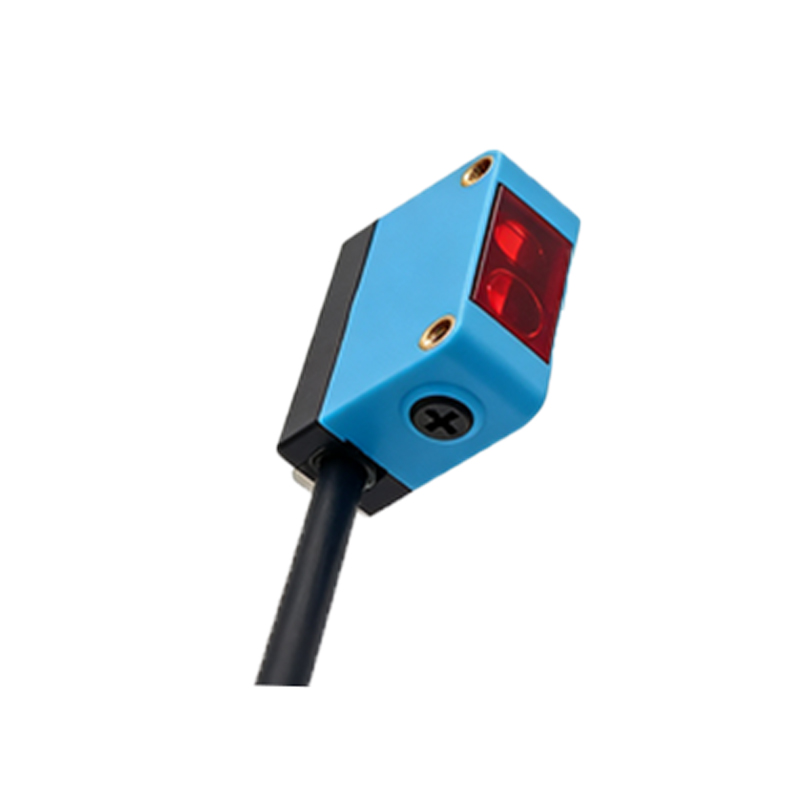
The performance of the QS18 series is defined by a set of critical specifications. Sensing range varies significantly by model and mode; through-beam versions can detect objects several meters away, while diffuse models may have ranges from a few centimeters to a couple of feet. Response time is exceptionally fast, often in the microsecond range, enabling detection of very small or rapidly moving parts. Most models feature selectable light-on/dark-on operation, allowing the output to be configured as normally open or normally closed based on the application logic. They are typically powered by 10-30V DC and provide either a discrete PNP or NPN transistor output compatible with PLCs and other control systems. Environmental ratings are a strong point, with many QS18 sensors boasting IP67 or higher ingress protection, making them resistant to dust and temporary immersion, and capable of operating in wide temperature ranges.
Installation, Alignment, and Troubleshooting Tips
Proper installation is paramount for reliable sensor operation. When mounting, ensure the sensor is securely fastened to minimize vibration-induced misalignment. For through-beam and retro-reflective types, precise alignment of the emitter, receiver, and reflector is essential; many models incorporate alignment aids like visible red LED beams or audible signals when alignment is achieved. Avoid mounting sensors facing direct sunlight or other powerful ambient light sources, which can cause interference. Common issues include false triggering or failure to detect. Troubleshooting should start with checking the power supply and connections, then verifying the sensing target is within the specified range and appropriately sized to interrupt the beam. Cleaning the lens of dust or debris and ensuring the background environment is stable are also critical steps. Regularly consulting the manufacturer's datasheet for specific alignment procedures and environmental limitations will prevent most operational problems.
Advancements and Specialized Variants
The core QS18 series has evolved to include advanced variants addressing niche requirements. Background suppression sensors, a type of diffuse sensor, use triangulation to detect an object only within a precise, fixed distance, ignoring surfaces beyond that point—invaluable for detecting objects on a conveyor regardless of the conveyor's color or reflectivity. Contrast sensors are optimized to detect differences in color or grayscale, crucial in label detection or sorting applications. Fiber optic versions of the QS18 package allow the sensing head to be installed in extremely tight, hot, or hazardous locations, with the amplifier unit mounted remotely. Furthermore, modern iterations may include IO-Link digital communication, enabling remote configuration, diagnostics, and process data monitoring, integrating seamlessly into Industry 4.0 smart factory networks.
Conclusion and Selection Guidance
The QS18 photoelectric sensor series offers a reliable, versatile solution for a vast array of industrial sensing challenges. Its enduring popularity stems from a combination of rugged construction, proven performance, and flexible configuration options. When specifying a sensor for a new application, systematically evaluate the key parameters: required sensing distance, target material characteristics, available mounting space, environmental conditions, and necessary output type. Starting with the sensing mode (through-beam, retro-reflective, or diffuse) will narrow the selection effectively. By leveraging the right model from the QS18 family, automation engineers can build robust, maintenance-friendly systems that enhance productivity, ensure safety, and improve overall process reliability for years to come.