Introduction to Inductive Proximity Sensing
The KG-5 represents a significant advancement in the field of inductive proximity sensors, a cornerstone technology for non-contact object detection in industrial automation. Operating on the principle of electromagnetic induction, these sensors generate an oscillating electromagnetic field from their active face. When a metallic target enters this detection field, eddy currents are induced within the target, causing a measurable change in the sensor's oscillation amplitude. This change is processed by the internal circuitry to trigger a solid-state output switch. The core advantage of this technology, exemplified by the KG-5 series, is its exceptional reliability in harsh environments, as it lacks moving parts and is immune to contaminants like dust, oil, and coolant, ensuring consistent performance in demanding applications such as machine tools, material handling, and automotive assembly lines.
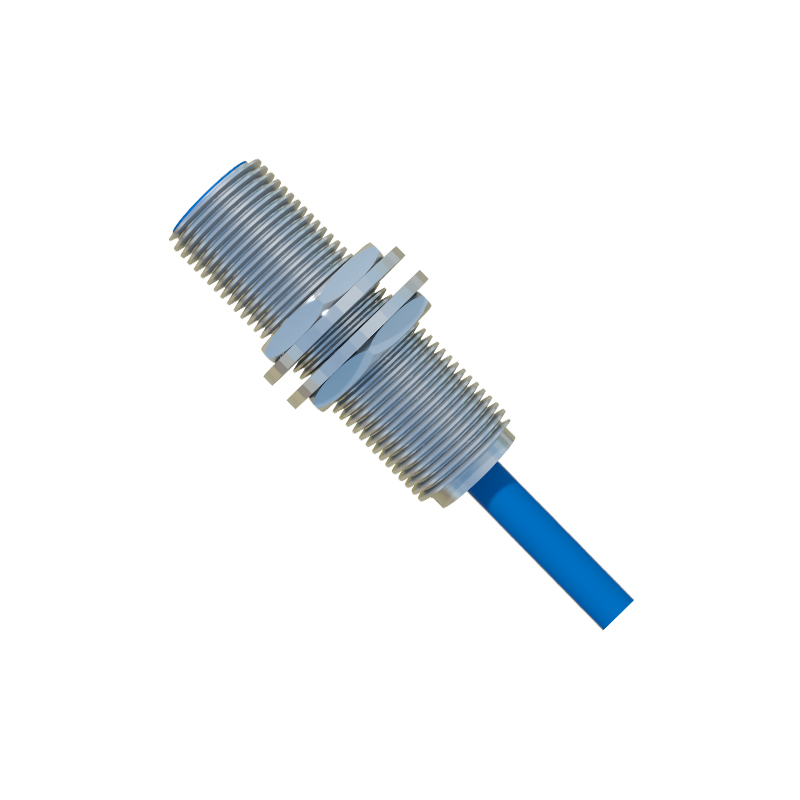
Key Specifications and Performance Parameters of the KG-5
The KG-5 sensor is engineered for precision and durability. Its nominal sensing range is precisely calibrated, typically up to 5mm for mild steel, with reduction factors applied for other metals like stainless steel, aluminum, and copper. It operates across a wide voltage range, commonly 10-30V DC, making it compatible with standard industrial control systems. The output configuration is typically a 3-wire design with NPN or PNP transistor outputs, providing a clean switching signal to programmable logic controllers (PLCs). Key performance metrics include a high switching frequency, enabling detection of rapidly moving parts, a minimal hysteresis to ensure precise repeatability, and robust housing materials like nickel-plated brass or stainless steel with IP67 or higher ingress protection ratings, safeguarding against water and dust.
Electrical Characteristics and Wiring Configuration
Correct electrical integration is paramount for optimal KG-5 performance. The sensor features three core wires: brown for positive supply voltage (V+), blue for common negative (0V), and black for the switched output signal. For an NPN (sinking) output model, the black wire sinks current to ground when activated, suitable for PLC input modules wired for positive logic. Conversely, the PNP (sourcing) output model sources current from the positive supply on the black wire upon detection. It is critical to include a protective load, such as a fuse or a small resistor, in series with the supply line. Furthermore, attention must be paid to avoid voltage spikes from inductive loads by using suppression diodes or RC networks, ensuring long-term circuit stability and preventing false triggering or damage.
Installation Considerations and Environmental Factors
Proper mechanical installation directly influences the sensing reliability of the KG-5. A fundamental rule is to maintain adequate clearance around the sensor's sensing face; mounting the unit in a metal surface requires a non-ferrous surround or specific recess dimensions to prevent flux field distortion and a resultant decrease in effective sensing range. The sensor must be aligned parallel to the target surface for maximum range. Environmental factors such as extreme temperatures, strong electromagnetic fields from nearby motors or welding equipment, and chemical exposure must be evaluated against the sensor's datasheet specifications. For instance, while the KG-5 is resistant to many coolants, direct immersion in strong acids or alkalis should be avoided to preserve housing integrity and seal performance.
Application Scenarios and Troubleshooting Guidelines
The versatility of the KG-5 sensor is demonstrated across numerous applications. It is extensively used for position verification of robotic end-effectors, counting metallic objects on conveyor belts, monitoring spindle tool presence in CNC machines, and as a limit switch in automated packaging systems. When a system malfunction occurs, a structured troubleshooting approach is recommended. First, verify the power supply voltage at the sensor terminals under load. Next, check the output state with a multimeter while presenting a target to the sensing face. If the output fails to switch, inspect for physical damage, accumulated metallic debris on the face, or potential interference from adjacent sensors. Consulting the indicator LED status, a standard feature on most KG-5 units, provides immediate diagnostic feedback on power and output state.
Advancements and Comparison with Other Sensor Types
The KG-5 series incorporates modern advancements such as improved chip-on-board (COB) technology for enhanced resistance to vibration and thermal cycling, and short-circuit and overload protection on the output stage. When compared to capacitive or ultrasonic proximity sensors, the KG-5's inductive design offers distinct advantages for exclusive metal detection, with superior immunity to non-metallic materials like plastics, liquids, or wood that might otherwise cause false triggers. Its primary limitation—detecting only conductive metals—is precisely its defining strength in metalworking and assembly environments. For applications requiring detection of all materials or specific non-metals, alternative technologies must be specified, but for