Introduction to Photoelectric Sensing Technology
Photoelectric sensors are fundamental components in modern industrial automation, playing a critical role in object detection, positioning, and quality control. These devices operate on the principle of converting light energy into electrical signals to detect the presence, absence, or distance of an object. Unlike mechanical or proximity sensors, photoelectric sensors offer non-contact detection, making them ideal for applications involving fragile materials, high-speed production lines, or harsh environments where physical contact is undesirable. The core of their functionality lies in a simple yet elegant interaction: a light emitter, a receiver, and the target object. This technology has evolved significantly from basic through-beam sensors to sophisticated, intelligent systems capable of complex measurements and communications, forming the backbone of countless automated processes across manufacturing, packaging, logistics, and automotive industries.
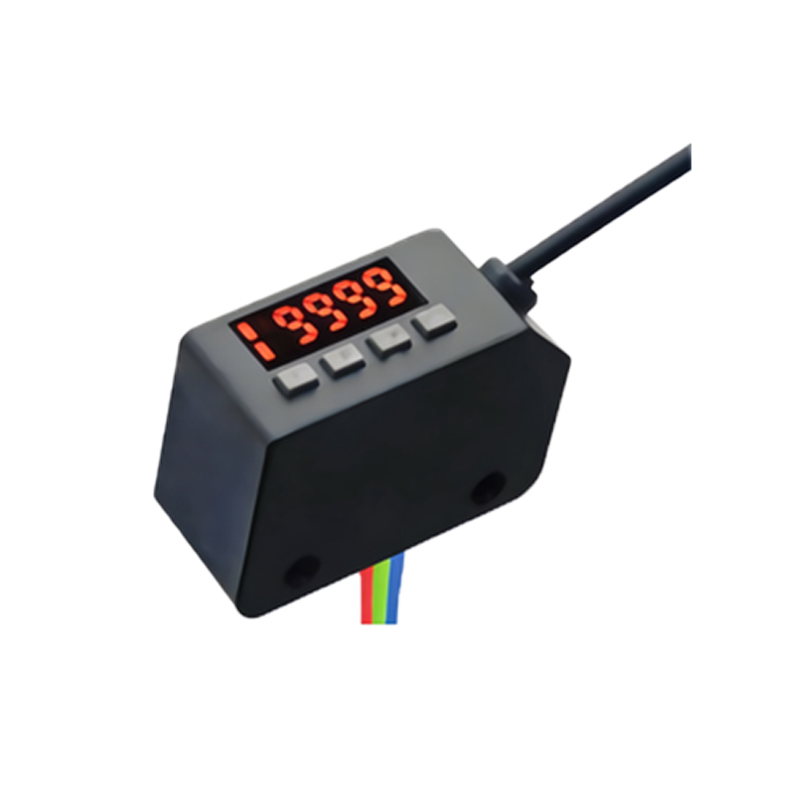
Core Components and Light Emission
The operation of a photoelectric sensor begins with its essential components: the emitter, the receiver, and the control circuitry. The emitter is typically a light-emitting diode (LED) that generates the sensing beam. Common types include visible red, infrared, and laser LEDs, each chosen for specific applications based on required sensing range, environmental conditions, and the material of the target object. For instance, infrared LEDs are often used for long-range detection or in environments with ambient light interference, while laser diodes provide a highly collimated beam for precise detection of small objects or long-distance applications. The emitter circuit modulates the light at a specific high frequency. This modulation is crucial as it allows the sensor's receiver to distinguish the emitted light from ambient background light, significantly enhancing reliability and noise immunity in industrial settings.
The Sensing Methods: Through-Beam, Retroreflective, and Diffuse
Photoelectric sensors employ three primary sensing modes, each defined by the spatial relationship between the emitter, receiver, and target. The through-beam, or opposed mode, consists of separate emitter and receiver units placed opposite each other. Detection occurs when the target object interrupts the light beam traveling from the emitter to the receiver. This method offers the longest sensing range and highest reliability, as it is largely unaffected by the object's color, reflectivity, or surface angle. The retroreflective mode uses a single housing containing both emitter and receiver, along with a separate reflector. The emitted light beam travels to the reflector and bounces back to the receiver. An object is detected when it blocks this return path. This mode simplifies installation compared to through-beam but requires a clear path to the reflector. Finally, the diffuse, or proximity, mode also houses the emitter and receiver together. Here, detection relies on the target object itself reflecting the emitted light back to the receiver. The sensing distance depends heavily on the object's size, color, and surface texture, making this mode versatile for detecting objects at varying distances without a separate reflector.
Signal Reception and Processing
The receiver component is a phototransistor or photodiode specifically tuned to respond to the wavelength of light emitted by the paired LED. When light strikes the receiver's semiconductor material, it generates a small electrical current proportional to the light intensity. The control circuitry, which includes amplifiers and demodulators, processes this weak signal. The demodulator filters out any signals not matching the emitter's modulation frequency, effectively rejecting ambient light noise. The amplified and cleaned signal is then compared to a preset threshold value. If the received light intensity is above (or below, depending on the logic setting) this threshold, the sensor's output switch—which can be a solid-state transistor (NPN or PNP) or an electromechanical relay—changes state. This output signal is then sent to a programmable logic controller (PLC) or other control system to trigger an action, such as stopping a conveyor, counting items, or initiating a robotic sequence.
Advanced Features and Modern Applications
Modern photoelectric sensors incorporate advanced features that extend their capabilities far beyond simple presence detection. Background suppression technology uses triangulation principles to measure distance, allowing the sensor to ignore objects beyond a set range, even if they are highly reflective. Contrast sensors can detect differences in color or grayscale, essential for label verification or sorting tasks. Fiber optic versions use flexible light guides to deliver light to and from cramped or hazardous locations, separating the sensitive electronics from extreme temperatures or corrosive atmospheres. Many sensors now feature built-in diagnostics via LED indicators or IO-Link communication, providing real-time data on signal strength, operating hours, and environmental conditions for predictive maintenance. These intelligent sensors are integral to Industry 4.0 applications, enabling seamless integration into networked systems for data collection and process optimization, ensuring high precision and reliability in complex automated environments.