Introduction to Photoelectric Sensing
The 441 photoelectric sensor represents a cornerstone technology in modern industrial automation. These devices are ubiquitous, performing critical tasks in object detection, counting, positioning, and quality control across manufacturing, packaging, and material handling sectors. At its core, a photoelectric sensor operates on a simple yet powerful principle: it uses light to detect the presence, absence, or distance of an object. The "441" designation typically refers to a specific model or series known for its robust construction, reliable performance, and adaptability to various challenging environments. Unlike mechanical limit switches, photoelectric sensors offer non-contact detection, which translates to no physical wear on the sensor itself and minimal impact on the target object, ensuring long-term reliability and precision.
Core Components and Light Emission
A standard 441 photoelectric sensor comprises three fundamental components: an emitter (light source), a receiver, and a signal processing circuit. The emitter is most commonly a Light Emitting Diode (LED) that generates the detection beam. For general-purpose applications, a visible red LED is often used, providing the advantage of easy alignment during setup. For more demanding scenarios requiring longer sensing ranges or detection of specific materials, infrared (IR) LEDs are frequently employed. Some advanced models may utilize laser diodes for extremely precise detection over longer distances. The emitted light is modulated at a specific high frequency, a crucial feature that allows the sensor to distinguish its own signal from ambient light interference, such as factory lighting or sunlight, thereby ensuring stable operation.
Primary Operating Modes
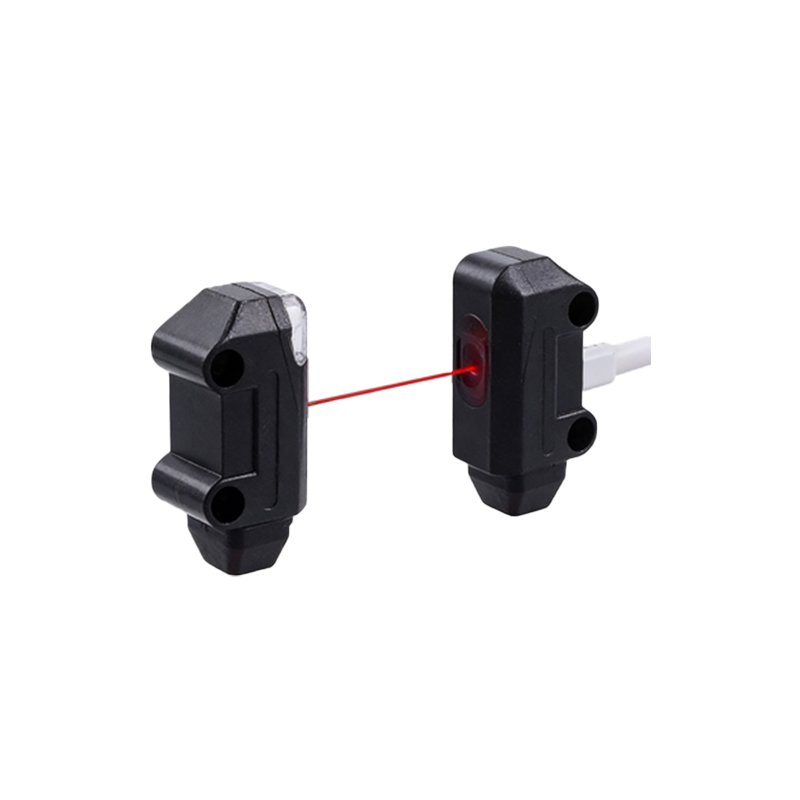
The 441 sensor can be configured in different operational modes, each suited for particular applications. The most common are through-beam, retro-reflective, and diffuse (proximity) modes. In through-beam mode, the emitter and receiver are housed in separate units placed opposite each other. Detection occurs when an object interrupts the light beam traveling from the emitter to the receiver. This mode offers the longest sensing range and highest reliability. Retro-reflective mode uses a single housing containing both emitter and receiver. The unit faces a specialized reflector. The emitted light beam travels to the reflector and bounces back to the receiver. An object is detected when it blocks this reflected beam. Diffuse mode, also known as proximity sensing, relies on the reflection of light from the target object itself. The emitter and receiver are in the same housing, angled towards the target. The sensor detects the object when enough of the emitted light is reflected back to the receiver.
The Sensing and Signal Processing Cycle
The working principle involves a continuous cycle of emission, reception, and evaluation. The modulated light beam, generated by the emitter, is projected towards the target area. In the absence of a target (in through-beam or retro-reflective mode), the receiver continuously detects the light signal. The internal circuitry, often centered around a microcontroller or dedicated IC, constantly monitors the strength and frequency of the received signal. When a target object enters the detection zone, it alters this light path—either by blocking it (for through-beam/retro-reflective) or by reflecting a portion of it (for diffuse mode). This change is instantly registered by the receiver. The signal processor compares the received signal against a pre-set threshold. Once this threshold is crossed, it triggers a change in the sensor's output state.
Output Types and Electrical Interface
Upon detection, the 441 photoelectric sensor provides an electrical signal to interface with control systems like Programmable Logic Controllers (PLCs), robots, or other machinery. The two primary output types are digital (discrete) and analog. Digital outputs are most common, providing a simple ON/OFF signal. This is typically implemented via a solid-state transistor (NPN or PNP) or an electromechanical relay. The output switches state (e.g., from 0V to 24V DC) when an object is detected. Analog outputs, available in more advanced models, provide a continuous voltage or current signal (e.g., 0-10V or 4-20mA) proportional to the received light intensity or the distance to the object, enabling tasks like edge guiding or transparency detection. The sensor also requires a stable DC power supply, usually within the 10-30V DC range, to operate its internal electronics.
Key Features and Application Considerations
The effectiveness of a 441 photoelectric sensor in the field depends on several engineered features. Sensing range is a primary specification, varying significantly between operating modes. Response time, often in the millisecond range, determines how quickly the sensor can detect high-speed objects. Many models incorporate a potentiometer or teach-in function for adjustable sensitivity, allowing fine-tuning to ignore background objects or detect challenging materials like clear glass or dark plastics. Environmental robustness is critical; housings are rated with IP (Ingress Protection) codes (e.g., IP67) for resistance to dust and water, and they are built to withstand typical industrial vibrations and electrical noise. Correct selection involves matching the sensor's mode, range, output type, and housing material to the specific application's requirements, target object properties, and environmental conditions.
Conclusion and Industry Relevance
In summary, the 441 photoelectric sensor is a sophisticated device that translates a simple optical principle into a robust industrial tool. Its operation—from the generation of a modulated light beam to the precise processing of the received signal—enables accurate, non-contact detection that is fundamental to automated processes. Understanding its working principle, including the differences between through-beam, retro-reflective, and diffuse modes, is essential for engineers and technicians to correctly select, install, and maintain these sensors. As automation evolves, the core principle remains, while enhancements in light source technology, signal processing algorithms, and connectivity (e.g., IO-Link) continue to expand the capabilities and applications of reliable workhorses like the 441 photoelectric sensor series.