Proximity sensors are essential components in modern automation and control systems, designed to detect the presence or absence of an object within a specific range without physical contact. Their non-contact nature makes them ideal for applications requiring reliability, speed, and durability in harsh environments. Understanding the different types is crucial for selecting the right sensor for a given task. This guide provides a detailed overview of the primary categories of proximity sensors, explaining their operating principles, typical applications, and key characteristics.
The most fundamental classification is based on the underlying sensing technology. The first major category is Inductive Proximity Sensors. These sensors generate an electromagnetic field. When a metallic object enters this field, it induces eddy currents within the object, causing a change in the sensor's oscillation amplitude. This change is detected, triggering an output signal. Inductive sensors are exclusively for detecting metals, with their effective sensing range varying based on the metal type—ferrous metals like iron and steel are detected at a longer range than non-ferrous metals like aluminum or copper. They are renowned for their robustness, high switching frequency, and resistance to environmental factors like dust, oil, and moisture. Common applications include position sensing in machine tools, part counting on conveyor belts, and limit switching in automated assembly lines.
The second prominent category is Capacitive Proximity Sensors. These operate by generating an electrostatic field. Any object that enters this field, whether metallic or non-metallic (such as plastic, wood, glass, or liquids), alters the capacitance of the sensor's circuit. This alteration is measured, and when it reaches a preset threshold, the sensor activates. Capacitive sensors can detect a much wider variety of materials compared to inductive types. They are often used for level detection of liquids or granular solids in tanks, presence detection of non-metallic objects, and touch-sensitive control panels. Their sensitivity can sometimes be affected by environmental factors like humidity.
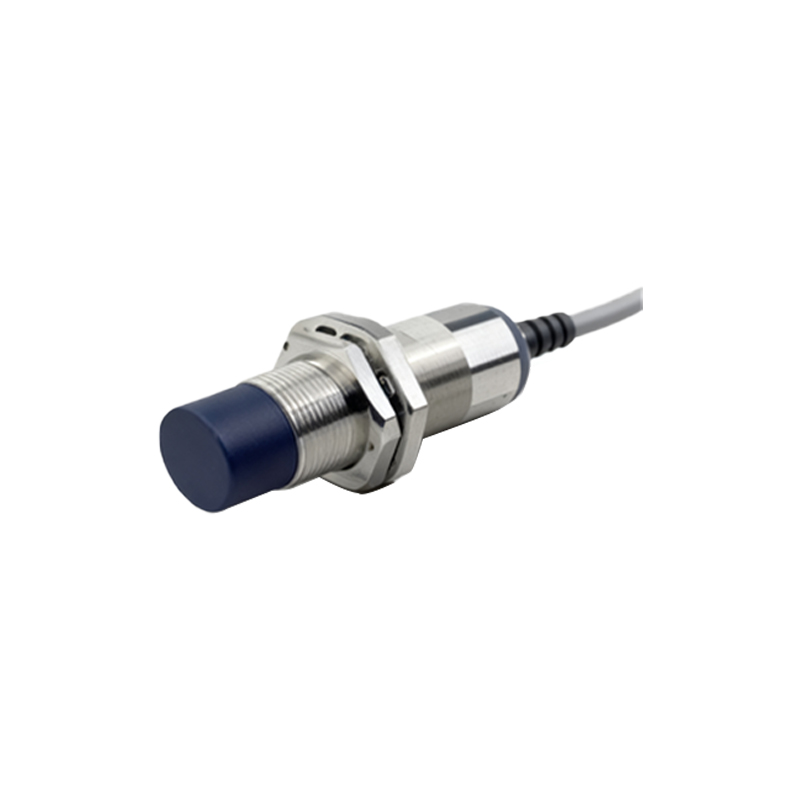
Ultrasonic Proximity Sensors form the third key category. They work on the principle of echolocation. The sensor emits high-frequency sound waves (ultrasound) and then listens for the echo reflected from a target object. By calculating the time difference between the emission and reception of the sound wave, the sensor can determine the distance to the object. Ultrasonic sensors are excellent for detecting objects of virtually any material, shape, or color, as long as they reflect sound adequately. They are particularly useful for distance measurement, transparent object detection, and level sensing in challenging conditions where other sensors might fail. However, factors like temperature, air turbulence, and the object's sound-absorbing properties can influence their performance.
Photoelectric Sensors, while sometimes considered a broader family, are a vital type of proximity sensor. They use light, typically infrared, emitted from a transmitter. The presence of an object is detected either by the interruption of a light beam (through-beam type), the reflection of light back to a receiver housed in the same unit (retro-reflective or diffuse reflective types). Photoelectric sensors offer very long sensing ranges and can detect small objects with high precision. They are versatile for detecting objects of various materials but can be challenged by transparent items or highly reflective surfaces. Applications are vast, including packaging machinery, material handling, and safety curtains.
A fifth important type is the Magnetic Proximity Sensor (often using Reed Switches or Hall Effect sensors). These detect the presence of a permanent magnet. In a reed switch, two ferromagnetic reeds inside a sealed glass capsule close when a magnetic field is applied. Hall Effect sensors produce a voltage change when exposed to a magnetic field. These sensors are extremely reliable for detecting the position of moving parts, such as in cylinder position sensing in pneumatic systems, door/window closure detection in security systems, and speed sensing in automotive applications. They are immune to non-magnetic contaminants.
Finally, Radar (Microwave) and LIDAR Sensors represent advanced categories used for longer-range and more precise detection. Radar sensors emit radio waves, while LIDAR uses laser light. Both measure the time-of-flight of the reflected signal to determine distance and presence. They are prevalent in advanced automotive systems (adaptive cruise control, collision avoidance), traffic monitoring, and specialized industrial automation.
In summary, the choice among inductive, capacitive, ultrasonic, photoelectric, magnetic, and radar/LIDAR sensors depends entirely on the application's specific requirements: target material, required sensing distance, environmental conditions, response speed, and cost. By understanding the distinct operating principles and strengths of each category, engineers and technicians can effectively integrate these powerful tools to enhance system intelligence, efficiency, and safety.