Introduction to Proximity Sensors
Proximity sensors are vital components in modern industrial automation, designed to detect the presence or absence of an object within a specific range without any physical contact. These devices operate on various principles, including inductive, capacitive, ultrasonic, and photoelectric technologies. Their primary function is to provide a reliable and non-contact method for object detection, which is crucial for enhancing efficiency, safety, and precision in automated systems. By eliminating mechanical contact, proximity sensors reduce wear and tear, minimize maintenance requirements, and increase the longevity of machinery. They are integral to countless applications, from simple presence detection to complex positioning and counting tasks in manufacturing, packaging, and material handling industries.
Core Function: Non-Contact Detection
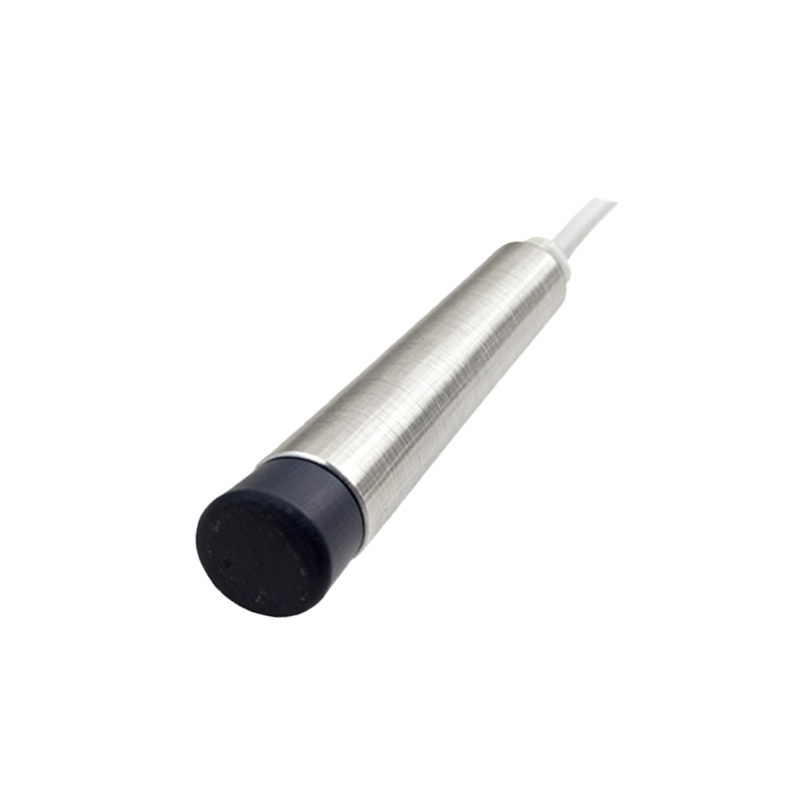
The fundamental and most critical function of a proximity sensor is non-contact detection. This capability allows the sensor to identify metallic or non-metallic objects depending on its type. Inductive proximity sensors, for instance, are specifically tuned to detect ferrous and non-ferrous metals by generating an electromagnetic field. When a metal object enters this field, it induces eddy currents, causing a change in the sensor's oscillation amplitude, which triggers a switching signal. This function is indispensable in harsh industrial environments where dust, oil, or other contaminants could compromise mechanical switches. It ensures reliable operation in applications like detecting the position of a machine part, confirming the closure of a safety door, or sensing the end of a material roll.
Function: Precise Positioning and Measurement
Beyond simple detection, many proximity sensors offer precise positioning and measurement capabilities. Analog output sensors, as opposed to standard digital on/off types, provide a continuous signal proportional to the distance between the sensor and the target. This function allows for precise gap monitoring, thickness measurement, or controlling the position of an actuator. For example, in a robotic assembly line, an analog inductive sensor can provide feedback to ensure a gripper is at the exact correct distance from a component before engaging. Similarly, ultrasonic sensors excel at precise distance measurement over longer ranges and can be used for level sensing in tanks or controlling loop tension in web processing.
Function: High-Speed Counting and Monitoring
Proximity sensors are engineered for high-speed operation, making them perfect for counting and monitoring tasks on fast-moving production lines. Their rapid response time and ability to handle high switching frequencies allow them to accurately count items on a conveyor belt, monitor the speed of a rotating shaft by detecting gear teeth or encoder marks, or verify the passage of components. This function is critical for production control, inventory management, and quality assurance. A capacitive sensor, for instance, can count non-metallic packages, while a photoelectric sensor with a small spot size can count tiny pharmaceutical vials at extremely high speeds without missing a single item.
Function: Enhancing Safety and Machine Guarding
A paramount function of proximity sensors is enhancing operational safety. They form the backbone of many machine guarding and safety interlock systems. Safety-rated proximity sensors are used to create presence-sensing device initiation (PSDI) systems or as part of safety light curtains and area scanners. Their function is to detect when a person or object enters a hazardous area and immediately send a signal to halt machine motion, preventing accidents. For example, a capacitive sensor can detect a person's approach, or a series of inductive sensors can confirm that a protective guard is securely in place before allowing a press or robot to cycle.
Function: Material Discrimination and Recognition
Advanced proximity sensors possess the function of material discrimination. Capacitive sensors, in particular, can detect a wide variety of materials, including liquids, plastics, wood, and glass, by sensing changes in capacitance caused by the material's dielectric constant. This allows for applications such as detecting the fill level of a non-metallic container, distinguishing between different types of packaging materials on a line, or sensing the presence of a liquid in a transparent pipe. Specialized sensors can even be tuned to ignore certain materials while detecting others, adding a layer of intelligence to the automation process.
Application in Harsh Environments
The robust design of industrial proximity sensors grants them the function of reliable operation in extreme conditions. Many models are built with stainless steel housings, are fully sealed (IP67, IP69K ratings), and can withstand high pressures, temperatures, corrosive chemicals, and intense washdown procedures common in food & beverage or pharmaceutical industries. This resilience ensures continuous functionality where other sensing methods would fail. An inductive sensor in a metal stamping press, for instance, can operate reliably despite being exposed to metal chips, coolant, and heavy vibration.
Conclusion: The Integral Role in Industry 4.0
In the era of Industry 4.0 and