Introduction to U-Shaped Photoelectric Sensors
A U-shaped photoelectric sensor, often referred to as a through-beam sensor or fork sensor, is a fundamental component in industrial automation and control systems. Its distinctive U-shaped housing contains both an emitter and a receiver facing each other across a defined gap, forming a fixed optical axis. This design is engineered for high reliability in object detection, counting, and positioning applications. Unlike diffuse-reflective sensors, the U-shaped configuration ensures that the emitted light beam travels directly from the transmitter to the receiver without requiring reflection from the target object. This inherent characteristic provides significant advantages in terms of sensing distance, accuracy, and environmental immunity. The sensor operates on the principle of light beam interruption; when an object passes through the gap, it obstructs the light beam, causing a change in the receiver's output state. This simple yet effective mechanism makes it a versatile solution across diverse industries, from packaging and material handling to assembly and automotive manufacturing.
Core Operating Principle: Light Beam Interruption
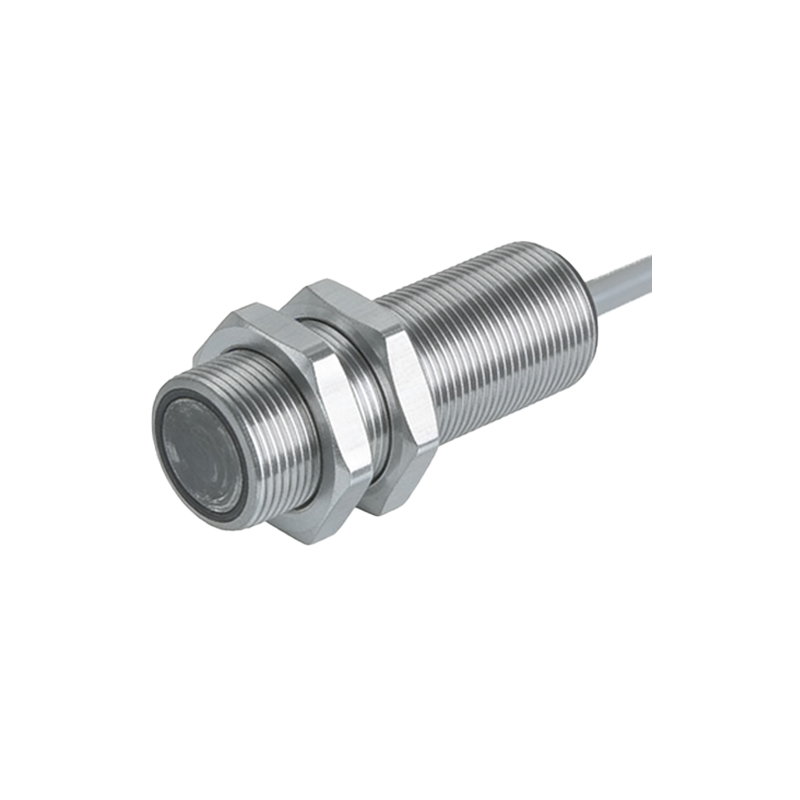
The fundamental operating principle of a U-shaped photoelectric sensor is based on the modulation and reception of a light beam, typically infrared, visible red, or laser. The emitter side contains a light-emitting diode (LED) that generates a continuous or modulated beam of light. Directly opposite, the receiver houses a phototransistor or photodiode specifically tuned to the wavelength of the emitted light. In its normal state, with no object present in the sensing gap, the light beam reaches the receiver unimpeded. The receiver circuit is saturated, maintaining a specific output signal—often a transistor in the "ON" state for DC sensors. When a target object enters the U-shaped gap, it physically blocks the light path. This interruption causes the light intensity at the receiver to drop dramatically or to zero. The receiver circuit detects this abrupt change and switches its output state accordingly, for example, turning a transistor "OFF." This clean, binary signal (beam present/beam blocked) is then sent to a programmable logic controller (PLC) or other control device to trigger an action, such as stopping a conveyor, incrementing a counter, or initiating a robotic sequence.
Key Components and Internal Architecture
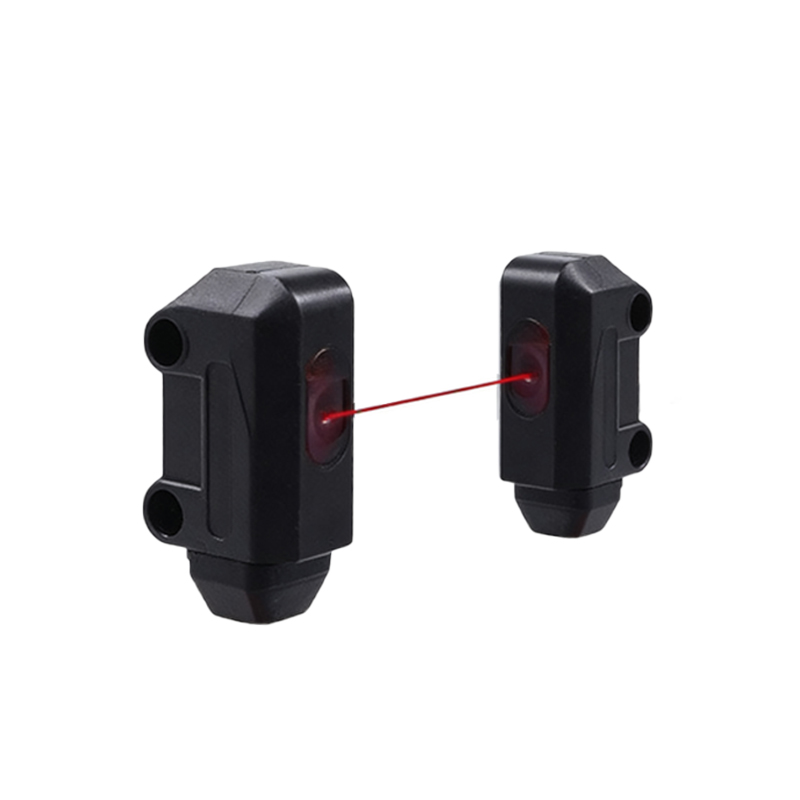
Internally, a U-shaped photoelectric sensor is a sophisticated assembly of optical and electronic components. The emitter module primarily consists of the LED light source and a lens that collimates the light into a focused beam, ensuring maximum energy travels across the gap. Modern sensors often employ modulated LED pulses at a specific frequency. The receiver module contains the photodetector and a corresponding lens to collect the incoming light. Crucially, its amplifier and processing circuitry are designed to recognize only the specific modulation frequency of its paired emitter. This design is critical for rejecting ambient light interference from factory lighting, sunlight, or other optical noise, thereby ensuring stable operation. The housing, which gives the sensor its U-shape, is typically constructed from robust materials like metal or high-grade plastic, providing mechanical protection, precise alignment of the optical axis, and often an IP67 or higher rating for resistance to dust and water ingress. Integrated electronics handle the signal conditioning, output switching (NPN/PNP, NO/NC), and may include diagnostic LEDs for power and output status.
Advantages Over Other Sensor Types
The U-shaped configuration offers several distinct advantages compared to other photoelectric sensing modes. First is its exceptional reliability and long sensing range relative to its size. Because the beam travels directly, it can be detected over larger gaps than a retro-reflective or diffuse sensor of similar power. Second, it provides highly consistent detection regardless of the target object's color, surface texture, or reflectivity. A diffuse sensor's performance can vary with a target's color, while a U-shaped sensor only requires the object to be opaque enough to interrupt the beam. Third, it offers superior precision in edge detection or positioning due to the sharp, well-defined beam. The fixed alignment also eliminates the need for alignment during installation, a common challenge with separate emitter-receiver through-beam setups. This "plug-and-play" stability reduces setup time and maintenance. Finally, it is generally less susceptible to false triggers from shiny or reflective backgrounds, a common issue with some reflective sensors.
Common Applications in Industry
The application scope for U-shaped photoelectric sensors is vast. In automated packaging lines, they are ubiquitously used for precise label detection, verifying the presence of a product in a carton, or counting items on a high-speed conveyor. In the printing industry, they detect the leading edge of paper sheets for accurate registration and counting. Assembly machines utilize them to confirm the presence of a component before a robotic arm performs an operation, such as insertion or welding. They are integral to security systems as safety curtains or door interlock sensors, where beam interruption signals an obstruction. In textile and wire production, they monitor thread breakage. Their robust design makes them suitable for harsh environments where separate emitter and receiver units might become misaligned due to vibration or mechanical shock. The choice of beam type—standard, focused, or laser—allows engineers to tailor the sensor to specific needs, such as detecting very small objects or achieving detection in a narrow, precise zone.
Selection Criteria and Installation Considerations
Selecting the appropriate U-shaped photoelectric sensor requires careful analysis of several parameters. The most critical is the sensing gap or slot width, which must accommodate the size of the target objects. The beam slot height and width define the effective sensing area. Material detection capability is also key; for detecting transparent materials like glass or plastic films, sensors with polarized light or high-intensity laser beams are necessary. The response time must be fast enough to detect objects moving at the line's maximum speed. Environmental factors dictate the required housing material and ingress protection (IP) rating—stainless steel housings are preferred for washdown or corrosive environments. Output configuration (NPN sinking or PNP sourcing) must be compatible with the control system's input module. During installation, it is vital to ensure that the sensor is mounted securely to prevent vibration-induced errors and that the entire target object is guaranteed to pass through the beam's path. Regular maintenance involves keeping the optical lenses clean from dust, oil, or debris that could attenuate the light beam and potentially cause detection failures.