Understanding Proximity Sensor Accuracy Fundamentals
Proximity sensor accuracy is a critical performance parameter that determines the reliability and effectiveness of countless industrial automation, robotics, and safety systems. Accuracy refers to the sensor's ability to consistently detect an object's presence or measure its distance at the specified nominal sensing range with minimal deviation from the true value. It is distinct from, yet interrelated with, concepts like repeatability, resolution, and hysteresis. High accuracy is paramount in applications requiring precise positioning, dimensional gauging, or critical object detection. The accuracy of a proximity sensor is not a single, fixed number but a characteristic influenced by a complex interplay of the sensor's operating principle, internal design, external environmental conditions, and the properties of the target object itself.
Factors Directly Impacting Sensor Precision
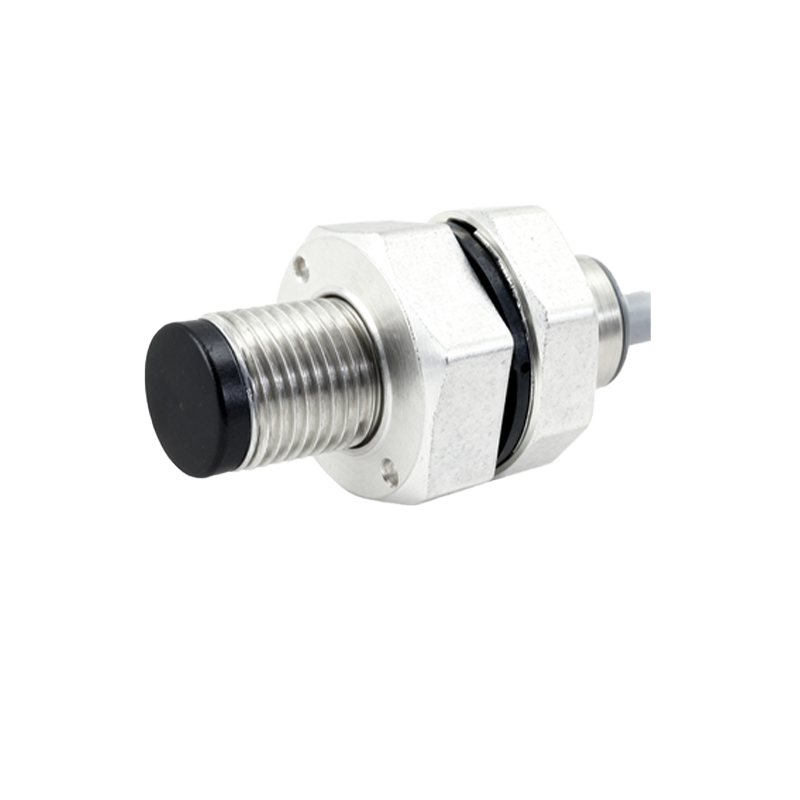
Several core factors dictate the achievable accuracy of a proximity sensor. First, the underlying technology plays a decisive role. Inductive sensors, used for detecting metals, typically offer very high repeatability and accuracy for ferrous targets at their optimized sensing distance but are influenced by the target's material composition and size. Capacitive sensors, sensitive to a wide range of materials, can be affected by environmental humidity and the target's dielectric constant. Ultrasonic sensors measure time-of-flight and are excellent for longer ranges and various materials, but their accuracy can be compromised by air turbulence, temperature, and the target's angle and surface texture. Photoelectric sensors, using light beams, provide high precision but are susceptible to ambient light, color, and surface reflectivity. Secondly, sensor design and component quality, including oscillator stability, coil winding precision (for inductive types), and the quality of the signal processing circuitry, are fundamental to maintaining stated accuracy specifications.
The Role of Environmental and Target Conditions
Even a perfectly calibrated sensor can exhibit reduced accuracy in suboptimal conditions. Temperature fluctuations are a primary concern, as they can cause thermal expansion of mechanical parts and drift in electronic components, leading to measurement shifts. Manufacturers specify temperature drift coefficients (e.g., ±10% of the sensing distance per 100°C) to quantify this effect. Electrical noise from nearby motors, drives, or welding equipment can induce false signals or interfere with the sensor's output. For inductive and capacitive sensors, the presence of other metals or materials in the sensing field can cause shielding or cross-talk effects. Crucially, the target object's properties—its size, shape, material, and surface condition—must align with the sensor's specifications. A sensor calibrated for a standard mild steel square may not achieve the same accuracy with a smaller, rounded, or non-ferrous target.
Quantifying Accuracy: Specifications and Tolerances
Accuracy is quantified in datasheets through several key specifications. The most common is the "repeatability" or "precision" value, often expressed as a percentage of the sensing distance or an absolute distance (e.g., ±0.5% of full scale or ±0.1mm). This indicates the sensor's ability to produce the same output under unchanged conditions. "Linearity error" is vital for analog output sensors, describing the maximum deviation of the actual output signal from an ideal straight line between the minimum and maximum sensing points. "Hysteresis" refers to the difference in the switch-on and switch-off points. "Temperature drift" and "supply voltage influence" are also specified. It is essential to interpret these figures in the context of the "standard target" defined by the manufacturer, usually a specific size and material of metal (e.g., Fe360 steel) for inductive sensors.
Strategies for Maximizing Accuracy in Application
Achieving optimal accuracy in the field requires careful application engineering. First, select the correct sensor type and model specifically designed for the required accuracy level and environmental challenges. Always mount the sensor securely to prevent vibration-induced errors. Ensure the target object is within the sensor's stated "assured sensing distance" and meets the size and material requirements. For distance measurement, use analog-output sensors with high linearity specifications and calibrate them within the intended working range. Implement environmental shielding or choose sensors with robust immunity to electrical noise, temperature changes, and contaminants. Regular maintenance and recalibration, especially in harsh environments, are necessary to sustain long-term accuracy. Utilizing sensors with built-in temperature compensation and advanced signal processing algorithms can significantly enhance performance stability.
Conclusion: A Context-Dependent Answer
So, are proximity sensors accurate? The answer is a qualified yes—they can be exceptionally accurate, but this accuracy is context-dependent. Modern high-quality proximity sensors, when applied correctly under their specified operating conditions, deliver precision that meets the demanding needs of advanced manufacturing and automation. The key is to understand that accuracy is a system characteristic, not just a sensor