Introduction to Photoelectric Sensor Pricing Factors
The cost of photoelectric sensors varies significantly based on multiple technical and commercial factors. Key determinants include sensing range, with longer-range models (e.g., over 50 meters) commanding premium prices due to advanced optics and emitter power. Light source type plays a crucial role—laser-based sensors are typically 40-60% more expensive than standard LED variants, offering superior precision for alignment and measurement tasks. Enclosure ratings, such as IP67 or IP69K for harsh environments, add 15-30% to base costs. Additional features like background suppression, teach-in functionality, and IO-Link communication interfaces contribute to price stratification. Market dynamics, including raw material availability for semiconductor components and regional demand fluctuations in automotive and packaging sectors, create quarterly price adjustments of 3-8%.
Through-Beam Sensor Price Analysis
Through-beam photoelectric sensors represent the most reliable long-distance detection solution, with prices ranging from $80 to $600 per unit. Entry-level models with ranges up to 15 meters and basic PNP outputs start at $80-$120, suitable for conveyor counting applications. Mid-range sensors (20-40 meter range) featuring adjustable sensitivity and stainless steel housings fall in the $200-$350 bracket. High-performance variants with laser alignment aids, synchronization capabilities for multi-sensor setups, and M12 quick-disconnect cables reach $400-$600. Bulk procurement (50+ units) typically yields 10-18% discounts from major manufacturers like Omron, Banner Engineering, and Sick AG. Recent supply chain improvements have stabilized prices after 2022's 12% surge, with 2024 showing only 2-3% inflationary increases.
Retroreflective Sensor Market Pricing
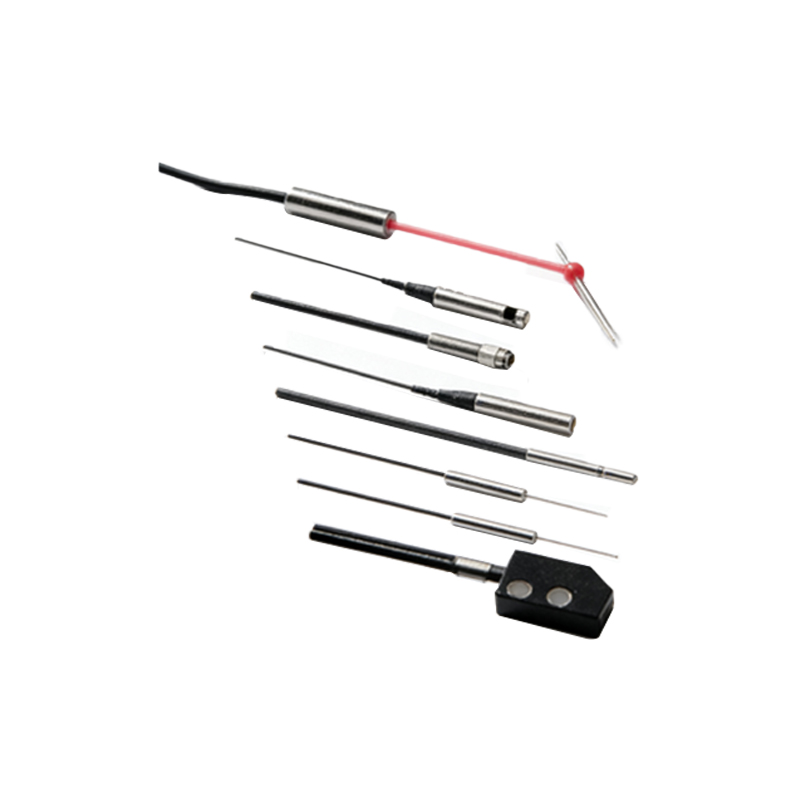
Retroreflective sensors utilizing polarized filters to ignore shiny objects are priced between $60 and $400. Standard 5-meter range models with fixed cable connections average $60-$90, widely used in packaging machinery. Advanced versions featuring fiber optic compatibility and programmable logic functions cost $150-$250. The premium segment ($300-$400) includes sensors with built-in diagnostics, LCD configuration displays, and dual digital-analog outputs. Notably, miniaturized M8 housing sensors have seen 8% price reductions due to improved micro-optics manufacturing. Regional variations exist—European markets pay 5-7% premiums for CE-certified models, while Asian manufacturers like Keyence offer competitive pricing at 15% below Western brands for equivalent specifications.
Diffuse Sensor Cost Breakdown
Diffuse (proximity-mode) sensors dominate price-sensitive applications, with costs spanning $40 to $320. Basic background suppression models start at $40-$70 for 300mm ranges, ideal for object differentiation on assembly lines. Contrast sensors for label detection and color recognition range from $100-$180, incorporating RGB LED technology. The $200-$320 tier includes ultrasonic-photoelectric hybrid sensors capable of detecting transparent materials like glass and clear films. Energy-efficient models with sleep-mode functionality carry 5-10% price premiums but reduce operational costs by 30% over three years. Distributor markup typically adds 25-35% to manufacturer list prices, though direct OEM contracts can secure prices 20% below market averages for annual volumes exceeding 500 units.
Specialized Sensor Pricing Trends
Niche photoelectric sensor categories exhibit distinct pricing structures. Safety light curtains for machinery guarding range from $500 to $3,000 per system based on resolution and protective height. Luminescence sensors for detecting invisible marks on pharmaceuticals cost $800-$1,200 due to UV-sensitive optical components. High-speed sensors for bottling lines (0.1ms response time) command $250-$450 premiums over standard models. The market shows increasing demand for hygienic design sensors with FDA-compliant materials, priced 40% higher than industrial equivalents. Smart sensors with cloud connectivity and predictive maintenance features are emerging at $180-$400, representing the fastest-growing segment with 22% annual price declines as technology matures.
Global Procurement Strategies
Strategic sourcing requires understanding regional manufacturing advantages. Chinese-produced sensors offer 30-50% cost savings but may lack certification for Western markets. European brands maintain 15-20% price premiums for locally manufactured units with extended warranties. Recommended approaches include hybrid sourcing—using Asian suppliers for standard sensors while investing in premium Western sensors for critical applications. Consider total cost of ownership: a $300 sensor with 100,000-hour MTBF often outperforms a $150 sensor requiring quarterly replacements. Many suppliers now offer modular pricing, allowing customization of housings, cables, and lenses with clear cost adders. Group purchasing organizations report 12-18% savings through consolidated multi-factory orders.
Future Price Projections and Technology Impact
Photoelectric sensor prices are projected to decrease 3-5% annually through 2026, driven by CMOS sensor production scaling and automated assembly. However, new regulations like the EU's Ecodesign Directive may add 5-8% to costs for enhanced recyclability. Solid-state LiDAR integration will create new premium categories ($400-$800) for high-precision 3D sensing. The adoption of gallium nitride (GaN) emitters promises 25% efficiency improvements but may initially increase prices 10-15% before mass production stabilizes costs. Subscription-based pricing for software-defined sensors is emerging, with annual fees representing 20-30% of hardware costs. Manufacturers are increasingly offering price-lock guarantees for 24-month periods to hedge against semiconductor market volatility.