Introduction to Distance Enhanced Proximity Sensors
Distance Enhanced Proximity Sensors represent a significant leap forward in industrial automation and sensing technology. Unlike traditional proximity sensors that primarily detect the presence or absence of an object within a limited, binary range, these advanced devices are engineered to precisely measure the distance to a target object over an extended operational range. They combine the non-contact, robust operation of standard inductive, capacitive, or photoelectric sensors with sophisticated signal processing to deliver continuous, analog distance information. This capability transforms simple detection tasks into precise measurement and positioning applications, enabling smarter, more responsive, and highly efficient automated systems across manufacturing, logistics, and robotics.
Core Operating Principles and Technologies
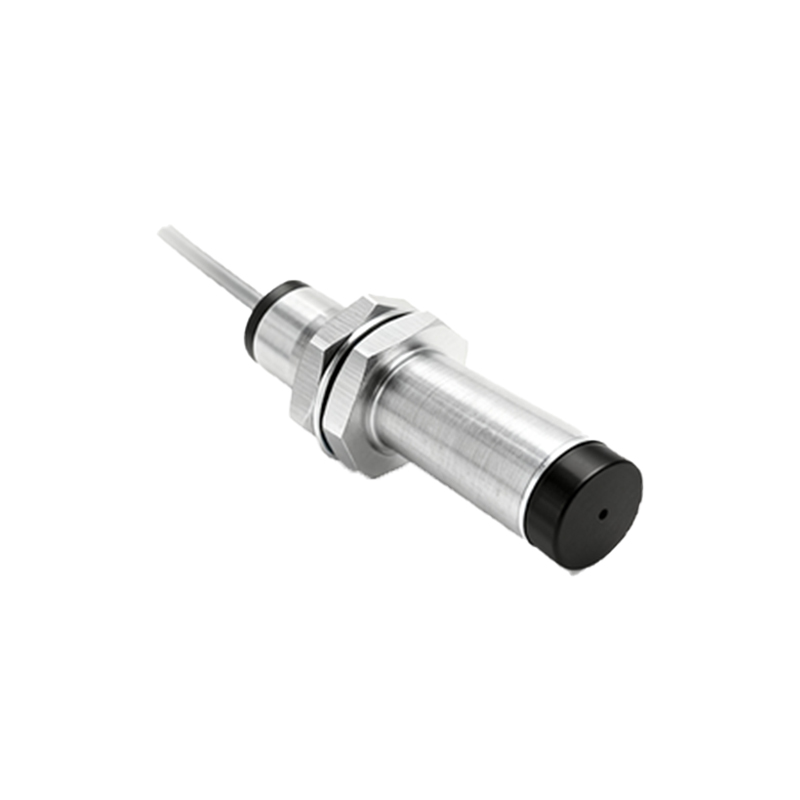
The enhanced functionality is rooted in advanced sensing principles. Inductive versions, ideal for metallic objects, utilize high-frequency oscillation fields. The damping effect caused by an approaching target is not just registered as a switch point but is meticulously analyzed to calculate the exact distance based on the amplitude or frequency shift. Photoelectric variants, including time-of-flight (ToF) and triangulation methods, emit a light pulse or beam and measure the time taken for the reflection to return or the angle of the reflected beam to determine distance with high accuracy. Capacitive types measure changes in capacitance to detect both conductive and non-conductive materials at varying distances. Common to all is an integrated microprocessor that processes the raw sensor signal, applies algorithms for linearization and temperature compensation, and outputs a stable, precise analog signal (e.g., 4-20 mA, 0-10V) or a digital value via IO-Link or other industrial networks.
Key Advantages Over Standard Proximity Sensors
The transition from simple detection to precise measurement unlocks numerous advantages. Firstly, it enables predictive maintenance and condition monitoring; for instance, monitoring the wear on a machine tool by measuring the increasing distance to a reference point. Secondly, it allows for precise positioning and edge guidance in material handling without the need for complex and costly vision systems. Thirdly, these sensors offer unparalleled flexibility. A single distance-enhanced sensor can often replace multiple binary sensors, simplifying mechanical design, reducing wiring, and lowering overall system cost and complexity. Their extended sensing range also provides greater installation flexibility and tolerance for mechanical misalignment, improving system robustness.
Critical Application Areas in Modern Industry
Distance Enhanced Proximity Sensors are pivotal in sophisticated automation scenarios. In robotics, they are essential for collision avoidance, precise gripper positioning, and bin-picking applications. On assembly lines, they ensure correct part placement, measure component dimensions for quality control, and control the fill level in containers. In mobile machinery and AGVs (Automated Guided Vehicles), they serve as the eyes for navigation and obstacle detection. The wood, paper, and plastic industries use them for diameter control and roll diameter measurement. Furthermore, their analog output is perfectly suited for integration into PLC-controlled systems for continuous process control, such as controlling the gap in a press or the tension in a winding machine.
Selection Criteria and Installation Best Practices
Selecting the appropriate sensor requires careful analysis of the application parameters. The primary considerations include the required measuring range, resolution, repeatability, and the material composition of the target object (metal, plastic, liquid, etc.). Environmental factors like temperature extremes, dust, moisture, and exposure to chemicals dictate the necessary ingress protection (IP) rating. The output type (analog voltage/current, IO-Link, PWM) must be compatible with the control system. For installation, ensuring a stable mechanical mounting is paramount to avoid vibration-induced errors. It is crucial to minimize environmental interference; for inductive sensors, avoiding other metal objects in the sensing field is necessary, while photoelectric sensors require a clean lens and consideration of ambient light conditions. Proper grounding and shielding of cables are essential for optimal signal integrity.
The Future with IO-Link and Industry 4.0 Integration
The true potential of Distance Enhanced Proximity Sensors is fully realized with digital communication protocols like IO-Link. As intelligent, point-to-point communication standards, IO-Link transforms these sensors into smart devices. It allows for remote parameterization—changing the measuring range or output characteristics on-the-fly from the control room. Detailed diagnostic data, such as internal temperature, operating hours, and signal strength, can be monitored, enabling predictive maintenance and minimizing unplanned downtime. This seamless flow of rich parametric and process data directly into higher-level systems (PLCs, SCADA, MES) is a cornerstone of Industry 4.0, facilitating data-driven optimization, flexible production, and the creation of digital twins for simulation and analysis.
SEO