Introduction to Square Proximity Sensors
In the realm of industrial automation, proximity sensors are indispensable components for non-contact detection. Among the various form factors available, the industrial square proximity sensor has carved out a significant niche. Characterized by its robust, rectangular housing, this sensor type offers distinct advantages in mounting, sensing range, and environmental resilience. Unlike cylindrical sensors, the square design provides a larger surface area for labeling and often incorporates multiple mounting holes, allowing for secure and flexible installation in tight or complex machinery layouts. These sensors are engineered to detect the presence or absence of metallic or, in some variants, non-metallic objects without any physical contact, thereby eliminating mechanical wear and enabling high-speed, reliable operation in demanding factory environments.
Key Operating Principles and Technologies
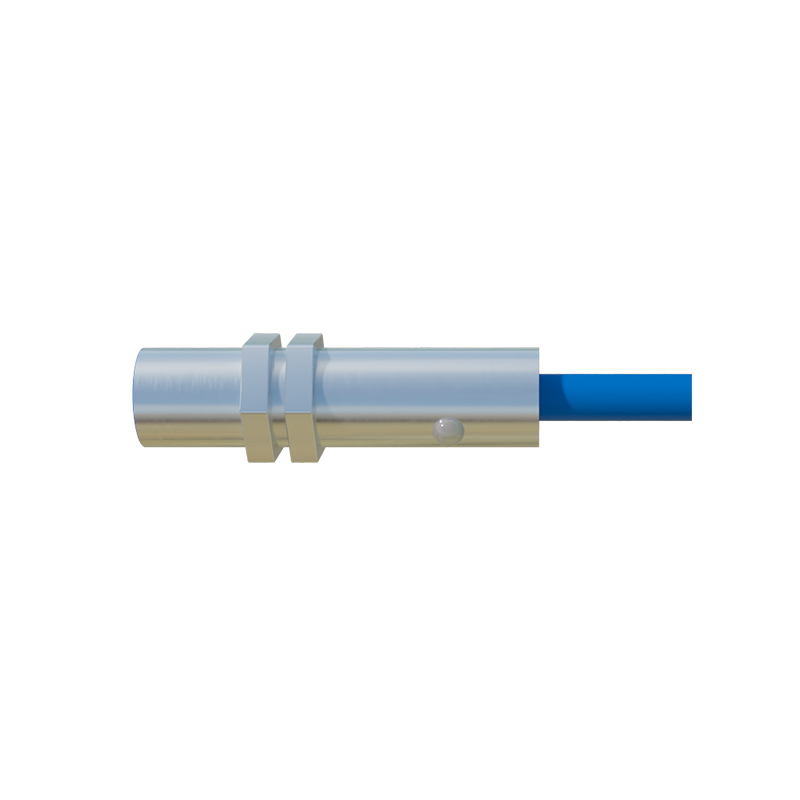
Square proximity sensors primarily operate on two fundamental principles: inductive and capacitive sensing. Inductive square proximity sensors are the most common in industrial settings. They generate an electromagnetic field from a coil in the sensor's face. When a metallic object enters this field, it induces eddy currents, causing a change in the oscillation amplitude. The sensor's internal circuit detects this change and triggers a solid-state output switch. These sensors are ideal for detecting ferrous and non-ferrous metals. Capacitive square sensors, on the other hand, can detect both metallic and non-metallic materials like plastics, wood, or liquids. They function by sensing changes in capacitance caused by the dielectric properties of a target object entering an electrostatic field. The square housing often allows for a larger sensing surface, which can be beneficial for both technologies in achieving stable detection fields.
Construction and Design Features
The construction of an industrial square proximity sensor is a testament to durability. The housing is typically made from nickel-plated brass, stainless steel, or high-grade industrial plastics like PBT or PPS, offering excellent resistance to chemicals, oils, and mechanical impacts. A critical component is the sensing face, which is often a rugged, epoxy-potted front to protect the internal electronics from moisture, dust, and vibration. The square design inherently provides better protection for the sensing coil or capacitor plate. Many models feature built-in LED status indicators for easy diagnostics. Wiring is facilitated via pre-wired cables or quick-disconnect connectors (e.g., M8 or M12 types), which are integrated into the robust housing, ensuring reliable electrical connections even in environments with constant vibration.
Critical Performance Specifications
When selecting a square proximity sensor, engineers must scrutinize several key specifications. The nominal sensing distance, or 'Sn', is a primary parameter, typically ranging from 2mm to 40mm for standard inductive models. It's crucial to note that this rating is based on a standard target (usually mild steel); for other metals, a correction factor must be applied. The hysteresis, the difference between the switch-on and switch-off points, ensures stable switching and prevents chatter. Repeat accuracy is vital for precision applications. Furthermore, operating frequency, or switching frequency, defines how quickly the sensor can detect objects per second. High-end square sensors can achieve frequencies exceeding 5 kHz. Other vital specs include voltage range (10-30V DC or 20-250V AC), output type (PNP/NPN, NO/NC), and protection ratings, with IP67 and IP69K being common for washdown or outdoor use.
Advantages Over Cylindrical Designs
The square form factor offers several compelling advantages. The flat sensing surface allows for flush or non-flush mounting with greater stability. In non-flush mounting (where the sensor protrudes), the achievable sensing range is longer. The flat sides enable easier alignment and mounting on flat machine surfaces, brackets, or T-slots. The housing often provides more space for advanced electronics, allowing for additional features like analog outputs, IO-Link communication, or advanced diagnostics without increasing the sensor's footprint. The shape also makes it less prone to rotating in its mount after installation, maintaining precise alignment. For applications where space is constrained in one dimension, a low-profile square sensor can be the optimal solution where a cylindrical sensor would not fit.
Typical Industrial Applications
Industrial square proximity sensors are ubiquitous across manufacturing sectors. In automotive assembly lines, they detect the presence of metal components on pallets or verify the position of robotic arms. In packaging machinery, they count bottles or boxes on conveyors. Their robust build makes them perfect for metalworking applications, such as monitoring tool position in CNC machines or detecting the end of a metal sheet in a stamping press. In material handling, they are used for pallet positioning and elevator level control. Capacitive square sensors find use in food and beverage processing to detect levels of liquids or powders through non-metallic container walls.