Introduction to Turck 48V Photoelectric Sensors
In the realm of industrial automation, reliable object detection is paramount. Turck's line of 48V photoelectric sensors represents a significant advancement in this field, offering enhanced performance and versatility for demanding applications. These sensors operate on a 48V DC supply, a voltage increasingly common in modern industrial control systems due to its efficiency and reduced voltage drop over long cable runs. Unlike traditional 24V sensors, the 48V platform allows for greater power availability, enabling features like stronger output signals, longer sensing ranges, and the integration of advanced diagnostics. Turck engineers have leveraged this electrical advantage to create sensors that deliver superior immunity to electrical noise and environmental interference, ensuring stable operation even in electrically harsh plant environments. The fundamental principle remains the conversion of light signals into electrical currents, but with 48V technology, the resulting signal integrity and transmission distance are substantially improved.
Key Technical Features and Advantages
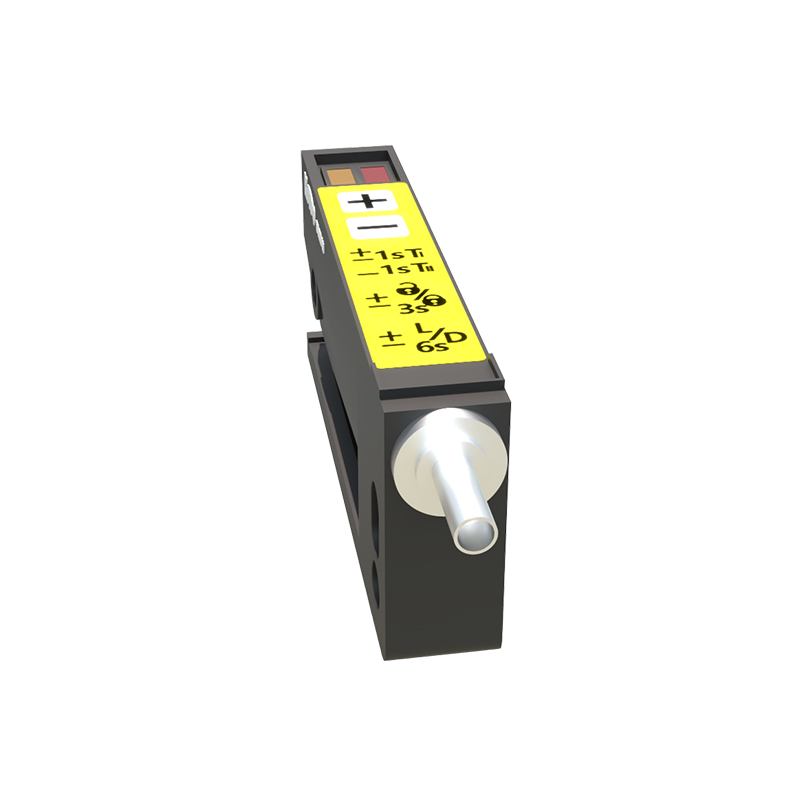
Turck 48V photoelectric sensors are distinguished by a suite of technical features designed for industrial robustness. A primary advantage is the extended sensing range. The higher operating voltage allows for the use of more powerful LEDs or laser diodes, enabling precise detection of objects at distances that challenge lower-voltage sensors. Models are available with ranges exceeding 50 meters for certain through-beam types. Furthermore, these sensors often incorporate advanced housing materials, such as stainless steel or high-grade plastics with IP67, IP68, or IP69K ratings, providing exceptional resistance to dust, water, and high-pressure washdowns. Many variants feature an IO-Link communication interface, transforming a simple sensor into a smart device capable of transmitting process data, parameter settings, and diagnostic information (like lens contamination warnings) to the control system. The 48V supply also contributes to improved switching frequency, allowing for the detection of very fast-moving objects on production lines.
Application Scenarios in Modern Industry
The application spectrum for Turck's 48V photoelectric sensors is vast, covering nearly every sector of automation. In material handling and logistics, they are indispensable for precise package detection on high-speed conveyor systems, palletizing robots, and automated storage and retrieval systems (AS/RS). Their long range and reliability are critical for position sensing on large gantry cranes and automated guided vehicles (AGVs). In the automotive manufacturing sector, these sensors perform tasks such as weld nut detection, body-in-white positioning, and verifying the presence of components on assembly lines, where their immunity to sparks and electromagnetic interference is vital. The food and beverage industry benefits from the hygienic, washdown-ready designs for bottle/can counting, fill level control, and label detection. Additionally, in packaging machinery, they ensure accurate registration marks detection for cutting and sealing operations.
Installation, Wiring, and Integration Considerations
Proper installation is crucial to unlocking the full potential of 48V sensors. Turck designs often include versatile mounting options with adjustable brackets and alignment aids for simplified setup. Wiring is streamlined through the use of quick-disconnect M8 or M12 connectors, which are industry-standard and color-coded for easy identification. When integrating into a 48V DC system, it is essential to verify the power supply unit's capacity to handle the inrush current of all connected sensors. While these sensors offer superior noise immunity, best practices dictate routing sensor cables separately from high-power AC lines to prevent any potential coupling. The integration with PLCs is typically straightforward, utilizing PNP (sourcing) or NPN (sinking) output configurations compatible with 48V control inputs. For IO-Link enabled sensors, a master module is required to facilitate the digital communication channel alongside the standard switching signal.
Comparison with 24V DC Sensor Systems
Choosing between 24V and 48V systems involves a careful analysis of application needs. The 48V platform, as utilized by Turck, offers clear benefits in specific scenarios. The most pronounced advantage is the reduced voltage drop over identical cable lengths and gauges compared to 24V systems. This allows for longer cable runs between the sensor and the controller without sacrificing signal strength, which can lower installation costs by reducing the need for additional junction boxes or local power supplies. The available output current is generally higher, enabling the direct switching of small relays or indicators without an intermediate amplifier. However, 24V systems remain the most ubiquitous and are perfectly adequate for a majority of standard applications with shorter distances. The decision often hinges on the plant's existing electrical infrastructure, the required sensing distance, and the need for advanced features powered by the extra voltage headroom.
Maintenance, Diagnostics, and Longevity
Turck 48V photoelectric sensors are engineered for minimal maintenance and high longevity. Key to this is the robust construction that withstands vibration, mechanical shock, and temperature extremes. Diagnostic capabilities, especially in IO-Link models, provide proactive maintenance alerts. The sensor can monitor its own operating parameters, such as internal temperature, supply voltage stability, and received signal strength. A gradual decrease in received light intensity, often due to lens fouling, can be reported before it causes a failure, allowing for scheduled cleaning rather than unscheduled downtime. LED status indicators provide immediate visual feedback on power, output state, and fault conditions. To ensure long-term reliability, periodic checks should include verifying the cleanliness of the optical lens, ensuring secure electrical connections, and confirming the mechanical mounting integrity. The solid-state design, with no moving parts in the sensing element, contributes to a typical operational life measured in millions of switching cycles.