Understanding the Core Principle of Enameled Wire in Sensing
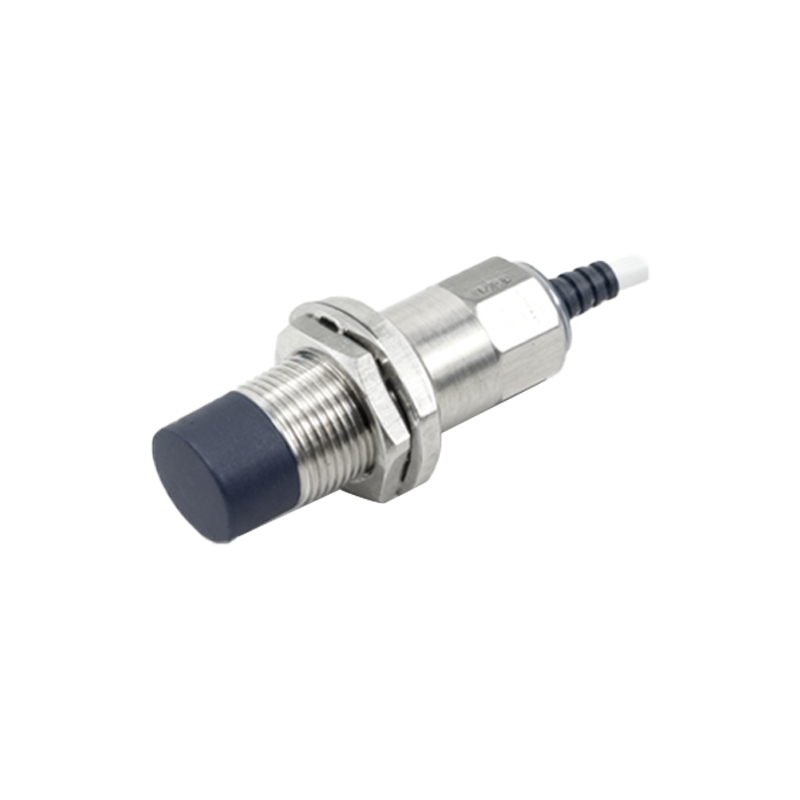
The sensitivity of a proximity sensor is fundamentally governed by the efficiency of its inductive coil. Enameled wire, a copper or aluminum conductor insulated with a thin, uniform polymer film, serves as the primary material for winding this coil. The key to its performance lies in the wire's ability to form dense, precise windings. A higher number of turns in a given volume increases the coil's inductance and the strength of the electromagnetic field it generates. The enamel insulation, typically polyurethane, polyamide, or polyester-imide, is crucial. It must be thin yet robust to prevent inter-turn short circuits while maximizing the copper-to-coil volume ratio. This allows for a more compact and powerful coil assembly, directly influencing the sensor's ability to detect smaller or more distant metallic objects with greater reliability.
Factors Directly Impacting Sensor Sensitivity
Several parameters of the enameled wire itself are critical levers for tuning sensitivity. First, the wire gauge (AWG) determines the number of turns possible. Finer wires enable more turns, boosting inductance but increasing DC resistance, which can lead to heat generation. Engineers must balance this trade-off. Second, the quality and consistency of the enamel coating are paramount. Any variation in insulation thickness can create weak spots, leading to potential breakdown under high-frequency operation, which introduces noise and reduces signal clarity. Third, the thermal class of the enamel (e.g., Class 155, Class 180) ensures the coil maintains its integrity under operational temperature rises, preventing degradation of sensitivity over time. Finally, the winding technique—whether layer-wound, random-wound, or precision-wound—affects the parasitic capacitance and the uniformity of the electromagnetic field.
Optimizing Wire Selection for High-Frequency Operation
Modern inductive proximity sensors often operate at high frequencies to achieve fast response times and detect non-ferrous metals. At these frequencies, skin effect and proximity effect become significant. The skin effect causes current to flow predominantly near the conductor's surface, effectively reducing the cross-sectional area and increasing AC resistance. Using enameled wire with a finer strand construction (Litz wire) can mitigate this, maintaining low AC resistance and preserving coil Q-factor, which is directly proportional to sensitivity. Furthermore, the dielectric properties of the enamel insulation influence parasitic capacitance between turns. A material with a lower dielectric constant minimizes this capacitance, reducing unwanted resonant effects and allowing the sensor to operate more stably at its designed frequency, thereby enhancing sensitivity and accuracy.
The Role of Advanced Enamel Formulations
Recent advancements in magnet wire technology offer direct paths to sensitivity improvements. Self-bonding enameled wires, coated with an adhesive layer that fuses during curing, create a rigid, monolithic coil structure. This eliminates micro-vibrations between turns that can generate electrical noise, resulting in a cleaner signal from the sensing oscillator. For applications in extreme environments, wires with nano-composite or ceramic-filled enamel provide superior dielectric strength and thermal conductivity. This allows the coil to handle higher drive currents without insulation failure, enabling the generation of a stronger magnetic field. Additionally, the development of ultra-fine enameled wires with diameters below 0.05mm opens possibilities for micro-sensors with exceptionally high spatial resolution and sensitivity in miniaturized packages.
Practical Design Considerations and Trade-offs
Achieving optimal sensitivity is an exercise in system design. While maximizing turns increases inductance, it also raises the coil's impedance, which may require matching with the sensor's oscillator circuit. The choice between copper and aluminum enameled wire presents another trade-off: copper offers superior conductivity for higher sensitivity, while aluminum reduces cost and weight. The physical construction must also account for the target object's material, size, and the required sensing distance. A well-designed housing that shields the enameled wire coil from external electromagnetic interference (EMI) is as critical as the coil itself. Ultimately, the goal is to select an enameled wire specification that delivers the highest possible signal-to-noise ratio from the induced eddy currents in the target, ensuring reliable activation at the maximum specified range.
Testing and Validation of Sensitivity Performance
Validating the sensitivity of a sensor built with enameled wire involves rigorous testing. Standard tests measure the operational switching distance (Sn) for standardized test pieces under specified voltage and temperature conditions. However, to truly assess the wire's contribution, engineers monitor parameters like the oscillator's amplitude shift or frequency shift when a target approaches. Consistency in sensitivity across production units heavily depends on the uniformity of the enameled wire's dimensions and insulation. Automated winding equipment and in-process electrical testing, such as surge tests and continuity checks, are essential to ensure every coil meets the designed sensitivity specification.