Introduction to Photoelectric Sensing Technology
Photoelectric sensors are indispensable components in modern industrial automation, offering non-contact detection of objects based on the modulation of a light beam. These devices operate by emitting a light beam—typically from an LED or laser source—and detecting changes in the received light intensity caused by the presence or absence of a target object. The core principle relies on the interaction between the emitted light and the sensing target, or "sensing flag" as it is sometimes called. This technology provides superior precision, long sensing ranges, and fast response times compared to many other sensing methods, making it ideal for applications like object counting, positioning, and quality inspection on high-speed production lines.
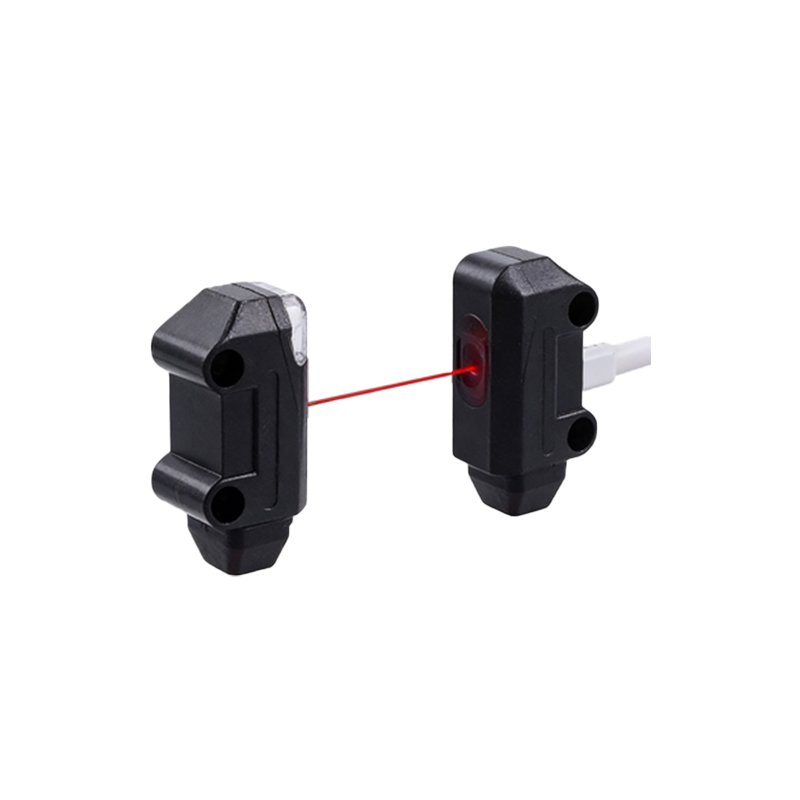
Fundamental Operating Modes
Photoelectric sensors function in three primary modes, each suited for different environmental conditions and target types. The through-beam (or opposed) mode uses separate, aligned emitter and receiver units. An object is detected when it interrupts the light beam traveling between them. This mode offers the longest sensing distance and highest reliability. The retro-reflective mode employs a single housing containing both emitter and receiver, utilizing a reflector to bounce the light beam back. Detection occurs when a target breaks this reflected beam. Finally, the diffuse-reflective (or proximity) mode also uses a single unit, but it detects light reflected directly off the target object itself. This mode is highly versatile but has a shorter sensing range and can be influenced by the target's color and surface texture.
The Critical Role of Sensing Targets
The performance of a photoelectric sensor is profoundly influenced by the characteristics of the sensing target. A sensing target, or sensing flag, is the specific object or surface designed to reliably interact with the sensor's light beam. Key material properties include reflectivity, color, surface finish, and size. Highly reflective, light-colored, and smooth targets provide the strongest return signal. For diffuse sensors, a matte white surface is often ideal. In contrast, dark, matte, or transparent materials like black rubber or clear glass can be challenging to detect. For through-beam and retro-reflective modes, the target simply needs to be opaque enough to interrupt the beam effectively. Engineers often specify standardized sensing flags made of materials like polished aluminum or with special retro-reflective tape to ensure consistent, reliable operation in critical applications.
Selecting the Right Sensor and Target Combination
Choosing the optimal pairing requires a systematic analysis of the application. First, define the target's properties: material, color, size, and expected movement. For small, fast-moving, or low-reflectivity targets, a focused, high-speed through-beam sensor might be necessary. For detecting objects on a conveyor regardless of color, a diffuse sensor with background suppression technology can be effective. The operating environment is equally crucial; factors like ambient light, dust, fog, or temperature extremes can degrade performance. In such cases, sensors with modulated infrared light, polarized filters, or ruggedized housings (IP67/IP69K) are selected. The sensing target may also need modification, such as applying a high-contrast sticker or using an actuator flag of a known size and reflectivity to trigger the sensor predictably.
Advanced Features and Specialized Applications
Modern photoelectric sensors incorporate advanced features to solve complex detection challenges. Background suppression sensors can precisely detect an object within a defined range, ignoring more distant surfaces. Color sensors differentiate targets based on RGB values, while luminescence sensors detect materials that glow under UV light. Fiber optic sensors, which use flexible light guides, allow sensing in extremely tight spaces or hostile environments. For sensing targets, specialized solutions include precise U-shaped flags for rotary encoder applications, retro-reflective tapes for long-range detection, and even custom-shaped targets for unique mechanical interactions. In packaging, sensors detect transparent films; in electronics assembly, they verify component presence with micron-level accuracy.
Installation, Alignment, and Troubleshooting
Proper installation is paramount for reliable operation. Sensors must be securely mounted to minimize vibration, and the sensing path must be kept clear of obstructions. Precise alignment is critical for through-beam and retro-reflective types; built-in alignment indicators or pilot beams simplify this process. For diffuse sensors, the sensing distance must be carefully set relative to the target. Common issues include false triggers from reflective backgrounds, which can be mitigated by adjusting the sensor angle or using a sensor with polarization. Dirt accumulation on lenses or reflectors is a frequent cause of failure, necessitating regular maintenance. A systematic troubleshooting approach involves verifying power, checking alignment, inspecting the target, and using an output indicator to confirm the sensor's switching state.
Future Trends and Integration
The evolution of photoelectric sensing is tightly linked with Industry 4.0. The next generation of sensors features integrated IO-Link communication, providing digital data on parameters like signal strength, operating hours, and internal temperature for predictive maintenance. Miniaturization continues, enabling their use in increasingly compact machinery. Furthermore, sensor intelligence is advancing, with some models capable of simple edge computing, like tracking object speed or length. The design of sensing targets is also becoming more sophisticated, often integrated directly into moving parts using 3D-printed materials with optimized optical properties. As systems become more interconnected, the humble photoelectric sensor and its target remain a fundamental, yet increasingly smart, node in the automated factory floor.