Introduction to PM-L25 Photoelectric Sensors
The PM-L25 photoelectric sensor represents a cornerstone technology in modern industrial automation and control systems. As a compact, versatile, and highly reliable device, it plays a critical role in object detection, positioning, and counting across a vast array of manufacturing and processing environments. Operating on the fundamental principle of converting light signals into electrical outputs, the PM-L25 offers a robust solution for applications demanding precision and durability. Its design typically incorporates an infrared LED light source and a phototransistor receiver, enabling non-contact detection of objects regardless of their material composition—be it metal, plastic, wood, or glass. The sensor's ability to function in challenging conditions, including areas with dust, vibration, or varying ambient light, makes it an indispensable tool for engineers seeking to enhance operational efficiency and system reliability.
Core Operating Principles and Sensing Modes
Understanding the operational methodology of the PM-L25 is key to its effective application. Primarily, it utilizes three main sensing modes: through-beam, retro-reflective, and diffuse reflective. In the through-beam (or opposed) mode, the emitter and receiver are housed in separate units. An object is detected when it interrupts the light beam traveling from the emitter to the receiver. This mode offers the longest sensing distance and highest reliability for detecting even transparent or small objects. The retro-reflective mode employs a single housing containing both emitter and receiver, along with a separate reflector. Detection occurs when the object blocks the light beam reflected back from the reflector. The PM-L25 models often feature advanced technology to ignore shiny objects, preventing false triggers. Finally, the diffuse reflective mode detects objects by measuring the light reflected directly off the target's surface, making it ideal for applications where installing a reflector or a separate receiver is impractical.
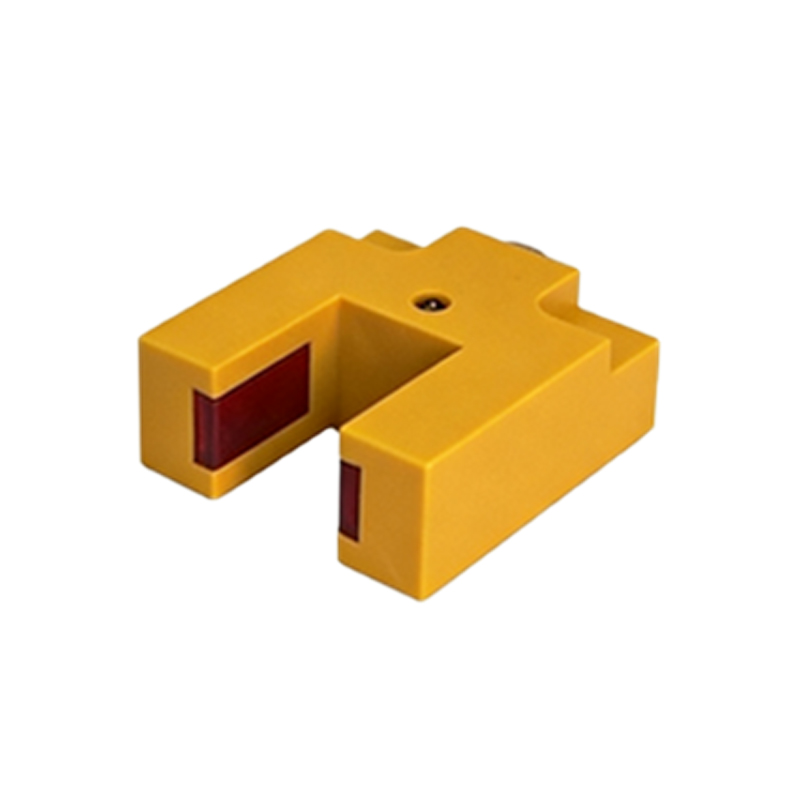
Key Technical Specifications and Performance Metrics
The performance of the PM-L25 sensor is defined by a set of precise technical specifications. Typical sensing distance ranges vary by mode: up to 15 meters for through-beam, 5 meters for retro-reflective, and 300mm for diffuse reflective models. The light source is usually a modulated infrared LED (e.g., 880nm wavelength), which minimizes interference from ambient light. The output configuration is a critical choice, commonly available as a solid-state NPN or PNP transistor output, often with a selectable light-on/dark-on operation mode. Response time is exceptionally fast, frequently below 1 millisecond, allowing for high-speed counting and detection on fast-moving production lines. The housing is engineered from robust materials like nickel-plated brass or stainless steel, providing high ingress protection ratings such as IP67, which ensures reliable operation despite exposure to water, oil, and dust. Connection is typically via a pre-wired cable or a quick-disconnect M8 or M12 connector.
Application Scenarios in Industrial Settings
The versatility of the PM-L25 photoelectric sensor lends itself to a multitude of industrial applications. In packaging machinery, it is extensively used for detecting the presence of boxes, bottles, or labels, ensuring proper filling and sealing processes. On assembly lines, it provides precise part positioning and verification, crucial for robotic pick-and-place operations. In material handling and logistics, these sensors count items on conveyors, control gate operations, and manage warehouse inventory systems. They are also fundamental in the automotive industry for verifying component placement and in the woodworking sector for detecting board edges. The sensor's robustness makes it suitable for harsh environments like foundries or food and beverage plants, where it can withstand washdown procedures and temperature fluctuations.
Installation, Alignment, and Calibration Best Practices
Correct installation is paramount for optimal PM-L25 performance. Engineers must carefully consider the mounting location, ensuring a stable platform free from excessive vibration. For through-beam sensors, precise alignment of the emitter and receiver is essential; built-in alignment indicators or audible signals can greatly assist this process. For retro-reflective and diffuse types, the sensor should be mounted at the recommended distance and angle relative to the target. Environmental factors must be mitigated: using sensors with modulated light helps combat ambient light interference, while physical barriers or shades can protect the beam. Regular calibration checks are advised, especially in environments where buildup of dirt or debris on the lens could attenuate the light signal, potentially leading to detection failures. Many PM-L25 models feature a sensitivity adjustment potentiometer or teach-in function for fine-tuning the detection threshold on-site.
Troubleshooting Common Issues and Maintenance
Even with proper installation, occasional issues may arise. Common problems include failure to detect objects, intermittent operation, or constant output activation. Troubleshooting should begin with a visual inspection of the lens for contamination. Next, verify the power supply voltage and polarity. Checking the alignment for through-beam or retro-reflective setups is a critical step. For diffuse sensors, ensure the target object's color, texture, and size are within the sensor's specified capabilities, as highly absorbent or transparent materials can be challenging. Utilizing the sensor's stability indicator (if available) can help diagnose marginal signal conditions. Maintenance is generally minimal but should include periodic cleaning of the lens with a soft cloth and checking the integrity of cables and connectors. Keeping a log of operating conditions can help predict and prevent failures.
Advantages Over Alternative Sensing Technologies
The PM-L25 photoelectric sensor offers distinct advantages when compared to other proximity sensing technologies like inductive or capacitive sensors. Its primary benefit is the ability to detect non-metallic objects from a greater distance. Unlike inductive sensors, which only detect metals, photoelectric sensors can sense virtually any material. Compared to capacitive sensors, which are sensitive to material density and moisture, photoelectric sensors provide more consistent performance for solid object detection. The non-contact nature of the PM-L25 eliminates mechanical wear and tear, leading to a longer operational lifespan. Furthermore, the fast response time and flexibility in sensing modes provide design engineers with a adaptable solution that can be tailored to complex application requirements without physical contact with the target.
Future Trends and Integration with Industry 4.0
The evolution of sensors like the PM-L25 is closely tied to the advancement of Industry 4.0 and the Industrial Internet of Things (IIoT). Future iterations are expected to feature enhanced diagnostics, such as IO-Link communication, which allows for remote parameter setting, continuous condition monitoring, and predictive maintenance data reporting. This digital integration enables the sensor to communicate not just a simple on/off signal, but also data about its operating health, signal strength, and temperature, feeding into larger data analytics platforms. This connectivity transforms the PM-L25 from a simple detection device into an intelligent node within a smart factory network, contributing to overall equipment effectiveness (OEE) and reducing unplanned downtime through data-driven insights.