Introduction to Inductive Proximity Sensing Technology
Inductive proximity sensors are fundamental, non-contact detection devices widely employed in industrial automation. Their operation is based on the principle of electromagnetic induction. The core component is a coil wound around a ferrite core, which, when energized by an oscillator, generates a high-frequency electromagnetic field at the active sensing face. When a metallic target object enters this field, eddy currents are induced on the target's surface. These eddy currents draw energy from the oscillator circuit, resulting in a measurable change—typically a reduction in oscillation amplitude. This change is detected by a threshold circuit, which subsequently triggers a solid-state output switch. This robust operating principle makes them exceptionally reliable for detecting ferrous metals like steel and iron, and to a lesser extent, non-ferrous metals such as aluminum, brass, and copper, though with a reduced sensing range.
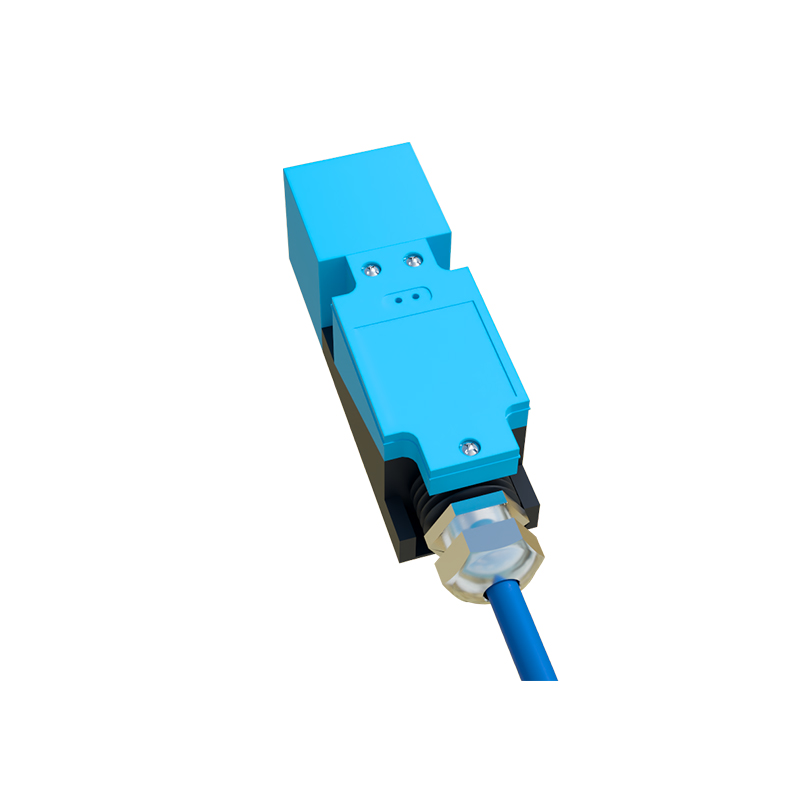
Key Performance Parameters and Specifications
Understanding the key performance specifications is critical for selecting the right sensor for an application. The nominal sensing distance (Sn) is a theoretical value under standardized conditions (typically mild steel). The effective or assured operating distance (Sr) is the practical switching distance that accounts for manufacturing tolerances and environmental factors, usually 70-90% of Sn. Hysteresis is the difference between the switch-on and switch-off points, expressed as a percentage of Sn; it prevents output chatter when a target is at the exact sensing limit. Repeat accuracy defines the sensor's consistency in detecting the same target under identical conditions, often within 1% of Sn. Switching frequency indicates how many on/off cycles the sensor can perform per second, crucial for high-speed counting or positioning tasks. Lastly, temperature drift specifies how much the sensing distance varies with ambient temperature changes, a vital consideration for harsh environments.
Factors Influencing Sensing Range and Accuracy
The performance of an inductive sensor is not absolute and is influenced by several target and environmental factors. The target material has the most significant impact. For ferrous metals, the sensing range is maximized. For non-ferrous metals, a correction or reduction factor (e.g., 0.4 for copper, 0.3 for aluminum) must be applied to the catalog sensing distance. The target size and shape also matter; the target should generally be at least equal to the sensor's face diameter for the rated range. A target that is too small or thin will reduce the effective range. Environmental conditions like extreme temperatures can affect internal components and the oscillator's stability. The presence of strong electromagnetic fields from nearby motors or welding equipment can cause interference or false triggering, necessitating proper shielding or increased mounting distances.
Output Types and Electrical Characteristics
Inductive sensors are available with various output configurations to interface with control systems like PLCs. The two primary categories are DC (typically 10-30V DC) and AC (typically 20-250V AC) models. Within DC sensors, three-wire designs are most common, offering NPN (sinking) or PNP (sourcing) transistor outputs. NPN outputs switch the negative (0V) line to the load, while PNP outputs switch the positive voltage line. Two-wire AC/DC sensors simplify wiring by connecting in series with the load but have a residual voltage drop when on. Analog output versions (0-10V or 4-20mA) provide a continuous signal proportional to the distance to the target, useful for positioning or monitoring applications. Key electrical specs to verify include operating voltage range, current consumption, and load current capacity.
Mechanical Design and Environmental Protection
The physical housing and construction determine the sensor's durability and suitability for specific installation conditions. Cylindrical threaded barrels (e.g., M8, M12, M18, M30) are standard, offering easy mounting in drilled and tapped holes. Rectangular or block-style housings provide flat sensing faces for specific mounting scenarios. The material, usually nickel-plated brass or stainless steel, must resist corrosion, chemicals, and physical impact. The Ingress Protection (IP) rating, such as IP67 or IP69K, is paramount. IP67 guarantees protection against dust ingress and temporary immersion in water, while IP69K indicates resistance to high-pressure, high-temperature washdowns, making it ideal for food and beverage or pharmaceutical industries. Some sensors also feature weld-field immunity, with special coatings or housings that resist spatter and strong magnetic fields.
Application-Specific Selection Guidelines
Selecting the optimal inductive sensor requires a systematic approach. First, define the target material, size, and required sensing distance, applying any necessary correction factors. Second, consider the required switching speed and accuracy for the task. Third