Understanding the Core Technology
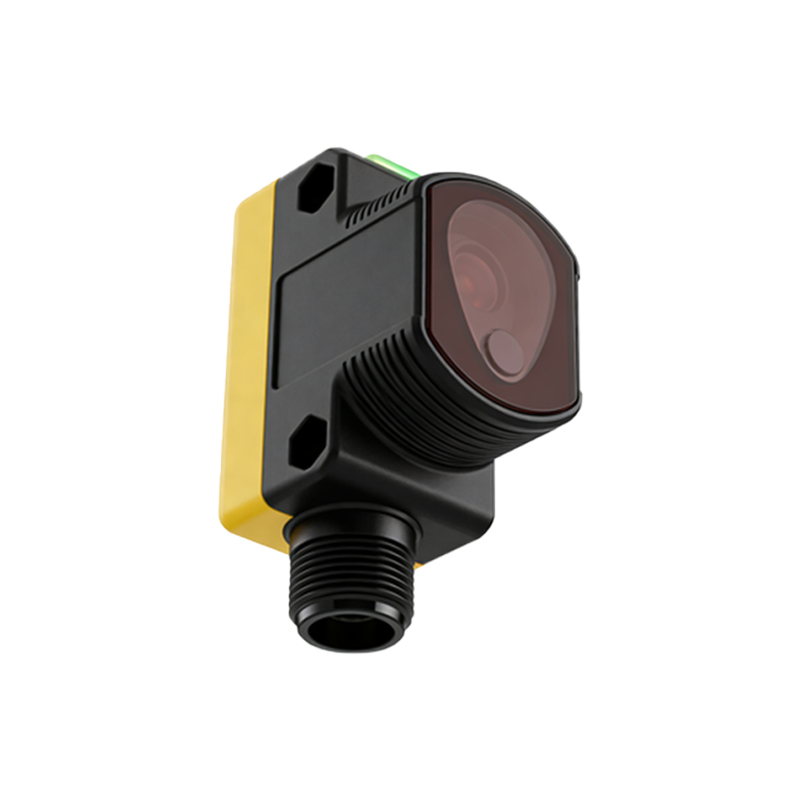
Single-point photoelectric sensors are fundamental components in modern industrial automation, serving as the eyes of a control system. Unlike area or array sensors, they detect the presence, absence, or distance of an object at one specific, focused point. The core operating principle involves a light emitter, typically an LED (Light Emitting Diode), and a receiver. The emitter projects a beam of light—visible red, infrared, or laser—towards the target. The receiver then detects changes in this light beam. These changes are categorized into three primary sensing modes: through-beam, retro-reflective, and diffuse reflective. In through-beam mode, the emitter and receiver are separate units; an object is detected when it interrupts the beam. Retro-reflective mode uses a single housing containing both elements and a reflector; detection occurs when the beam bouncing off the reflector is blocked. Diffuse reflective mode, the most common for single-point sensing, detects an object by measuring the light reflected directly from the object itself.
Key Sensing Modes in Detail
Each sensing mode offers distinct advantages. Through-beam sensors provide the longest sensing ranges and highest reliability, as they are less affected by the object's color, texture, or angle. They are ideal for precise detection in high-speed or demanding environments. Retro-reflective sensors offer a good balance of range and convenience with a single wiring point, though they can be fooled by highly reflective objects. Diffuse reflective sensors, with their single, compact housing, are versatile and easy to install. Advanced versions, known as background suppression or convergent beam sensors, use triangulation to detect objects only within a specific, defined range, ignoring the background. This makes them exceptionally reliable for detecting objects on conveyors or at fixed positions, regardless of color variations.
Critical Performance Specifications
Selecting the right single-point photoelectric sensor requires careful analysis of application parameters. Sensing range is paramount; it defines the maximum distance at which the sensor can reliably detect a standard target. Response time, measured in milliseconds or microseconds, determines how fast the sensor can react to a passing object, crucial for high-speed production lines. Light sources play a significant role: red LED is common and economical, infrared is for covert operation or to reduce ambient light interference, and laser diodes provide extremely small, precise spot sizes for detecting minute objects or precise edges. Environmental factors like ambient temperature, humidity, and exposure to dust, oil, or chemicals dictate the required housing material and ingress protection (IP) rating, such as IP67 for washdown environments.
Versatile Industrial Applications
The applications for single-point photoelectric sensors are vast and cross-industry. In packaging and material handling, they count bottles, detect label presence, and confirm case sealing. On assembly lines, they verify component insertion, check for part presence in nests, and control robotic pick-and-place operations. In the automotive sector, they ensure correct part positioning for welding robots and verify door and panel alignments. They are also integral to safety systems, forming part of safety light curtains or presence detection zones. Their simplicity, robustness, and reliability make them the go-to solution for basic object detection tasks that form the backbone of automated process logic.
Guidelines for Optimal Selection and Installation
Successful implementation hinges on proper selection and installation. First, clearly define the task: object detection, counting, or positioning. Choose the sensing mode based on required range, target characteristics, and environmental constraints. Always consider the target's properties—size, color, material, and surface finish—as these dramatically affect the sensor's performance, especially in diffuse mode. During installation, ensure precise alignment for through-beam and retro-reflective types. For diffuse sensors, account for the minimum sensing distance and avoid mounting them opposite highly reflective backgrounds. Utilize built-in sensitivity adjustments or teach-in functions to fine-tune the sensor for the specific target. Regular maintenance, including lens cleaning and periodic functional checks, is essential for long-term, trouble-free operation.