Introduction to the PT08 Metal Proximity Sensor
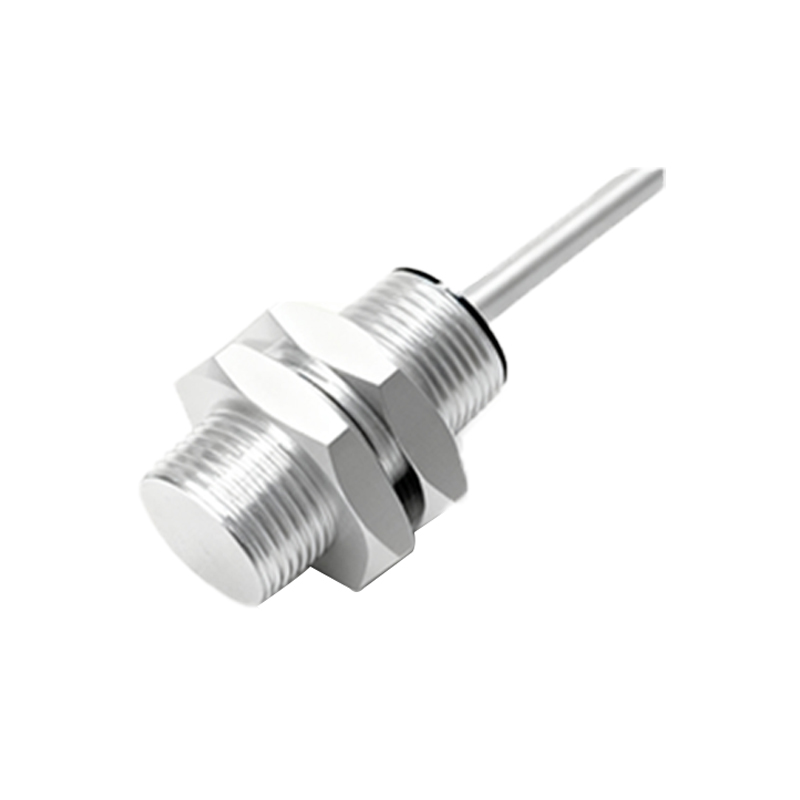
The PT08 metal proximity sensor represents a cornerstone in industrial automation, offering reliable non-contact detection of metallic objects. As an inductive proximity sensor, the PT08 operates on the principle of electromagnetic induction. When a metal target enters its sensing field, it causes a change in the oscillation amplitude within the sensor's coil. This change is detected by the internal circuitry, which subsequently triggers a solid-state output switch. The PT08 series is renowned for its robust construction, typically housed in a cylindrical M8 threaded stainless steel or nickel-plated brass body, making it suitable for demanding factory environments. Its compact size allows for easy integration into machinery with limited space, while its standardized design ensures compatibility with a wide range of industrial control systems.
Key Technical Specifications and Operating Principles
The operational performance of the PT08 sensor is defined by several critical specifications. The sensing distance, often standardized at 2mm for this form factor, is a nominal value under ideal conditions for a standard mild steel target. It is crucial to note that this distance can vary depending on the target material's properties, such as its size, shape, and specific metal type. Ferrous metals like iron and steel typically achieve the rated sensing distance, while non-ferrous metals like aluminum or copper may require a reduction factor. The PT08 commonly operates on a DC supply voltage, typically ranging from 10-30V DC, with both NPN (sinking) and PNP (sourcing) output configurations available to interface seamlessly with programmable logic controllers (PLCs) and other control units. Its switching frequency, indicating how quickly it can detect objects, is sufficiently high for most high-speed automation tasks.
Wiring and Installation Best Practices

Correct installation is paramount for optimal sensor performance and longevity. The PT08 sensor features a 3-wire or sometimes a 4-wire configuration. The standard wires are color-coded: brown for positive supply voltage (+V), blue for common negative (0V), and black for the switched output signal. For a 4-wire version, a second output (often white) provides a complementary signal. When installing, ensure the sensor is mounted securely using its M8 thread. Maintain the recommended lateral and axial clearance from surrounding metal structures to prevent false triggering due to side-metal effects. The sensing face should be kept clean from debris, oil, or metal chips, which could interfere with its electromagnetic field. Always refer to the manufacturer's datasheet for precise wiring diagrams and clearance requirements specific to the model variant.
Application Scenarios in Industrial Automation
The versatility of the PT08 metal proximity sensor makes it indispensable across numerous industrial sectors. A primary application is in position sensing on automated assembly lines, where it verifies the presence or absence of metal components, such as engine blocks, brackets, or fasteners. It is extensively used in packaging machinery to count metal cans or foil lids. In material handling, these sensors detect the position of metal pallets on conveyors or the end-of-travel limit for robotic arms. Machine tools employ PT08 sensors for tool breakage detection or to confirm the closed position of safety guards. Its resistance to environmental factors like dust, coolants, and vibrations makes it a reliable choice for these critical control and safety functions.
Advantages Over Other Sensing Technologies
Compared to other non-contact sensors like photoelectric or capacitive types, the inductive PT08 sensor offers distinct benefits for metal detection. Its primary advantage is immunity to common environmental disturbances. It is not affected by ambient light, dust, smoke, or opaque fluids that could obstruct a photoelectric beam. Unlike capacitive sensors, it specifically targets metals and is largely insensitive to non-metallic materials, human hands, or changes in humidity. The PT08's solid-state design, with no moving mechanical parts, ensures a long operational life with high repeatability and fast response times. This robustness translates to reduced maintenance costs and higher system reliability in harsh industrial settings.
Troubleshooting Common Issues and Maintenance
Even with their reliability, PT08 sensors can encounter issues. Common problems include failure to detect a target, constant output activation, or intermittent operation. Initial troubleshooting should always involve verifying the power supply voltage and polarity. Check for physical damage to the sensor body or cable. Ensure the target is within the specified sensing range and is of sufficient size and material. Accumulation of metallic swarf on the sensing face can cause permanent activation and must be cleaned regularly. Using an oscilloscope or a multimeter to monitor the output signal can help diagnose electrical faults. For persistent issues, swapping the sensor with a known-working unit is an effective diagnostic step. Preventive maintenance involves periodic inspection for physical integrity and cleanliness.