Introduction to Robotic Proximity Sensing
Proximity sensing is a fundamental capability for modern robotic systems, enabling them to perceive and interact with their immediate environment without physical contact. These sensors act as the robot's "skin," providing critical data about the presence, distance, and sometimes even the characteristics of nearby objects. This non-contact detection is essential for tasks ranging from simple obstacle avoidance to complex assembly and human-robot collaboration. By integrating proximity sensors, robots gain a layer of spatial awareness that significantly enhances their autonomy, safety, and operational precision. The evolution of these sensors has been driven by the demand for more responsive, flexible, and intelligent automation solutions across manufacturing, logistics, healthcare, and service industries.
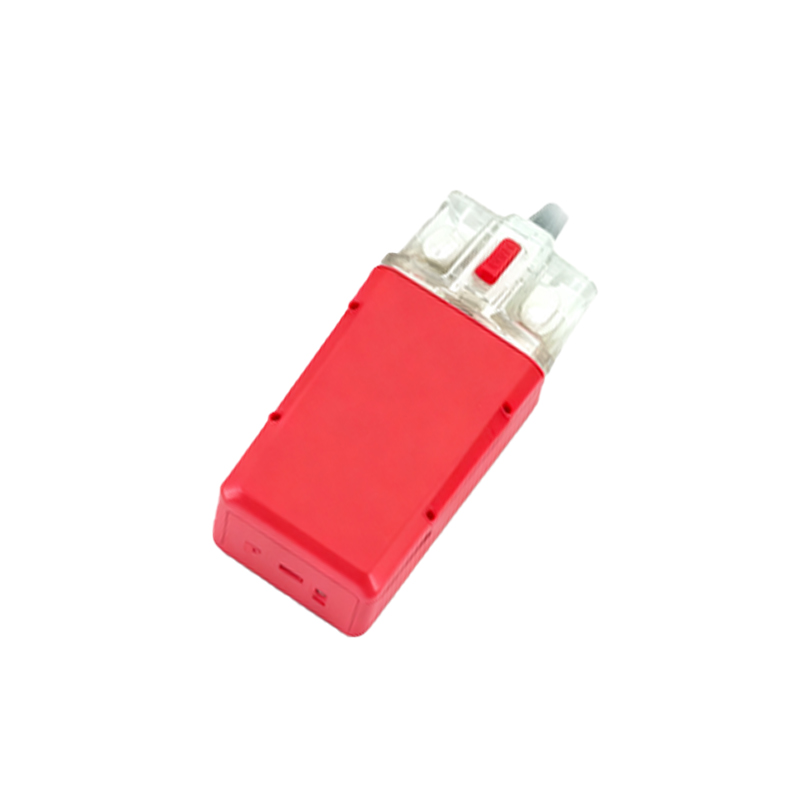
Core Technologies and Operating Principles
Several distinct technologies form the backbone of robotic proximity sensing, each with unique advantages. Inductive sensors are workhorses in industrial settings, detecting metallic objects through electromagnetic fields. They are highly reliable, resistant to environmental contaminants like dust or oil, and offer fast response times, making them ideal for position verification of metal parts. Capacitive sensors, conversely, can detect both metallic and non-metallic materials (plastics, wood, liquids) by measuring changes in capacitance. This versatility is valuable in material handling and level detection applications. Ultrasonic sensors operate by emitting sound waves and calculating distance based on the time-of-flight of the reflected echo. They are effective for longer ranges and can function in challenging environments with dust, smoke, or varying light conditions, commonly used in AGVs (Automated Guided Vehicles) for navigation and collision prevention.
Optical and Vision-Based Proximity Sensors
Optical proximity sensors, including infrared (IR) and laser-based systems, represent a highly precise category. Infrared sensors often use modulated light to measure reflection, providing good resolution for short to medium ranges. Laser rangefinders (LIDAR in some configurations) offer exceptional accuracy and are pivotal for high-precision tasks like bin-picking or 3D mapping. Photoelectric sensors, with through-beam, retro-reflective, or diffuse reflective modes, are ubiquitous for detecting object presence at various distances and through different media. The integration of simple vision sensors or ToF (Time-of-Flight) cameras expands this further, allowing not just for distance measurement but also for basic shape or profile recognition, bridging the gap between simple proximity detection and complex machine vision.
Magnetic and Specialized Sensor Types
Magnetic proximity sensors detect permanent magnets, typically used for sensing the position of cylinders or moving parts in machinery. They are extremely robust and immune to almost all environmental interference. Furthermore, specialized sensors like Eddy-current sensors provide high-resolution measurement for conductive targets, often used in precision displacement monitoring. The choice of sensor technology is a critical design decision, heavily dependent on the target material, required sensing range, environmental conditions (temperature, contaminants), required response speed, and the necessary resolution or accuracy.
Integration and System Implementation
The true power of proximity sensing is realized through seamless integration into the robot's control system. Sensors provide analog or digital signals to the robot's controller or a dedicated PLC (Programmable Logic Controller). Advanced implementations use sensor fusion, combining data from multiple sensor types (e.g., ultrasonic and infrared) to create a more robust and reliable perception of the environment. This is crucial for safety-rated systems, such as those enabling collaborative robots (cobots) to work alongside humans. Here, proximity sensors form part of a larger safety system that can trigger reduced speed or a complete stop based on the intruder's distance, governed by standards like ISO/TS 15066.
Key Applications in Industrial Automation
In industrial automation, applications are vast. On assembly lines, proximity sensors ensure parts are correctly positioned before a robotic arm performs an operation, such as welding or screwdriving. They are used for precise end-effector tooling control, detecting the grasp of a component. In material handling, they prevent collisions in dense robotic workcells and guide robots for accurate palletizing and depalletizing. Machine tending robots rely on them to know when a CNC machine door is open or if a raw billet is present for loading. Furthermore, they enable complex robotic grinding or polishing by maintaining a constant distance between the tool and the workpiece contour.
Challenges and Future Trends
Despite their maturity, challenges remain. Sensor selection can be complex, balancing cost, performance, and durability. Harsh environments with extreme temperatures, heavy vibration, or electromagnetic interference can affect reliability. Future trends point towards miniaturization, allowing sensors to be embedded directly into robot joints or grippers. The development of smarter sensors with onboard processing and IO-Link communication is rising, facilitating predictive maintenance and easier