Introduction to 103 Photoelectric Sensors
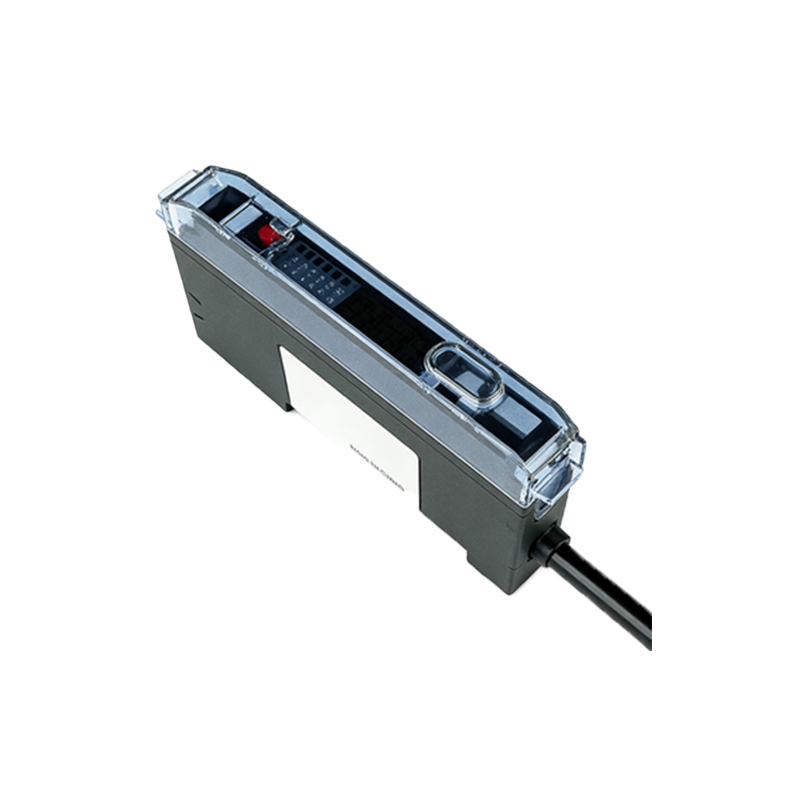
The 103 photoelectric sensor represents a cornerstone technology in modern industrial automation. These devices operate on the fundamental principle of converting light signals into electrical currents to detect the presence, absence, or position of objects without physical contact. Characterized by their compact design and robust construction, 103 series sensors are engineered to deliver reliable performance in demanding environments. They typically consist of an emitter, which projects a light beam, and a receiver that detects changes in the received light intensity. This non-contact detection method minimizes wear and tear, making them superior to mechanical limit switches for applications requiring high-speed operation or involving fragile materials. Their versatility allows for integration into diverse systems, from simple conveyor belt controls to complex robotic assembly lines.
Core Operating Principles and Modes
Understanding the operational modes of the 103 photoelectric sensor is crucial for optimal application. The three primary sensing modes are through-beam, retro-reflective, and diffuse (proximity). In through-beam mode, the emitter and receiver are separate units aligned opposite each other. An object is detected when it interrupts the light beam traveling from the emitter to the receiver. This mode offers the longest sensing range and highest reliability, ideal for precise detection in packaging or material handling. Retro-reflective mode utilizes a single housing containing both emitter and receiver, along with a reflector. The sensor detects an object when it blocks the beam reflected back from the reflector. Diffuse mode, also with a combined emitter and receiver, detects objects based on the reflection of light directly off the target's surface, making it suitable for detecting objects at shorter ranges without a separate reflector.
Key Technical Specifications and Features
The performance of a 103 photoelectric sensor is defined by its technical specifications. Key parameters include sensing range, response time, light source type, and output configuration. Common light sources are visible red, infrared, or laser LEDs, each chosen for specific environmental conditions and target properties. Response time, often in the millisecond range, determines how quickly the sensor can react to a change in state, a critical factor in high-speed production lines. Outputs are typically transistor-based (NPN or PNP) or relay-based, interfacing directly with PLCs (Programmable Logic Controllers) or other control systems. Many 103 models feature advanced functionalities like background suppression, which allows detection of an object while ignoring reflections from surfaces behind it, and teach-in programming for easy adjustment of sensitivity thresholds. Enclosure ratings, such as IP67, ensure protection against dust and water ingress.
Typical Industrial Applications and Use Cases
103 photoelectric sensors find extensive use across numerous industrial sectors. In automotive manufacturing, they are deployed for part verification on assembly robots, ensuring correct components are present before a welding or fastening operation. Within the packaging industry, these sensors count bottles on filling lines, detect labels on products, and control the positioning of boxes on conveyors. In material handling and logistics, they provide object detection for automated guided vehicles (AGVs) and palletizing systems. Furthermore, they are indispensable in the food and beverage sector for level detection in silos or detecting transparent films and glass containers, where their precise and hygienic non-contact operation is paramount. Their reliability in detecting various materials, including metal, plastic, wood, and glass, underscores their universal utility.
Installation, Alignment, and Best Practices
Proper installation is vital for the consistent operation of 103 photoelectric sensors. Mounting must be secure to prevent vibration-induced misalignment. For through-beam sensors, precise alignment of the emitter and receiver is essential; many units incorporate alignment indicators like LED signals that change color or blink when optimal alignment is achieved. Environmental factors must be carefully considered: ambient light from factory windows or other machinery can interfere with some sensors, necessitating models with modulated light sources that filter out constant ambient light. For detecting glossy or highly reflective objects, sensors with polarization filters can prevent false triggers. Regular maintenance involves keeping lenses clean from dust, oil, or debris and periodically verifying the sensing range and output function to prevent unexpected downtime in automated processes.
Troubleshooting Common Operational Issues
Even with robust design, 103 photoelectric sensors can encounter issues. Common problems include failure to detect objects, intermittent operation, or constant output activation. Initial troubleshooting should verify power supply voltage and correct wiring of the output load. For detection failures, check for physical obstructions, misalignment, or a dirty lens. If the sensor is in diffuse mode, ensure the target object is within the specified sensing distance and has adequate reflectivity. Intermittent signals are often caused by unstable mounting, electrical noise from nearby motors or drives, or fluctuating power supplies. Utilizing shielded cables and proper grounding techniques can mitigate electrical interference. Understanding the sensor's status indicators is key; a stable LED usually signifies normal operation, while a blinking pattern may indicate a specific fault condition as per the manufacturer's manual.
Advancements and Future Trends
The evolution of 103 series sensors continues, driven by Industry 4.0 and smart manufacturing demands. Modern iterations are incorporating IO-Link communication, a point-to-point serial connection that enables digital data exchange beyond simple on/off signals. This allows for remote monitoring of parameters like internal temperature, signal strength, and operating hours, facilitating predictive maintenance. Sensor fusion, combining photoelectric sensing with other technologies like distance measurement (LiDAR principles) or vision, is creating more intelligent and adaptive devices. Furthermore, miniaturization trends are producing even smaller form factors without compromising performance, enabling installation in space-constrained machinery. Enhanced connectivity ensures that the humble 103 photoelectric sensor remains a vital, intelligent component in the interconnected industrial ecosystem of the future.