Fundamental Operating Principle
Capacitive proximity sensors operate based on the principle of capacitance change. At their core, these sensors function as an open capacitor. The active face of the sensor typically contains two conductive electrodes, often arranged as concentric metal rings or plates, which form the sensing surface. These electrodes act as the two plates of a capacitor. An oscillator circuit generates a high-frequency electromagnetic field that emanates from these electrodes. When no target object is present, the sensor maintains a specific baseline capacitance. The key operational trigger occurs when a target object enters the detection field. The target object, regardless of its material composition, alters the dielectric properties of the space between and around the sensor electrodes. This intrusion changes the capacitance of the system. The sensor's internal circuitry is precisely tuned to detect this specific change in capacitance. Once the change exceeds a predefined threshold, the sensor's output state switches, signaling the presence of the object.
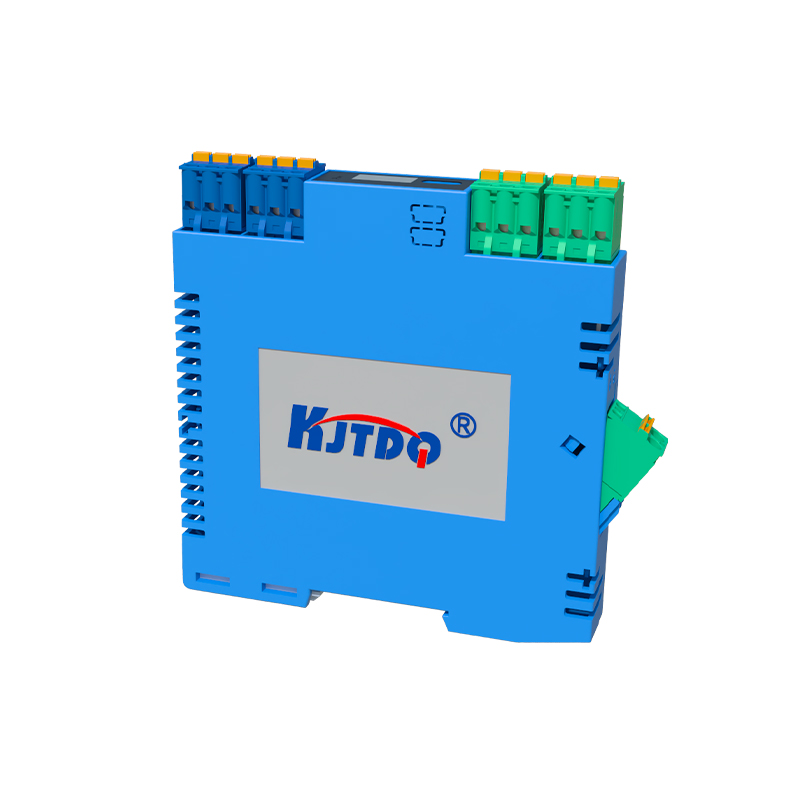
Key Components and Internal Circuitry
The internal architecture of a capacitive sensor is designed for sensitivity and stability. The primary component is the RC oscillator circuit, where 'R' stands for resistance and 'C' for capacitance. This circuit generates the oscillating field. A Schmitt trigger follows the oscillator, providing a clean, digital output signal by comparing the oscillator's amplitude to a reference level. When the capacitance increases due to a target, the oscillator's amplitude drops. The trigger detects this drop and activates the output switch, which can be a solid-state transistor (PNP or NNP) or a relay contact. Modern sensors incorporate compensation circuits to mitigate the effects of environmental changes like temperature drift or humidity. The sensing face is also crucial; it is often insulated with materials like PTFE or ceramic to prevent direct electrical contact and to allow for the detection of non-conductive materials.
Detection Capabilities: Beyond Metals
A significant advantage of capacitive sensors over their inductive counterparts is their ability to detect a vast range of materials. While inductive sensors are limited to metals, capacitive sensors can detect virtually any material that has a dielectric constant different from air. This includes non-conductive solids like wood, plastic, glass, cardboard, and ceramics, as well as liquids and granular materials such as powders, grains, or fluids inside non-metallic containers. The detection sensitivity is directly related to the target material's dielectric constant. Materials with a high dielectric constant (like water or ceramics) are easier to detect and can be sensed from a greater distance than materials with a low dielectric constant (like dry wood or certain plastics). This versatility makes them indispensable in packaging, food and beverage, chemical, and woodworking industries.
Factors Influencing Sensing Performance
Several critical factors determine the performance and reliability of a capacitive proximity sensor. The nominal sensing distance, or Sn, specified by manufacturers, is defined for a standard target (usually a grounded metal square). For non-metallic targets, the effective sensing distance is reduced and must be derated based on the material's dielectric constant. The size and shape of the target object also matter; a larger surface area parallel to the sensor face generally provides better detection. Environmental conditions pose challenges. Condensation, dust, or contaminant buildup on the sensor face can act as a permanent target, causing false triggering. Many sensors feature a potentiometer for sensitivity adjustment to compensate for such conditions or to tune for specific materials. Mounting is another consideration; flush-mounted sensors have a reduced sensing range but are immune to lateral interference from surrounding metal, while non-flush sensors offer longer ranges.
Typical Industrial Applications
The unique capabilities of capacitive sensors lead to their deployment in diverse applications. A common use is level detection for liquids, pellets, or powders in silos, hoppers, or tanks, often through non-metallic container walls. In packaging lines, they detect the presence of bottles (glass or plastic), cardboard boxes, or plastic lids. They are used to verify the fill level in transparent containers or the presence of a liquid in a tube. In the automotive industry, they can detect composite materials or rubber components. Another sophisticated application is in touch-sensitive interfaces, where the sensor detects a finger's touch through a glass or plastic panel. Their ability to ignore metals can also be an advantage in applications where a metal background must not trigger the sensor, requiring careful shielding and sensitivity tuning.
Selection and Installation Guidelines
Selecting the correct capacitive sensor requires a systematic approach. First, identify the target material and its dielectric constant to determine the required sensitivity and effective range. Consider the operating environment: will it be exposed to moisture, chemicals, or temperature extremes? This dictates the required housing material (e.g., stainless steel, PBT plastic) and ingress protection (IP) rating. The output type