Introduction to Magnetic Proximity Sensors
Magnetic proximity sensors are a fundamental category of non-contact sensing devices widely utilized in industrial automation and control systems. Unlike standard inductive or capacitive sensors, these devices specifically detect the presence of a magnetic field, typically generated by a permanent magnet. The core operating principle involves a sensing element, such as a reed switch, Hall-effect IC, or magnetoresistive element, that changes its electrical state when subjected to a sufficient magnetic flux density. This change is then processed by the sensor's electronics to provide a clean, digital output signal. The primary advantage of this technology is its ability to detect objects through non-magnetic barriers, making it ideal for applications requiring sealed or hygienic designs. Furthermore, magnetic sensors are generally immune to common environmental factors like dust, oil, and moisture that often plague other sensing methods, ensuring high reliability in harsh operating conditions.
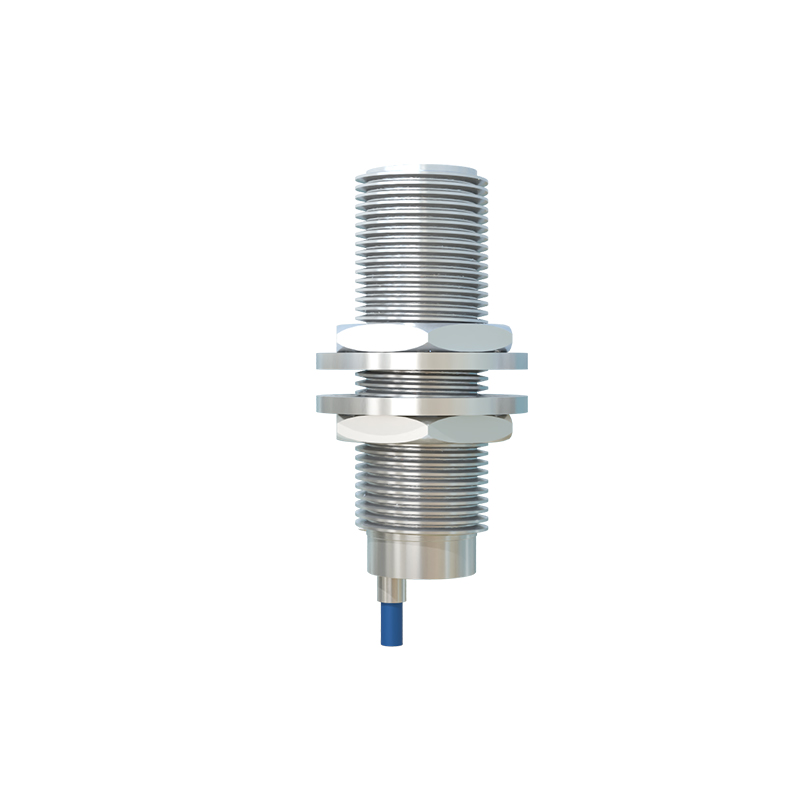
Reed Switch-Based Proximity Sensors
Reed switch sensors represent one of the oldest and most straightforward magnetic sensing technologies. The sensor contains a hermetically sealed glass capsule housing two ferromagnetic reeds that form a switch. When a magnet approaches, the reeds are magnetized, attracting each other and closing the electrical contact. When the magnet moves away, the reeds spring back to their open position. These sensors are prized for their simplicity, low cost, and ability to switch both AC and DC loads directly without complex electronics. They offer a very low contact resistance when closed. However, they have limitations, including relatively slow switching speeds, mechanical wear over billions of cycles (though this is very high), and sensitivity to physical shock. Common applications include door and window position sensing in security systems, liquid level detection using float magnets, and as safety interlocks.
Hall-Effect Proximity Sensors
Hall-effect sensors utilize a semiconductor-based transducer. When a current-carrying conductor is placed in a magnetic field perpendicular to the current flow, a voltage difference, known as the Hall voltage, is generated across the conductor. Integrated circuit (IC) versions amplify this signal and provide a digital or analog output. Hall-effect proximity sensors are solid-state, meaning they have no moving parts, leading to exceptional durability, virtually infinite operational life, and high switching frequencies (often in the kHz range). They can provide precise distance measurement with analog outputs or simple presence detection with digital switches. Key variants include unipolar (responding to one pole of a magnet), bipolar (responding to alternating poles), and omnipolar (responding to either pole). They are ubiquitous in automotive systems (crankshaft/camshaft position), brushless DC motor commutation, and industrial speed counting.
Magnetoresistive (MR) Proximity Sensors
Magnetoresistive sensors exploit the property of certain materials to change their electrical resistance in the presence of a magnetic field. Technologies include Anisotropic Magnetoresistance (AMR) and Giant Magnetoresistance (GMR). These sensors are highly sensitive and can detect very small changes in magnetic field strength and direction. Unlike Hall-effect sensors, which typically respond to field strength perpendicular to the chip surface, MR sensors are often sensitive to the field's direction in the plane of the chip, offering design flexibility. They provide excellent accuracy and stability over a wide temperature range. This makes them suitable for demanding applications requiring precise angular or linear position sensing, such as in advanced robotics, high-resolution rotary encoders, and current sensing where the magnetic field from a current-carrying conductor is measured.
Applications Across Industries
The robustness and versatility of magnetic proximity sensors drive their adoption across diverse sectors. In factory automation, they are used for cylinder position feedback, detecting the open/closed status of pneumatic or hydraulic pistons via magnets embedded in the piston. In the automotive industry, they monitor wheel speed for ABS systems, gearbox position, and throttle valve angle. Consumer electronics use miniature Hall sensors for laptop lid closure detection and smartphone flip covers. In heavy machinery and construction equipment, their sealed designs allow for reliable operation in dirty, wet, and high-vibration environments to monitor bucket position or boom angles. The food and pharmaceutical industries favor them for their cleanability and ability to sense through stainless steel walls, preventing product contamination.
Selection Criteria and Installation Considerations
Choosing the correct magnetic proximity sensor requires careful analysis of several parameters. The sensing distance, or switch point, must be specified, noting that it varies with magnet size, strength, and orientation. The sensor's output type (PNP/NPN transistor, analog, IO-Link) must be compatible with the controller (PLC). Environmental ratings like IP (Ingress Protection) and IK (Impact Protection) codes are critical for durability. Temperature range, supply voltage,