Introduction to Square Proximity Sensors
Square proximity sensors are a specialized category of non-contact detection devices widely utilized in industrial automation. Unlike cylindrical sensors, their square or rectangular housing offers distinct advantages in mounting and integration within machinery and production lines. These sensors operate by generating an electromagnetic field or beam; when a target object enters this field, it causes a change in the sensor's oscillation or signal, triggering an output switch. This fundamental principle allows for reliable detection of metallic or, in some models, non-metallic objects without physical contact, thereby minimizing wear and tear. The design is particularly favored in applications where space constraints or specific mounting configurations are present, providing a robust solution for position sensing, object counting, and end-of-travel detection in harsh environments.
Key Operational Principles and Technologies
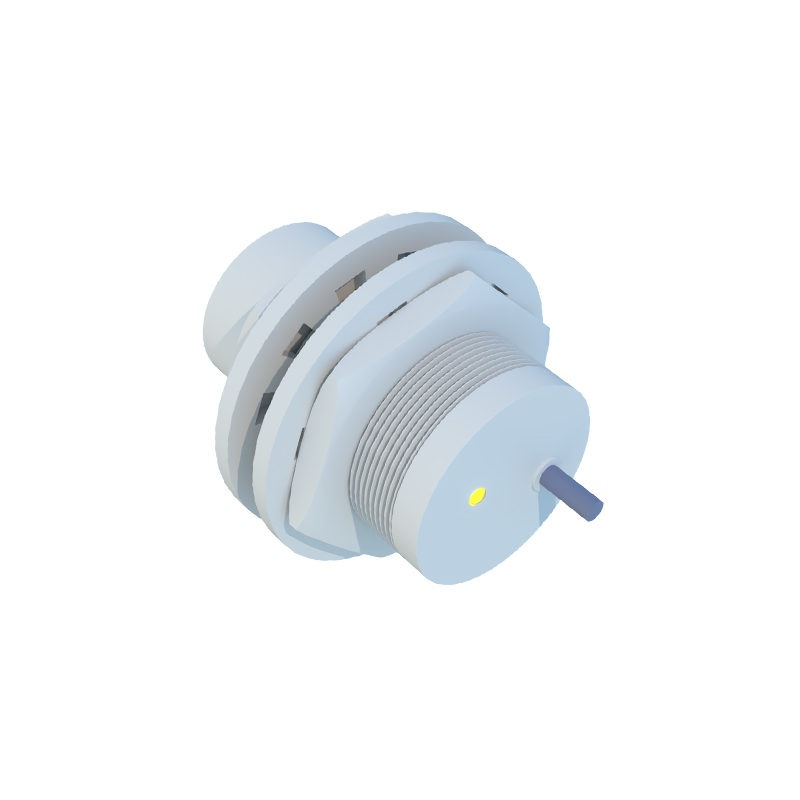
The core functionality of square proximity sensors hinges on several technologies, primarily inductive, capacitive, and photoelectric principles. Inductive square sensors are the most common, detecting ferrous and non-ferrous metals through eddy current losses. Their sensing range is typically shorter but highly precise for metal targets. Capacitive variants can detect both metallic and non-metallic materials, such as plastics, liquids, or granules, by measuring changes in capacitance. Photoelectric square sensors use a light beam, often infrared, to detect objects. The square housing effectively protects the internal electronic components and lens. Each technology is selected based on the target material, required sensing distance, environmental conditions like dust or moisture, and the necessary response speed, ensuring optimal performance for specific automation tasks.
Design and Construction Advantages
The square form factor provides significant mechanical and installation benefits. The flat surfaces facilitate easy mounting on brackets, machine frames, or enclosures using standard hardware. Many models feature pre-drilled mounting holes on multiple sides, offering flexibility in orientation. This shape also allows for a larger internal volume compared to cylindrical sensors of similar face dimensions, which can accommodate more complex circuitry, additional output configurations (like NPN, PNP, or analog outputs), or enhanced protection features. The housing is typically constructed from robust materials like nickel-plated brass, stainless steel, or high-grade plastics (PBT), ensuring high resistance to impacts, vibrations, oils, and coolants commonly found in industrial settings such as CNC machining, packaging, and material handling systems.
Performance Characteristics and Specifications
When evaluating a square proximity sensor, key specifications must be considered. The sensing distance, or nominal range, is critical and varies by technology and target material. Inductive models may range from 1 to 40 mm. Frequency response, or switching frequency, determines how quickly the sensor can detect objects passing by, which is vital for high-speed counting or sorting applications. Another crucial parameter is the hysteresis, which prevents output chattering when a target is at the edge of the sensing range. Environmental ratings are paramount; most industrial-grade square sensors boast an IP67 or IP68 ingress protection rating, making them dust-tight and capable of withstanding temporary or prolonged immersion in water. Operating temperature ranges, often from -25°C to 70°C, ensure functionality in diverse climates and processes.
Typical Application Scenarios in Industry
The application spectrum for square proximity sensors is vast. In automotive assembly lines, they verify the presence of components like pistons or gears. In packaging machinery, they detect the position of cartons or bottles on conveyors. Their flat design is ideal for embedding into machine structures where a cylindrical sensor would protrude unsafely or inefficiently. They are extensively used in palletizing systems to sense stack height, in robotic arms for end-effector position feedback, and in metalworking for tool breakage detection. The ability to function reliably near other metallic structures or in the presence of electromagnetic interference, thanks to embedded shielding (shielded models), makes them indispensable for complex, dense industrial layouts.
Selection Criteria and Installation Best Practices
Selecting the right square proximity sensor requires a systematic approach. First, identify the target material (steel, aluminum, plastic, etc.) to choose between inductive, capacitive, or photoelectric types. Next, determine the required sensing distance, ensuring a 10-20% safety margin from the maximum rated distance to account for real-world variances. Consider the output type needed to interface with the controller (PLC): a discrete DC switch (sinking or sourcing) or an analog signal (4-20 mA, 0-10 V). Electrical specifications like supply voltage (commonly 10-30 V DC) and current load must match the system. During installation, ensure the sensing face is parallel to the target approach direction for optimal range. Maintain proper clearance from adjacent metal surfaces as specified by the manufacturer to avoid