Introduction to Photoelectric Sensors
Photoelectric sensors are widely used in industrial automation for detecting the presence, absence, or position of objects. These devices operate by emitting a light beam, typically from an LED or laser diode, and measuring the changes in light intensity received by a photodetector. The core principle relies on the interaction between light and the target object, making them versatile for various applications such as object counting, level sensing, and safety systems. Their non-contact nature ensures minimal wear and tear, enhancing durability in harsh environments like manufacturing lines or packaging systems. Understanding the basic components—light source, photodetector, and signal processing unit—is essential for grasping how these sensors function effectively in real-world scenarios.
Working Principle Overview
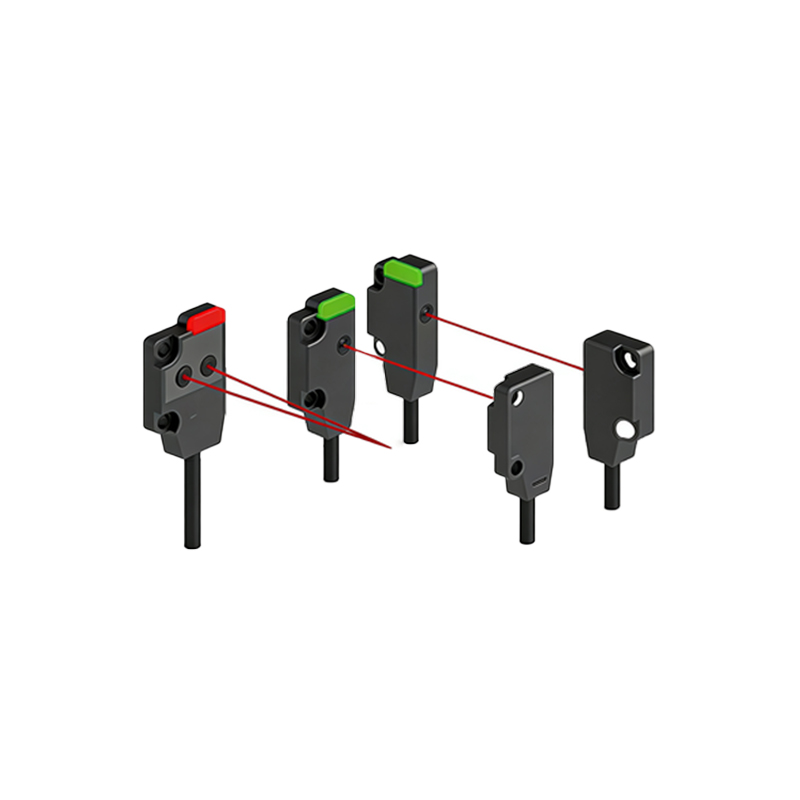
The fundamental operation of photoelectric sensors involves three main modes: through-beam, retro-reflective, and diffuse reflective. In through-beam mode, the emitter and receiver are separate units; an object is detected when it interrupts the light beam between them. Retro-reflective mode uses a single housing with both emitter and receiver, along with a reflector; detection occurs when the object blocks the reflected light. Diffuse reflective mode also employs a single housing, but it relies on light bouncing off the object itself. Each mode has distinct advantages: through-beam offers long-range and high accuracy, retro-reflective provides easier alignment, and diffuse reflective is suitable for varied surface types. The choice depends on factors like distance, object material, and environmental conditions.
Key Components and Diagram Analysis
A typical photoelectric sensor diagram includes several critical parts. The light source, often an infrared or visible LED, generates the beam. The photodetector, such as a phototransistor or photodiode, converts received light into an electrical signal. Signal processing circuitry amplifies and filters this signal to determine the object's presence. In diagrams, arrows indicate light paths, with dashed lines showing interrupted beams during detection. For instance, in a through-beam setup, the diagram depicts two separate units connected by a straight line representing the beam. Labels highlight components like lenses for focusing light, housings for protection, and output terminals for connecting to control systems. Analyzing these diagrams helps visualize how disruptions in light flow trigger sensor responses.
Light Emission and Detection Mechanisms
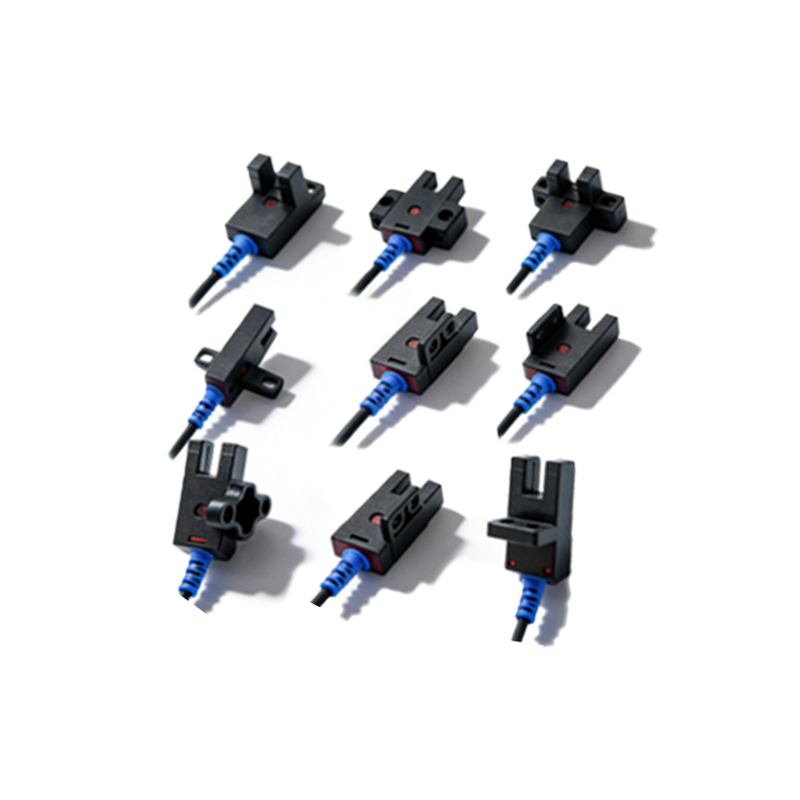
The emission process starts with the light source, which is modulated at a specific frequency to reduce interference from ambient light. This modulated beam travels through air or a medium, and upon hitting an object, it may be reflected, absorbed, or transmitted. The photodetector then captures the returning light, generating a current proportional to its intensity. In digital sensors, this current is compared to a threshold to produce a binary output (ON/OFF). Analog sensors provide continuous output based on light levels, useful for distance measurement. Diagrams often show waveforms to illustrate modulation and signal changes, emphasizing how filtering techniques eliminate noise from sources like sunlight or artificial lighting.
Application Examples with Visual Aids
In practical applications, photoelectric sensors are integral to automated systems. For example, in conveyor belts, diagrams show sensors mounted on sides to count products as they break the beam. In packaging, they ensure correct filling levels by detecting material presence in containers. Safety curtains use multiple beams to create protective barriers around machinery. Diagrams for these scenarios include annotations for installation angles, sensing ranges, and output connections. Visual aids like flowcharts can further explain the decision-making process: if light is blocked, the sensor sends a signal to a PLC (Programmable Logic Controller), triggering actions like stopping a motor or activating an alarm.
Advantages and Limitations
Photoelectric sensors offer significant benefits, including high speed, precision, and adaptability to diverse materials. They can detect small or transparent objects that other sensors might miss, thanks to sensitive light detection. However, limitations exist, such as susceptibility to environmental factors like dust, fog, or extreme temperatures, which can scatter or absorb light. Diagrams may include notes on shielding or enclosures to mitigate these issues. Additionally, reflective surfaces can cause false triggers, requiring careful calibration. Understanding these pros and cons through illustrative examples helps engineers select the right sensor type and configure them for optimal performance in specific industrial settings.
Maintenance and Troubleshooting Tips
Regular maintenance ensures long-term reliability of photoelectric sensors. Diagrams can guide users in cleaning lenses to prevent dirt buildup that attenuates light beams. Alignment checks are crucial, especially for through-beam and retro-reflective types; misalignment diagrams show how off-angle beams reduce sensitivity. Troubleshooting steps often involve using diagnostic LEDs or output indicators to verify operation. For instance, if a sensor fails to detect, a diagram might illustrate testing the light path with a reflective target or checking wiring connections. Keeping sensors away from direct sunlight or strong vibrations, as depicted in installation schematics, also minimizes failures and extends lifespan.
Future Trends in Photoelectric Sensing
Advancements in technology are enhancing photoelectric sensors with features like IoT connectivity and AI integration. Future diagrams may include wireless modules for data transmission to cloud systems, enabling predictive maintenance. Miniaturization allows for smaller sensors with higher resolution, suitable for robotics and medical devices. Enhanced materials, such as fiber optics, improve performance in extreme conditions. Diagrams could show smart sensors with embedded processors that analyze light patterns for object recognition. As industries move toward Industry 4.0, these innovations will make photoelectric sensors more intelligent and efficient, driving automation to new levels.