Understanding the Role of the Core in Proximity Sensing
The core is the heart of an inductive proximity sensor, fundamentally dictating its performance, range, and application suitability. Its primary function is to concentrate and direct the magnetic field generated by the sensor's internal coil towards the target area. When a metallic target enters this concentrated field, eddy currents are induced on the target's surface. These currents create their own opposing magnetic field, which the sensor detects as a change in the oscillation amplitude or frequency within the coil circuit. The efficiency of this energy transfer and field shaping is almost entirely dependent on the core's material properties and geometry. Selecting the wrong core material can lead to reduced sensing distance, instability in detection, temperature sensitivity, and premature sensor failure. Therefore, a deep understanding of core characteristics is not just beneficial but essential for designing reliable and effective proximity sensing solutions across diverse industrial environments.
Key Material Properties for Core Selection
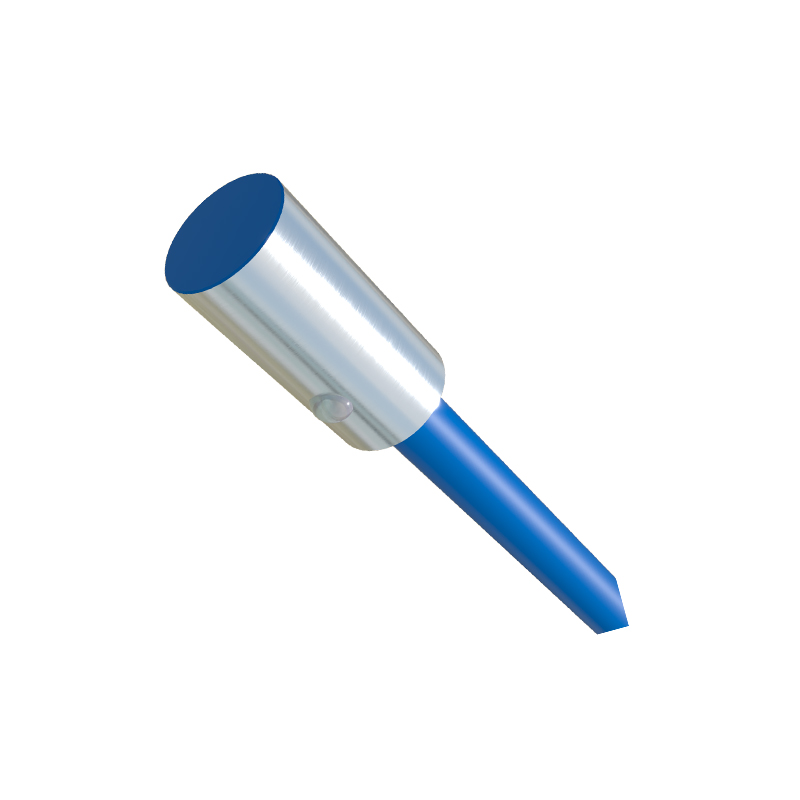
Several intrinsic material properties critically influence core performance. Permeability (µ) is arguably the most significant; it measures a material's ability to support the formation of a magnetic field within itself. High-permeability materials, like ferrites, allow for stronger, more focused fields, enabling longer sensing ranges and better sensitivity to smaller targets. Saturation flux density (Bsat) defines the maximum magnetic flux a material can handle before it loses its magnetic properties. For applications requiring detection of large or highly magnetic targets at close range, a high Bsat material like powdered iron is necessary to prevent core saturation and subsequent loss of signal. Core loss, comprising hysteresis and eddy current losses, converts magnetic energy into heat. High-frequency sensor applications demand materials with low core loss to maintain efficiency and prevent thermal runaway. Finally, temperature stability is crucial; the core's magnetic properties should not degrade significantly over the sensor's operational temperature range.
Common Core Materials and Their Applications
Engineers typically choose from a few established material families, each with distinct advantages. Ferrite cores, primarily made of manganese-zinc (MnZn) or nickel-zinc (NiZn) compounds, offer very high permeability and exceptionally low eddy current losses, making them the premier choice for high-frequency, short-to-medium range sensors. They are ideal for detecting non-ferrous metals like aluminum, copper, and brass. However, they have a relatively low saturation flux density and can be brittle. Powdered Iron cores consist of insulated iron particles compressed into shape. They provide high saturation flux density and excellent temperature stability, excelling in applications involving large ferrous targets (steel, iron) or where high DC bias is present. Their distributed air gap gives them a soft saturation characteristic. Laminated Silicon Steel cores, while less common in miniature sensors, are used in larger, high-power proximity systems where extreme ruggedness and high saturation levels are required, albeit at lower operating frequencies.
Core Geometry and Its Impact on Performance
The shape and size of the core are as important as its material composition. The core geometry directly shapes the magnetic field's profile—its reach, shape, and intensity. A pot core, for example, surrounds the coil, providing excellent shielding and a focused, axial field ideal for precise, short-range detection. A rod or slug core extends the magnetic field along its axis, offering a longer, more directional sensing range, suitable for tubular or cylindrical sensor housings. An E-core or U-core shape can help create a more uniform field or target a specific sensing zone. The physical dimensions also dictate the effective cross-sectional area and magnetic path length, which in turn influence inductance and the sensor's electrical characteristics. Designers must balance geometric efficiency with the mechanical constraints of the sensor housing and the required sensing field pattern for the application.
Environmental and Application-Specific Considerations
Core selection cannot be isolated from the operational environment. Temperature extremes are a primary concern. Ferrites may experience a steep decline in permeability above their Curie temperature, while powdered iron maintains more stable performance across a wider range. In corrosive or chemically aggressive environments, the core may require encapsulation or coating, which can slightly affect magnetic performance. For washdown or outdoor applications, resistance to moisture is critical. Mechanical stress and vibration can affect brittle ferrite cores, making powdered iron a more robust choice in high-vibration settings. Furthermore, the target material itself dictates core choice: detecting mild steel requires a different field concentration strategy than detecting stainless steel or aluminum. The required switching frequency (fast-moving targets) also pushes the selection towards low-loss materials like specific ferrite grades.
A Systematic Approach to Core Selection
A methodical selection process ensures optimal sensor design. First, clearly define the application parameters: target material (ferrous, non-ferrous, specific alloy), nominal sensing distance