Introduction to Proximity Sensing Technology
Proximity sensors are indispensable components in modern industrial automation, providing non-contact detection of objects within a defined sensing range. Their operation hinges on generating an electromagnetic field or beam and detecting changes caused by the presence of a target object. The core question for many applications, particularly in material handling and metal detection, is whether these reliable devices can effectively sense non-ferrous metals like aluminum. The answer is nuanced and depends heavily on the specific type of proximity sensor technology employed. Understanding the underlying principles of inductive, capacitive, and ultrasonic sensors is crucial for selecting the right device for aluminum detection tasks.
Inductive Proximity Sensors and Aluminum
Standard inductive proximity sensors are primarily designed to detect ferrous metals. They operate by generating a high-frequency oscillating electromagnetic field from a coil. When a conductive metal enters this field, eddy currents are induced on the metal's surface. For ferrous metals like iron and steel, these eddy currents are strong, and the metal's ferromagnetic properties cause a significant change in the oscillation amplitude, triggering the sensor's output. Aluminum, being a non-ferrous, conductive metal, also induces eddy currents. However, the effect is typically weaker because aluminum is not ferromagnetic. Consequently, the sensing distance for aluminum with a standard inductive sensor is substantially reduced—often to only 30% to 50% of the rated sensing distance for steel. For reliable detection, the aluminum target must be larger and positioned closer to the sensor face.
Specialized Inductive Sensors for Non-Ferrous Metals
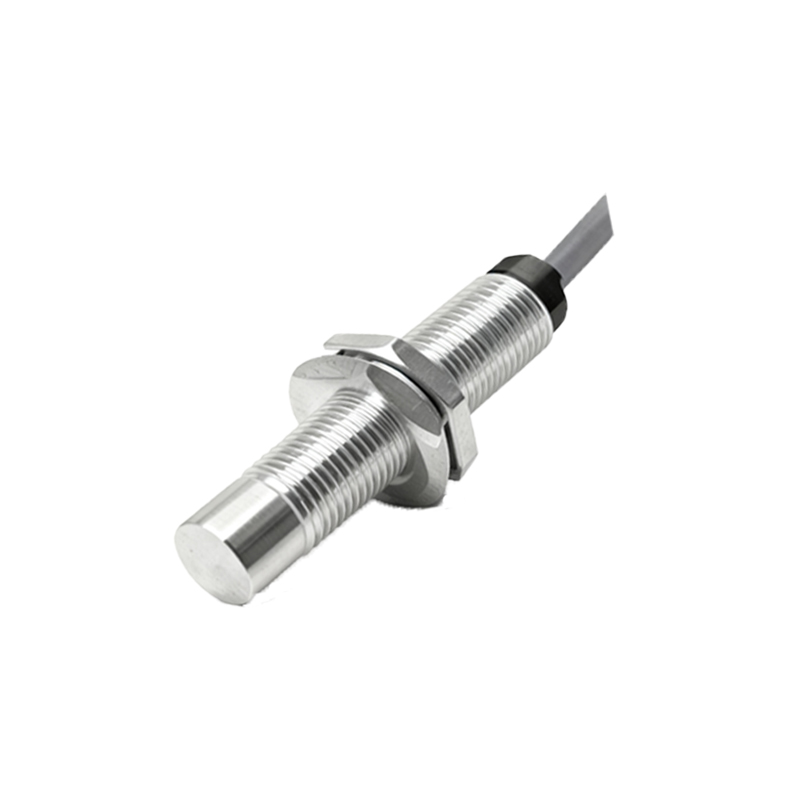
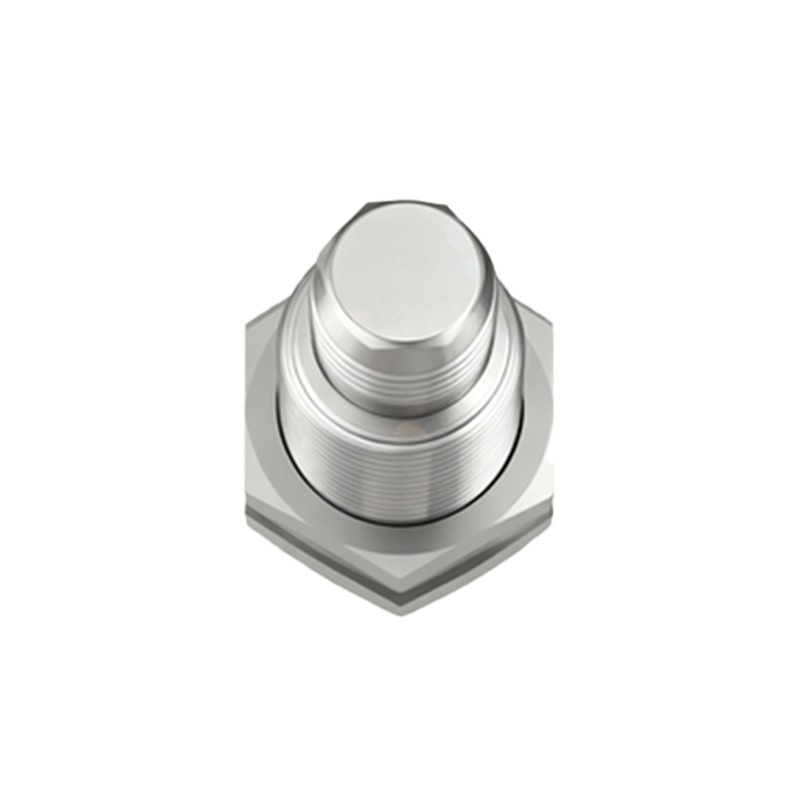
To overcome the limitations of standard models, specialized inductive proximity sensors are available for optimal non-ferrous metal detection. These include "All-Metal" or "Factor 1" sensors. They are specifically calibrated to provide a consistent sensing distance regardless of the target metal type—ferrous or non-ferrous. This is achieved through different internal oscillator designs and evaluation circuits that respond more uniformly to the eddy current losses in any conductive material. For critical applications involving aluminum, copper, or brass, specifying an "All-Metal" inductive sensor is the recommended practice. It ensures reliable detection at the sensor's published nominal range without requiring recalibration or adjustment for different metal types on a production line.
Capacitive Proximity Sensors as an Alternative
Capacitive proximity sensors offer a robust alternative for detecting aluminum, especially when the target is non-metallic or when other factors are present. These sensors function by detecting changes in capacitance. The sensor's active face forms one plate of a capacitor, with the target object acting as the other plate. The presence of any material with a sufficient dielectric constant (including metals, liquids, plastics, and wood) alters this capacitance, triggering the switch. Since aluminum is an excellent conductor, it causes a very pronounced change in capacitance, making it highly detectable. Capacitive sensors often have a longer effective range for aluminum compared to standard inductive sensors. They are particularly useful for detecting aluminum through thin non-conductive barriers, such as glass or plastic containers, which inductive sensors cannot penetrate.
Factors Influencing Detection of Aluminum
Several practical factors significantly impact the reliable detection of aluminum. The target object's size, thickness, and surface area are paramount; a larger, thicker piece of aluminum is easier to detect than a thin foil. The sensor's mounting and the presence of surrounding metals can cause shielding or interference effects, reducing effective range. Surface condition also matters; a clean, smooth surface provides better detection than a heavily oxidized or coated one, as oxidation can slightly reduce conductivity. For inductive sensors, the oscillation frequency plays a role; higher frequencies can sometimes improve sensitivity to non-ferrous metals. Engineers must always consult the sensor's technical datasheet, which typically provides derating or correction factors for various metals, including aluminum.
Ultrasonic and Other Sensing Technologies
Beyond inductive and capacitive technologies, ultrasonic proximity sensors are also highly effective for detecting aluminum and any other solid material. They operate by emitting high-frequency sound waves and measuring the time for the echo to return. The acoustic properties of aluminum ensure a strong, clear reflection, making it an ideal target. Ultrasonic sensors are not affected by the color, transparency, or conductivity of the material, only by its density and surface texture. They offer very long sensing ranges and can detect objects regardless of their metallic composition. However, they may be influenced by temperature gradients, air turbulence, and highly absorbent surfaces. For simple presence detection of aluminum parts, photoelectric sensors can also be used, relying on the reflectivity or interruption of a light beam.
Application Examples and Best Practices
In real-world industrial settings, detecting aluminum is common. Examples include counting aluminum