Introduction to Proximity Sensing Technology
Proximity switches and position sensors are fundamental components in modern industrial automation and control systems. These devices detect the presence or absence of an object without physical contact, providing reliable, wear-free operation critical for high-speed and repetitive tasks. The core principle involves generating an electromagnetic field or beam and detecting changes caused by a target object. This non-contact nature eliminates mechanical failure points, significantly enhancing system longevity and reducing maintenance costs. From assembly lines and robotic arms to safety interlocks and material handling, these sensors form the invisible nervous system of automated processes, ensuring precision, efficiency, and safety.
Key Types of Proximity Switches
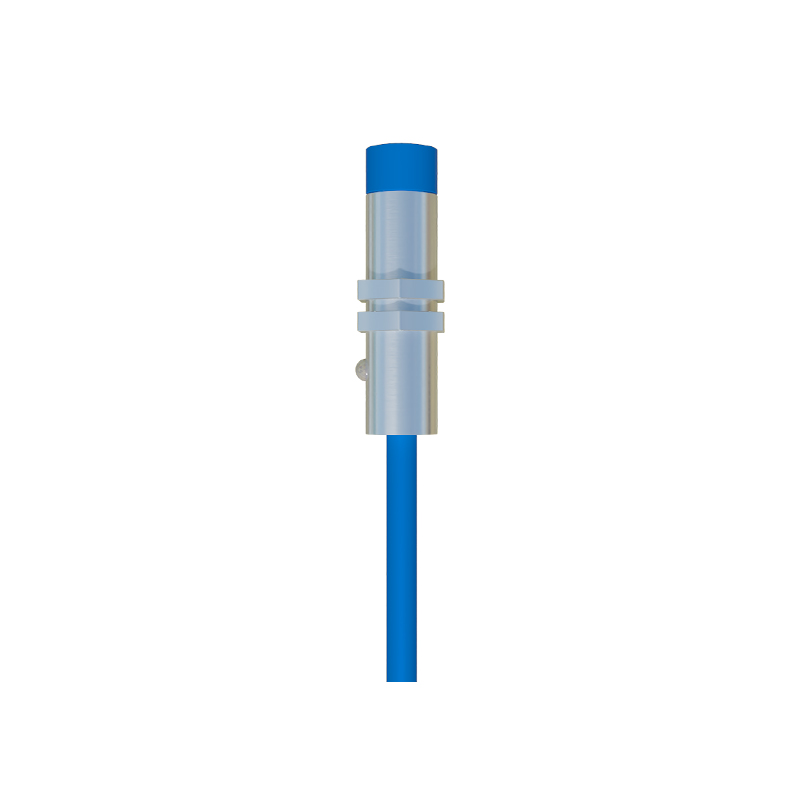
Several primary technologies dominate the proximity switch market, each suited to specific applications. Inductive proximity sensors are the most common, detecting metallic objects—typically ferrous metals like steel and iron—by disturbing an oscillating electromagnetic field. They are robust, immune to environmental contaminants like dust or oil, and ideal for machine automation. Capacitive proximity sensors, on the other hand, can detect both metallic and non-metallic materials (plastics, wood, liquids) by sensing changes in capacitance. Photoelectric sensors use a light beam (visible, infrared, or laser) and are excellent for long-range detection and sensing small objects. Ultrasonic sensors employ sound waves, making them effective for detecting objects of varying materials, colors, and transparency, as well as for distance measurement and level sensing in challenging environments.
Understanding Position Sensor Variants
While proximity switches typically provide a simple on/off signal, position sensors offer continuous feedback on an object's linear or angular displacement. Linear Variable Differential Transformers (LVDTs) are highly accurate devices for measuring linear position, using electromagnetic induction to produce an output voltage proportional to the displacement of a movable core. Rotary encoders, including incremental and absolute types, translate rotational motion into digital signals, providing critical data for motor speed and position control in CNC machines and robotics. Magnetostrictive position sensors offer high precision for hydraulic cylinder positioning by measuring the time delay of a torsional strain wave. Potentiometers, though contact-based, remain a cost-effective analog solution for less demanding applications.
Critical Selection Criteria for Engineers
Selecting the appropriate sensor requires a detailed analysis of the application parameters. The sensing range, or the maximum distance at which the sensor can reliably detect a standard target, is paramount. Environmental factors are equally crucial; engineers must consider temperature extremes, potential exposure to chemicals, moisture (IP rating), and electrical noise. The target material's properties—size, shape, and composition—directly influence the choice between inductive, capacitive, or photoelectric technologies. Output type is another key decision: PNP (sourcing) or NPN (sinking) transistor outputs for digital signals, analog outputs (4-20 mA, 0-10V) for proportional measurement, or IO-Link for smart, digital communication that provides diagnostics and parameterization.
Installation and Wiring Best Practices
Correct installation is vital for optimal sensor performance and longevity. Maintaining the specified mounting distances, especially between multiple sensors, prevents mutual interference. For inductive sensors, ensuring the correct approach direction relative to the sensing face and accounting for the reduction factor for different metals is essential. Wiring must adhere to manufacturer specifications, using shielded cables in electrically noisy environments and ensuring proper grounding to avoid electromagnetic interference. For DC sensors, careful attention to polarity is required. Implementing short-circuit protection and considering fail-safe wiring configurations enhances system reliability. Regular verification of the sensing distance under actual operating conditions is recommended during commissioning.
Advanced Applications and Industry 4.0 Integration
The role of proximity and position sensors is expanding with the advent of Industry 4.0 and the Industrial Internet of Things (IIoT). Smart sensors equipped with IO-Link communication provide not only switching signals but also detailed diagnostic data like operating temperature, signal strength, and contamination warnings, enabling predictive maintenance. In collaborative robotics (cobots), these sensors ensure safe human-machine interaction by precisely monitoring arm position and detecting unexpected intrusions. In automated guided vehicles (AGVs), arrays of sensors enable precise navigation and load handling. Furthermore, their integration into digital twin models allows for real-time process simulation and optimization, closing the loop between the physical and digital worlds for unprecedented control and efficiency.
Troubleshooting Common Issues
Even with proper selection and installation, sensors can encounter issues. False triggering is a frequent problem, often caused by electrical noise, incorrect grounding, or the presence of an unintended metal object in the sensing field. Using shielded cables, installing ferrite cores, and adjusting the sensitivity or hysteresis setting can mitigate this. Failure to detect a target may result from