Introduction to Photoelectric Sensors
Photoelectric sensors are essential components in modern industrial automation, utilizing light beams to detect the presence, absence, or distance of objects. These sensors operate by emitting a light signal—typically infrared, visible, or laser—and receiving the reflected or transmitted light to determine object characteristics. Their applications span across manufacturing, packaging, material handling, and safety systems, offering non-contact detection with high precision and reliability. The core principle involves a transmitter that projects light and a receiver that captures changes in light intensity, enabling real-time monitoring and control in dynamic environments.
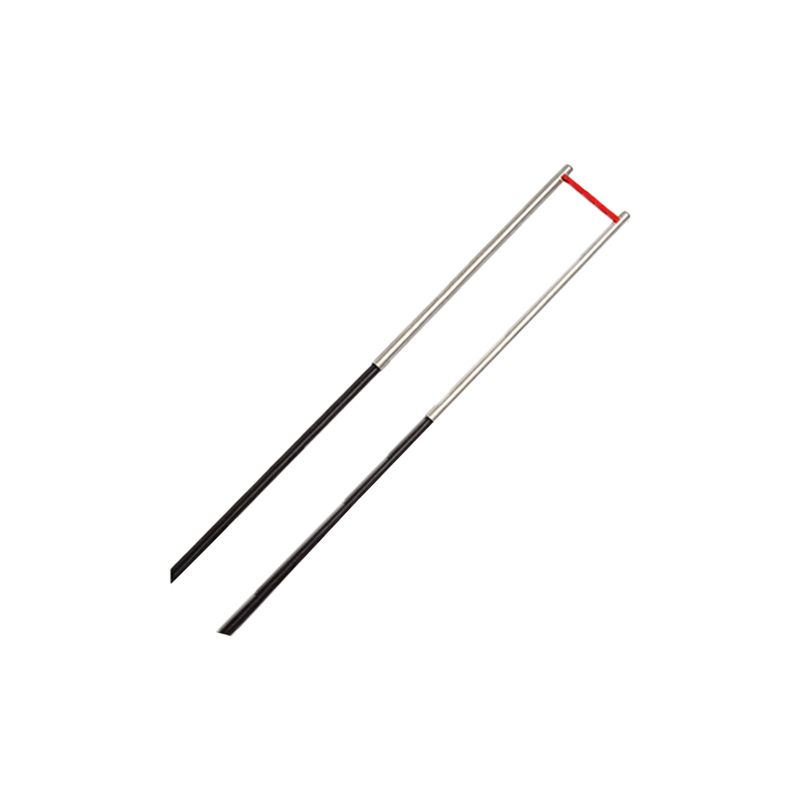
Through-Beam Photoelectric Sensors
Through-beam sensors, also known as opposed-mode sensors, consist of separate transmitter and receiver units positioned opposite each other. The transmitter emits a continuous or modulated light beam directly toward the receiver. When an object interrupts this beam, the receiver detects a drop in light intensity, triggering an output signal. This design provides long sensing ranges—often up to several meters—and high immunity to environmental factors like dust or ambient light. Common uses include object counting on conveyor belts, detecting large items in logistics, and safety curtains in machinery. However, installation requires precise alignment of the two units, which can be challenging in tight spaces.
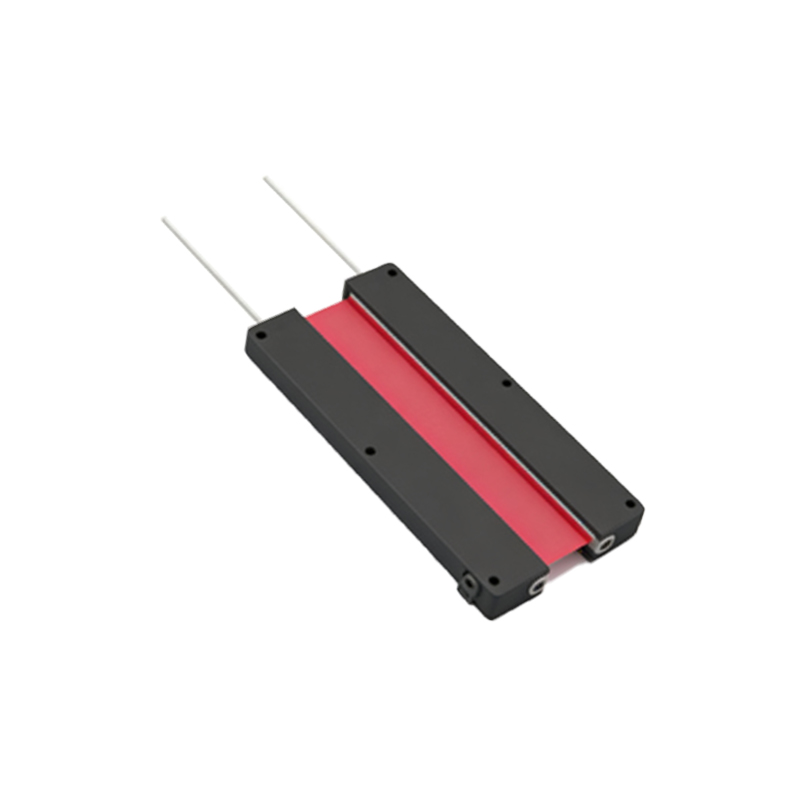
Retroreflective Photoelectric Sensors
Retroreflective sensors integrate the transmitter and receiver into a single housing, with a reflector placed opposite to bounce light back. The transmitter emits light toward the reflector, and the receiver captures the returned beam. When an object blocks the path, the sensor detects the absence of reflected light. These sensors offer moderate sensing distances, typically up to 10 meters, and simplify installation compared to through-beam types. They are ideal for detecting transparent or shiny objects, as some models use polarized filters to ignore false reflections. Applications include packaging line monitoring and door control systems. A limitation is potential interference from highly reflective surfaces nearby.
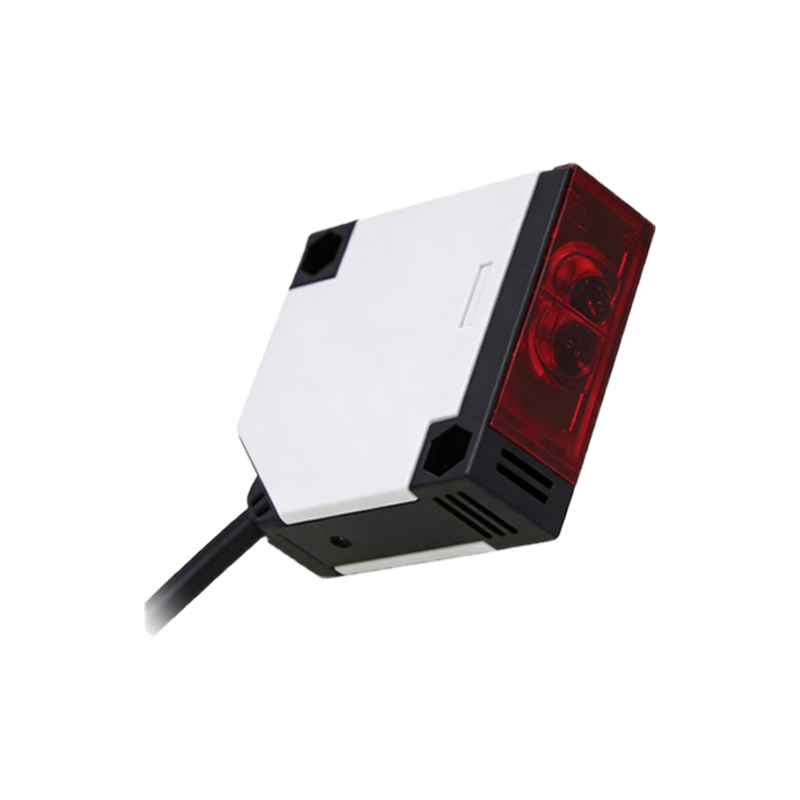
Diffuse Reflective Photoelectric Sensors
Diffuse reflective sensors, or proximity-mode sensors, combine the transmitter and receiver in one unit without an external reflector. The transmitter emits light that scatters off a target object, and the receiver detects the diffused reflection. Sensing range is shorter, usually under 1 meter, making them suitable for close-proximity detection. These sensors are versatile for identifying objects of varying colors and textures, such as in bottling plants or assembly lines. However, performance can be affected by object color and surface finish, as dark or absorbent materials may reduce reflectivity. Advanced models incorporate background suppression technology to ignore distant objects.
Background Suppression Sensors
Background suppression sensors are a specialized type of diffuse sensor that uses triangulation to measure distance precisely. By focusing on a specific range, they ignore objects beyond a set threshold, preventing false triggers from backgrounds like walls or machinery. This is achieved through dual receivers or optical systems that compare light angles. They excel in applications requiring exact positioning, such as detecting objects on pallets or controlling robotic arms. Sensing ranges vary from a few centimeters to meters, with high accuracy for contrasting environments. These sensors are particularly useful in logistics and automotive industries where reliable detection is critical.
Fiber Optic Photoelectric Sensors
Fiber optic photoelectric sensors separate the sensing head from the amplifier unit, using optical fibers to transmit light. The transmitter sends light through the fiber to a tip, where it interacts with the target, and the receiver analyzes the returned signal via another fiber. This design allows operation in extreme conditions—high temperatures, corrosive areas, or tight spaces—since only the small, durable tip is exposed. They come in through-beam, retroreflective, and diffuse types, with sensing ranges adapted by fiber configuration. Common applications include semiconductor manufacturing and food processing, where hygiene or space constraints are concerns. Installation flexibility is a key advantage, though fibers may require careful handling.
Laser Photoelectric Sensors
Laser photoelectric sensors utilize focused laser beams for high-precision detection over long distances. They can be configured as through-beam, retroreflective, or diffuse models, offering sensing ranges up to hundreds of meters with millimeter accuracy. The coherent light minimizes dispersion, making them effective in measuring small objects or exact positions, such as in electronics assembly or quality inspection. Advanced features include analog outputs for distance measurement and resistance to vibration. However, they are more expensive than standard LED-based sensors and may require safety precautions due to laser intensity. Industries like aerospace and pharmaceuticals often rely on them for critical tasks.
Selection Criteria for Photoelectric Sensors
Choosing the right photoelectric sensor depends on factors like sensing range, object properties, and environmental conditions. For long-range detection, through-beam or laser sensors are optimal, while diffuse types suit short-range applications. Consider object size, color, and reflectivity; for example, retroreflective sensors handle transparent items well. Environmental challenges such as dust, moisture, or temperature extremes may favor fiber optic or sealed models. Output types (digital or analog) and response time should align with system requirements. Always review manufacturer specifications for compatibility with industrial standards like IP ratings or CE marks to ensure durability and safety in operations.
Conclusion and Future Trends
Photoelectric sensors continue to evolve with advancements in technology, enhancing automation efficiency. From basic through-beam to sophisticated laser systems, each type serves distinct roles in receiving and transmitting signals for object detection. Emerging trends include IoT integration for real-time data analytics, miniaturization for compact devices, and smart sensors with self-diagnostic capabilities. As industries embrace Industry 4.0, these sensors will play a pivotal role in enabling smarter, more responsive manufacturing environments. By understanding their types and applications, engineers can optimize system performance and drive innovation in electrical and automation fields.