Fundamental Operating Principle
Eddy current proximity sensors operate on the principle of electromagnetic induction. The core component is a coil housed within the sensor's probe, which is energized by a high-frequency alternating current. This current generates an oscillating electromagnetic field that radiates from the active face of the sensor. When a conductive target object enters this field, electromagnetic induction causes circulating currents, known as eddy currents, to form on the surface of the target. These eddy currents, in turn, generate their own opposing magnetic field, which interacts with the original field from the sensor coil. This interaction results in a change in the impedance of the sensor's coil. The sensor's integrated oscillator-demodulator circuit continuously monitors this impedance. The change is directly proportional to the distance between the sensor and the target. This signal is then processed and converted into a usable output, typically a switch signal or an analog voltage/current proportional to the gap.
Key Components and Construction
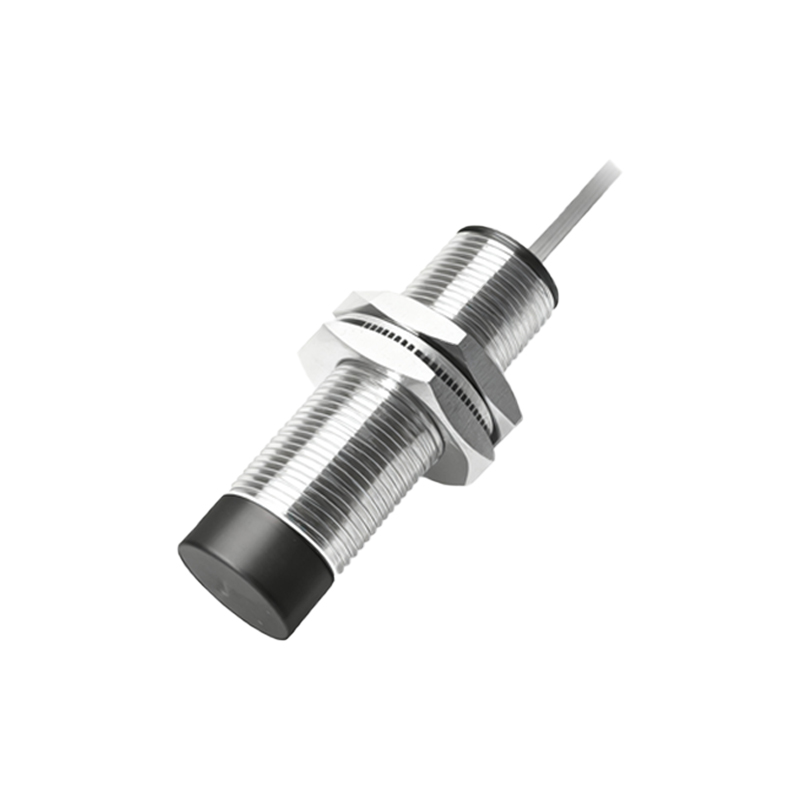
A standard eddy current sensor comprises several critical parts. The sensing coil, often made from fine copper wire, is wound around a ferrite core to concentrate the magnetic field. This assembly is encapsulated in a robust housing, usually stainless steel or nickel-plated brass, to protect it from physical damage and environmental factors. The electronics module contains the oscillator circuit that drives the coil, the demodulation circuit that extracts the distance-related signal from the impedance change, and the output driver. For high-temperature applications, the coil and electronics may be separated by a long cable. The probe tip is made of a non-conductive, wear-resistant material like PEEK or ceramic to prevent the sensor from short-circuiting on the target and to protect the coil from abrasive wear.
Factors Influencing Performance
Several factors significantly impact the performance and sensing range of an eddy current sensor. The most critical is the electrical conductivity and magnetic permeability of the target material. Non-ferrous metals like aluminum and copper, with high conductivity, induce strong eddy currents, resulting in a longer sensing range. Ferrous metals like steel have both conductivity and high permeability, which also provides a good sensing range but with a different characteristic curve. The target size and thickness are also vital; the target must be large enough to intercept the sensor's field fully and sufficiently thick to prevent the eddy currents from being limited by the material's depth. Standardized correction factors are applied when the target material differs from the factory-calibrated mild steel. Temperature fluctuations can affect both the sensor's electronics and the target's conductivity, necessitating sensors with built-in temperature compensation for precision applications.
Output Types and Signal Conditioning
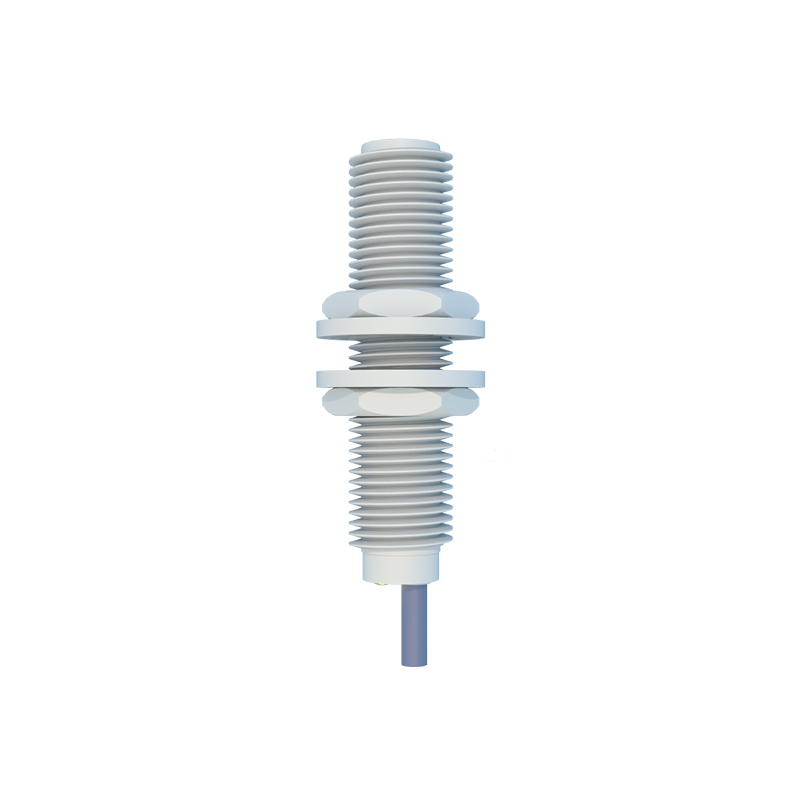
Eddy current sensors offer versatile output options to interface with various control systems. The simplest is a digital or switch output, where the output state changes (e.g., from OFF to ON) when the target reaches a preset threshold distance. More advanced versions provide analog outputs, such as 0-10V DC or 4-20mA, which provide a continuous, linearized signal proportional to the gap over the sensor's measuring range. This makes them ideal for precise displacement and vibration monitoring. High-resolution versions with sophisticated signal conditioning can resolve sub-micron changes. Many modern sensors feature programmable parameters, allowing users to set switching points, output characteristics, and temperature compensation via software, enhancing flexibility in complex machinery.
Advantages Over Other Technologies
Eddy current sensors possess distinct advantages that make them suitable for demanding industrial environments. They are completely non-contact, eliminating mechanical wear and allowing measurement of fragile or rapidly moving objects. Their operation is unaffected by non-conductive intervening materials like oil, coolant, paint, or plastic films, allowing them to sense through tank walls or protective coatings. They offer very high resolution, frequency response, and repeatability, capable of detecting minute displacements at high speeds. They are inherently robust, resistant to dust, moisture, and high-pressure washdowns when properly rated. Unlike capacitive sensors, they are not affected by humidity or material density changes, and unlike inductive sensors, they can detect non-ferrous metals effectively.
Common Industrial Applications
The unique capabilities of eddy current sensors lead to widespread use across industries. In manufacturing and automation, they are used for precise position feedback in robots, end-of-arm tooling, and for detecting the presence of metal parts. In the automotive sector, they monitor crankshaft and camshaft position and timing. A major application is in condition monitoring and predictive maintenance on rotating machinery, where they measure shaft radial vibration, axial thrust position, and rotor eccentricity in turbines, compressors, and pumps. They are also employed in metal processing for thickness measurement of sheets, runout measurement of rotating rolls, and crack detection in metal parts. Their ability