Understanding the Core Technology
High-frequency oscillation proximity sensors represent a cornerstone of modern industrial automation, offering non-contact detection of metallic objects. At their heart lies a high-frequency oscillator circuit that generates an electromagnetic field from a coil located at the sensor's active face. When a metallic target enters this oscillating field, eddy currents are induced on the target's surface. These eddy currents draw energy from the oscillator, causing a measurable change in its amplitude or frequency. The sensor's internal circuitry detects this damping effect and triggers a solid-state output switch. This fundamental operating principle allows for reliable, wear-free detection, making these sensors ideal for harsh environments with high cycle rates, dust, or moisture where mechanical switches would fail.
Key Operational Characteristics and Advantages
The performance of these sensors is defined by several critical parameters. The nominal sensing distance, or Sn, is a key specification, though factors like target material, size, and shape influence the effective range. Ferrous metals like iron and steel typically provide the longest sensing distances, while non-ferrous metals like aluminum or copper require a reduction factor. Another significant advantage is the high switching frequency, often reaching several kilohertz, enabling detection of very fast-moving objects on production lines. Furthermore, their rugged construction, often with IP67 or higher ratings, ensures immunity to vibration, contaminants, and washdown procedures. The absence of moving parts translates to virtually infinite mechanical lifespan and consistent repeat accuracy, a vital factor in precision assembly and positioning tasks.
Material Dependence and Target Considerations
A crucial aspect of application design is understanding material dependence. Standard high-frequency oscillation sensors are primarily tuned for metals. The damping effect varies significantly between material types. For instance, a sensor rated for a 10mm range with mild steel might only detect a same-sized aluminum target at 4mm. Engineers must consult sensor-specific reduction factor curves. Target size also plays a role; the target should generally be equal to or larger than the sensor's sensing face diameter to achieve the rated Sn. For small targets, such as screws or wire ends, the effective range is reduced. Some advanced models incorporate compensation circuits to minimize the variation between different metals, offering more consistent performance across material types.
Common Variants and Output Configurations
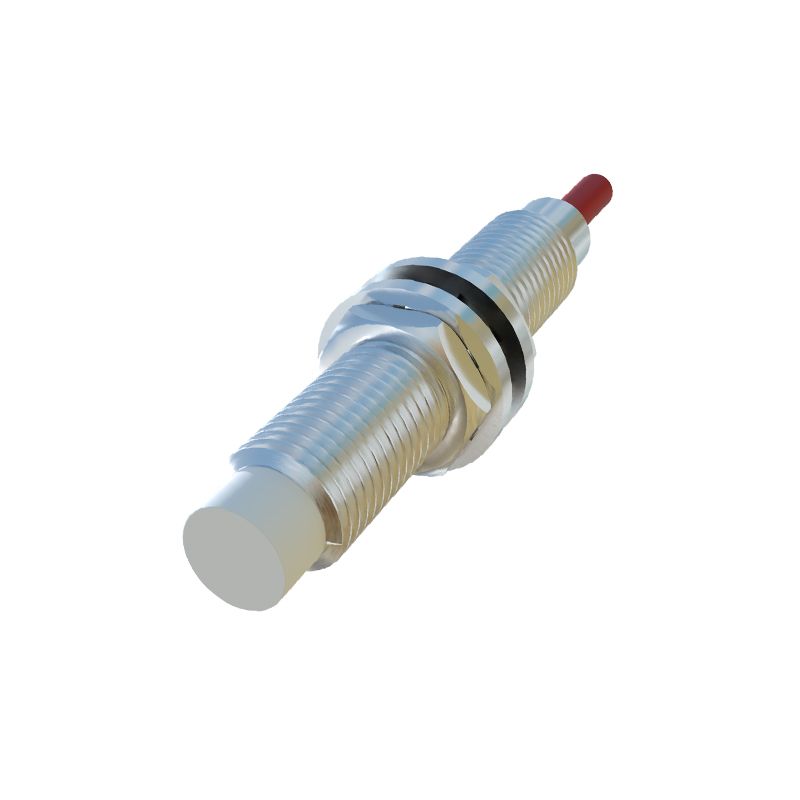
These sensors are available in several form factors to suit diverse mounting constraints, including cylindrical threaded barrels, rectangular block styles, and ring-shaped models for detecting objects passing through an aperture. Output configurations are predominantly solid-state, with NPN (sinking) and PNP (sourcing) transistor outputs being the standard. The choice between NPN and PNP depends on the control system's input card requirements (e.g., PLC). Many sensors feature a built-in LED status indicator for diagnostics. Shielded (flush-mountable) and unshielded (non-flush) designs offer another key distinction. Shielded sensors can be installed flush in metal without affecting their field, while unshielded types offer a longer sensing range but require a non-metallic surround.
Typical Industrial Applications
The versatility of high-frequency oscillation proximity sensors makes them ubiquitous across manufacturing. Common applications include part presence verification on conveyor belts, robotic arm end-effector positioning, and counting metallic objects like cans or machined parts. They are indispensable in machine tools for monitoring tool position, detecting broken tools, or confirming workpiece clamping. In packaging machinery, they control fill levels by detecting metallic components. Their speed makes them suitable for rotary encoder applications, detecting gear teeth or encoder disk slots for speed and position feedback. The automotive industry relies on them extensively for assembly line automation and robotic welding cell safety.
Selection Criteria and Installation Best Practices
Selecting the right sensor requires a systematic approach. First, identify the target material and required sensing distance, applying necessary reduction factors. Next, determine the needed switching frequency and response time based on object speed. The physical environment dictates the housing material (e.g., stainless steel for corrosive settings) and ingress protection rating. Electrical compatibility involves choosing the correct operating voltage (commonly 10-30V DC) and output type (NPN/PNP) to match the controller. During installation, ensure proper alignment between the sensor face and the target approach path. Maintain the recommended clearance from adjacent metal surfaces, especially for unshielded models, to prevent false triggering. Always refer to the manufacturer's datasheet for specific mounting and wiring instructions.
Troubleshooting and Maintenance Insights
While highly reliable, these sensors can encounter issues. Common problems include failure to detect, which may stem from an incorrect target material, insufficient target size, or the target being outside the effective range. Intermittent operation often points to loose wiring connections, power supply fluctuations, or