What Are Photoelectric Sensors?
Photoelectric sensors are versatile devices used extensively in industrial automation for detection, counting, and positioning tasks. They operate on a simple yet profound principle: they emit a beam of light (visible or infrared) and detect changes in the received light signal. The core question, "Is there light?" is fundamental. Yes, there is always light involved—either emitted by the sensor itself or present in the environment. The sensor's function is to monitor the presence, absence, or intensity of this light to determine an object's status. These sensors consist of two main components: an emitter (light source) and a receiver (photodetector). The emitter projects light, and the receiver analyzes the light that returns or is interrupted. Their reliability, non-contact nature, and long sensing ranges make them superior to mechanical switches in many demanding applications.
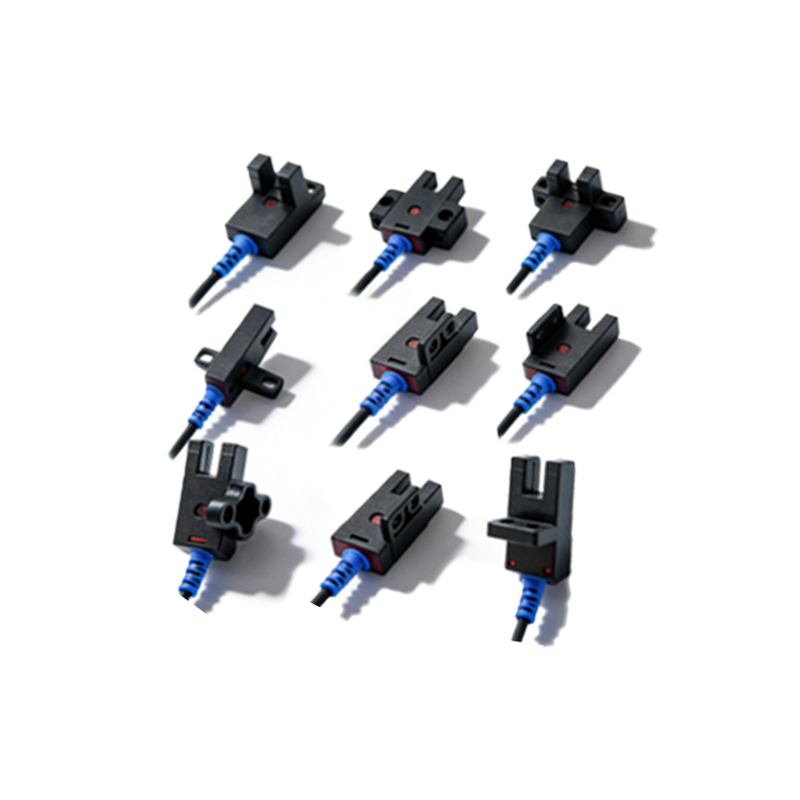
Core Operating Principles: The Light's Journey
The operation hinges on how the emitted light interacts with the target. There are three primary sensing modes. First, through-beam sensors have separate emitter and receiver units positioned opposite each other. An object is detected when it breaks the light beam. This mode offers the longest range and highest reliability. Second, retro-reflective sensors house both emitter and receiver in one unit, using a reflector to bounce the beam back. Detection occurs when the beam is blocked. Third, diffuse reflective sensors, also single-unit, detect light reflected directly off the target object itself. Here, the target becomes the reflector. In all cases, the receiver answers "Is there light?" If the expected light pattern changes, the sensor's output switches state, signaling detection.
Key Light Sources and Their Characteristics
The "light" in photoelectric sensors is not always visible. Common light sources include LEDs, with red LEDs being prevalent due to low cost and good visibility for alignment. Infrared LEDs are used for their invisibility and resistance to ambient light interference. Laser diodes provide extremely focused beams for high-precision detection over long distances. More recently, modulated LED light, which pulses at a specific frequency, has become standard. This allows the sensor's receiver to tune into that frequency, effectively ignoring constant ambient light (like sunlight or factory lighting), thus making the sensor highly immune to optical noise and reliably answering the "light present?" question even in bright environments.
Critical Factors Affecting Light and Performance
Several environmental and physical factors directly impact the light beam and sensor performance. Target properties such as color, reflectivity, texture, and material (transparent, opaque, shiny, matte) drastically affect how light is reflected or absorbed. For instance, detecting a clear glass bottle requires a specialized sensor. Ambient conditions like dust, fog, steam, or intense ambient light can scatter or saturate the light signal. Sensor alignment is crucial, especially for through-beam types; misalignment means the receiver gets no light, causing false triggers. Understanding these factors is essential for selecting the correct sensor type, installing it properly, and ensuring it provides a stable "light yes/no" signal.
Advanced Features for Complex Detection
Modern photoelectric sensors incorporate sophisticated features to handle complex "is there light?" scenarios. Background suppression is a technology that allows a diffuse sensor to detect an object only within a precise distance range, ignoring objects and surfaces beyond it, based on the angle of the reflected light. Contrast sensors are designed to detect differences in color or contrast by evaluating light intensity, crucial in label detection. Fiber optic units allow the sensing head to be placed in extremely hot, cramped, or hazardous locations, while the amplifier (containing the light source and processor) is mounted remotely. Light-on/Dark-on operation lets users configure whether the output activates when light is received or when it is blocked, adding application flexibility.
Typical Industrial Applications
The applications are vast, all revolving around monitoring the presence or absence of light. On packaging lines, they count bottles, detect labels, and confirm case presence. In material handling, they provide object detection on conveyors, pallet positioning, and stack height control. For safety, they form light curtains that guard dangerous machine perimeters—any interruption of the light grid triggers a machine stop. In the automotive industry, they verify part assembly and robot positioning. Essentially, anywhere a process requires knowing if an object is present, absent, positioned, or counted, a photoelectric sensor is asking and answering the question, "Is the light beam intact or broken?"
Troubleshooting Common "No Light" Issues
When a sensor fails, the problem often relates to the light path. Common issues include misalignment, where the beam is not hitting the receiver or reflector correctly. A dirty lens on the emitter or receiver can attenuate the light signal. Power supply problems can cause the LED to dim or fail entirely. Incorrect sensing mode selection for the target (e.g., using a standard diffuse sensor on a shiny object) leads to unreliable operation. Strong ambient light flooding the receiver can blind it. Systematic troubleshooting involves checking alignment, cleaning optics, verifying power, and using the manufacturer's indicators (often a visible red beam or a stability LED) to confirm that light is being emitted and properly received.
The Future of Light in Sensing
The evolution continues toward smarter, more integrated systems. IO-Link communication is becoming standard, allowing sensors to transmit detailed diagnostic data (like received light intensity) beyond a simple on/off switch, enabling predictive maintenance. Sensors are becoming more miniaturized yet robust. There is also growth in the use of specialized light wavelengths for detecting specific materials or overcoming challenging ambient conditions. The fundamental principle remains unchanged: using light as an information carrier. However, the precision, intelligence, and connectivity with which the question "Is there light?" is asked and answered are driving greater efficiency and capability in automated systems worldwide.