Introduction to Dual-Color Sensing
Dual-color photoelectric sensors represent a sophisticated advancement in industrial automation and detection technology. Unlike conventional single-wavelength sensors, these devices operate by simultaneously detecting light at two distinct wavelengths, typically in the red and infrared spectra. This dual-wavelength approach is engineered to significantly enhance reliability and accuracy in challenging environments where factors like background interference, target color variations, or ambient light fluctuations are prevalent. By comparing the ratio of the reflected or transmitted signals at these two wavelengths, the sensor can effectively distinguish the target from its surroundings, making it indispensable in applications requiring high precision and noise immunity. The core principle hinges on differential absorption or reflection characteristics of materials at different wavelengths, allowing the sensor to make decisions based on relative signal strengths rather than absolute intensity alone.
Core Components and Optical Design
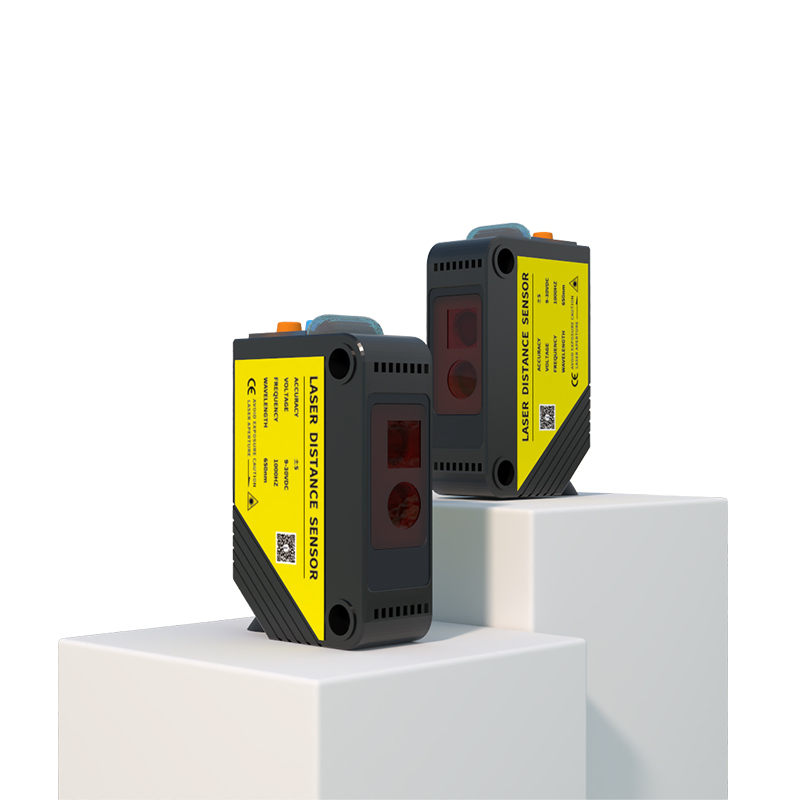
The architecture of a dual-color photoelectric sensor comprises several critical components that work in unison. At its heart are two light-emitting diodes (LEDs) that emit light at specific wavelengths—commonly 660 nm (red) and 880 nm (infrared). These LEDs are often pulsed alternately to prevent crosstalk and to enable synchronous detection. The emitted light is directed toward the target via a lens system, which focuses the beams to optimize signal strength and spatial resolution. On the receiver side, a photodetector, such as a phototransistor or photodiode, captures the reflected or transmitted light. Advanced models incorporate optical filters matched to the emission wavelengths to minimize interference from stray ambient light. The sensor's electronic circuitry includes amplifiers, analog-to-digital converters, and a microprocessor that processes the dual-channel signals, calculating the ratio between them to determine the presence or absence of a target.
Principle of Operation and Signal Processing
The operational principle of dual-color sensors is based on the concept of chromaticity detection. When the sensor emits pulses of red and infrared light sequentially, the target material reflects or transmits these wavelengths differently due to its spectral properties. For instance, a red object may reflect red light strongly while absorbing infrared, whereas a white object might reflect both wavelengths similarly. The sensor's receiver measures the intensity of the returned light for each wavelength. The key innovation lies in the processing algorithm: instead of relying on the absolute magnitude of either signal, the sensor computes the ratio of the two intensities (e.g., red/infrared). This ratio remains relatively constant even if the detection distance changes or if dust, fog, or other environmental factors attenuate both signals equally. Consequently, the sensor can reliably detect targets regardless of common interferences that would typically affect single-wavelength sensors.
Advantages Over Single-Wavelength Sensors
Dual-color photoelectric sensors offer distinct advantages that make them superior in many industrial settings. Their primary benefit is immunity to background interference and color variations. Since the detection is based on a wavelength ratio, changes in target color or reflectivity—provided they affect both wavelengths proportionally—do not trigger false readings. This is particularly useful in packaging, printing, or textile industries where product colors may vary. Additionally, these sensors are less susceptible to environmental contaminants like dust, steam, or oil films that uniformly coat lenses, as such contaminants tend to attenuate both wavelengths similarly, preserving the ratio. Furthermore, they exhibit stable performance under fluctuating ambient light conditions, as ambient light typically affects both wavelengths in a comparable manner, allowing the sensor to differentiate its own emitted signals from external sources.
Typical Applications in Industry
In industrial automation, dual-color photoelectric sensors are deployed in scenarios demanding high reliability. Common applications include object detection on conveyor belts, where products of different colors must be identified without adjustment. They are also used in label detection to verify the presence of labels on varied backgrounds, and in edge guiding systems for web processing to maintain alignment regardless of material color changes. Another critical use is in liquid level detection, where the sensor can distinguish between transparent and opaque liquids based on their spectral absorption. In automotive manufacturing, these sensors assist in part verification and assembly checks, ensuring components are present regardless of surface finish variations. Their robustness also makes them suitable for outdoor or harsh environments, such as in agricultural equipment or mining operations.
Installation and Calibration Considerations
Proper installation and calibration are vital for optimizing the performance of dual-color photoelectric sensors. During setup, it is essential to align the emitter and receiver accurately to ensure both wavelength beams intersect the target effectively. The sensing distance should be within the specified range to maintain signal integrity. Calibration typically involves teaching the sensor the reference ratio for the target under normal conditions. This is done by presenting the target to the sensor and allowing it to store the baseline ratio. Many modern sensors feature automatic calibration functions that simplify this process. Environmental factors such as extreme temperatures or strong ambient light sources should be mitigated, as they can affect the sensor's components over time. Regular maintenance, including lens cleaning and checking for mechanical misalignment, helps sustain long-term accuracy and reliability.
Future Trends and Technological Developments
The evolution of dual-color photoelectric sensors continues with advancements in miniaturization, integration, and intelligence. Emerging trends include the incorporation of digital signal processing and machine learning algorithms to enhance pattern recognition and adaptability to complex environments. Sensors are becoming more compact, enabling installation in space-constrained applications. There is also a shift toward smart sensors with integrated IoT capabilities, allowing for real-time monitoring, diagnostics, and data logging via industrial networks. Additionally, research into new wavelength pairs and materials may expand their applicability to niche sectors like pharmaceuticals or food processing, where non-invasive detection is crucial. As industries increasingly adopt Industry 4.0 practices, dual-color sensors are poised to play a pivotal role in creating more resilient and automated systems.