Introduction to the JND04 Photoelectric Sensor
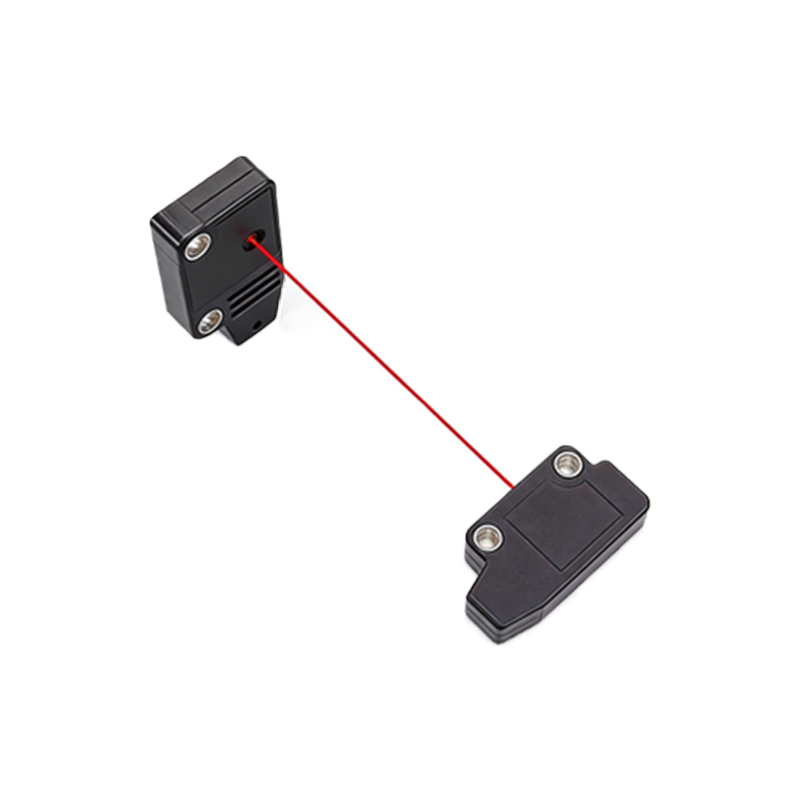
The JND04 photoelectric sensor represents a significant advancement in industrial sensing technology, designed to meet the rigorous demands of modern automation systems. As a versatile and reliable component, it operates on the fundamental principle of converting light signals into electrical outputs. This sensor typically consists of an emitter, which projects a light beam, and a receiver, which detects the presence or absence of this beam. The JND04 model is engineered for high precision, offering various sensing modes including through-beam, retro-reflective, and diffuse reflective configurations. Its robust construction ensures consistent performance in diverse industrial environments, from packaging lines to material handling systems, making it an indispensable tool for engineers seeking to enhance operational efficiency and machine safety.
Key Technical Specifications and Features
Delving into the technical specifications, the JND04 photoelectric sensor boasts an impressive array of features. It commonly operates with a supply voltage ranging from 10 to 30 V DC, ensuring compatibility with standard industrial power systems. The sensing distance is a critical parameter, with the JND04 offering a long-range detection capability, often up to several meters in through-beam mode, while its diffuse reflective version provides reliable short to medium-range sensing. The output is typically a solid-state NPN or PNP transistor, providing a clear switch signal to the programmable logic controller (PLC). Key features include a high switching frequency, allowing for the detection of fast-moving objects, and an IP67 protection rating, which guarantees resistance against dust ingress and temporary immersion in water, crucial for harsh factory conditions.
Operating Principles and Sensing Modes
Understanding the operating principles is essential for optimal application. In the through-beam (or opposed) mode, the emitter and receiver are separate units. An object is detected when it interrupts the light beam traveling from the emitter to the receiver. This mode offers the longest sensing distance and highest reliability. The retro-reflective mode uses a single housing containing both emitter and receiver, along with a reflector. Detection occurs when the beam reflected back from the reflector is blocked. The diffuse reflective (or proximity) mode, also in a single housing, detects an object by measuring the light reflected directly from the object's surface. The JND04 is adept in all these modes, often featuring a potentiometer or teach-in function for easy sensitivity adjustment to suit different target materials and colors.
Installation, Alignment, and Calibration Best Practices
Proper installation is paramount for reliable sensor performance. When mounting the JND04, ensure a stable and vibration-free platform. For through-beam sensors, precise alignment of the emitter and receiver is critical; many models incorporate alignment indicators like LED signals that change color or blink when optimal alignment is achieved. In diffuse or retro-reflective setups, consider the background and potential interfering objects. Calibration involves setting the sensitivity threshold to distinguish the target from environmental noise. The JND04 often includes a background suppression function, which allows it to ignore distant objects or the background, focusing only on targets within a defined window. Regular verification checks should be part of the maintenance schedule to ensure ongoing accuracy.
Common Industrial Applications and Use Cases
The JND04 finds extensive application across numerous industrial sectors. In automotive assembly lines, it is used for part presence verification, robot guidance, and door seal gap detection. Within the packaging industry, it counts bottles on a conveyor, checks for correct label placement, and controls fill levels. In material handling and logistics, these sensors detect the position of pallets, manage warehouse automation, and ensure safety in automated guided vehicle (AGV) systems. They are also vital in the food and beverage industry for detecting transparent objects like glass or plastic containers. The sensor's robustness makes it suitable for outdoor applications in bulk material handling, such as detecting the level of grains or aggregates in silos.
Troubleshooting and Maintenance Guidelines
Even with high reliability, occasional issues may arise. Common problems include false triggering, failure to detect, or unstable output. False triggering can often be traced to environmental interference from ambient light, dust, or vibration. Using sensors with modulated infrared light (like the JND04 typically employs) and proper shielding can mitigate this. Failure to detect might result from misalignment, dirty lenses, or an incorrect sensing range for the target. Regular cleaning of the lens with a soft cloth is recommended. Checking electrical connections, supply voltage, and load current is also crucial. Most JND04 sensors have a diagnostic LED that provides visual status feedback, which is the first point of reference for troubleshooting. Implementing a preventive maintenance plan significantly reduces unexpected downtime.
Advantages Over Alternative Sensing Technologies
Compared to other proximity sensors like inductive or capacitive types, the JND04 photoelectric sensor offers distinct advantages. Its primary benefit is the ability to detect a wide variety of materials regardless of their conductivity or color (with appropriate settings), unlike inductive sensors which only detect metals. It provides non-contact sensing over much longer distances than capacitive sensors. While ultrasonic sensors are also used for long-range detection, photoelectric sensors like the JND04 generally offer faster response times and higher precision for small object detection. The versatility in sensing modes allows one sensor type, the JND04, to solve a multitude of detection challenges, reducing inventory complexity and providing a cost-effective solution for complex automation systems.
Future Trends and Integration with Industry 4.0
The evolution of sensors like the JND04 is closely tied to the rise of Industry 4.0 and the Industrial Internet of Things (IIoT). Future iterations are expected to feature enhanced connectivity options, such as IO-Link, which allows for bidirectional data communication. This enables remote configuration, real-time monitoring of sensor health (predictive maintenance), and the transmission of process values beyond a simple on/off signal. Integration with cloud platforms for data analytics will become more seamless. Furthermore, advancements in laser technology and optics may lead to even smaller form factors with greater precision and resistance to challenging environmental conditions like heavy contamination or extreme temperatures, ensuring the photoelectric sensor remains a cornerstone of industrial automation.