Introduction to Photoelectric Sensors
Photoelectric sensors are widely used in industrial automation for detecting the presence, absence, or position of objects. These sensors operate by emitting a light beam, typically from an LED or laser diode, and detecting changes in the received light intensity. The core principle involves converting light signals into electrical signals, enabling precise control in various applications such as packaging, material handling, and assembly lines. Their non-contact nature ensures minimal wear and high reliability, making them essential in modern manufacturing environments. Understanding the basic working mechanisms is crucial for effective implementation.
Working Principles of Photoelectric Sensors
Photoelectric sensors function based on three primary methods: through-beam, retro-reflective, and diffuse reflective. In through-beam sensors, an emitter and receiver are placed opposite each other; an object is detected when it interrupts the light beam. Retro-reflective sensors use a reflector to bounce light back to the receiver, with detection occurring when the beam is blocked. Diffuse reflective sensors rely on light reflecting directly off the target object, with the receiver sensing the reflected beam. Each type has distinct advantages: through-beam offers long-range and high accuracy, retro-reflective is easier to install, and diffuse reflective is compact for close-range detection. Advanced models may incorporate background suppression or fiber optics for specialized needs.
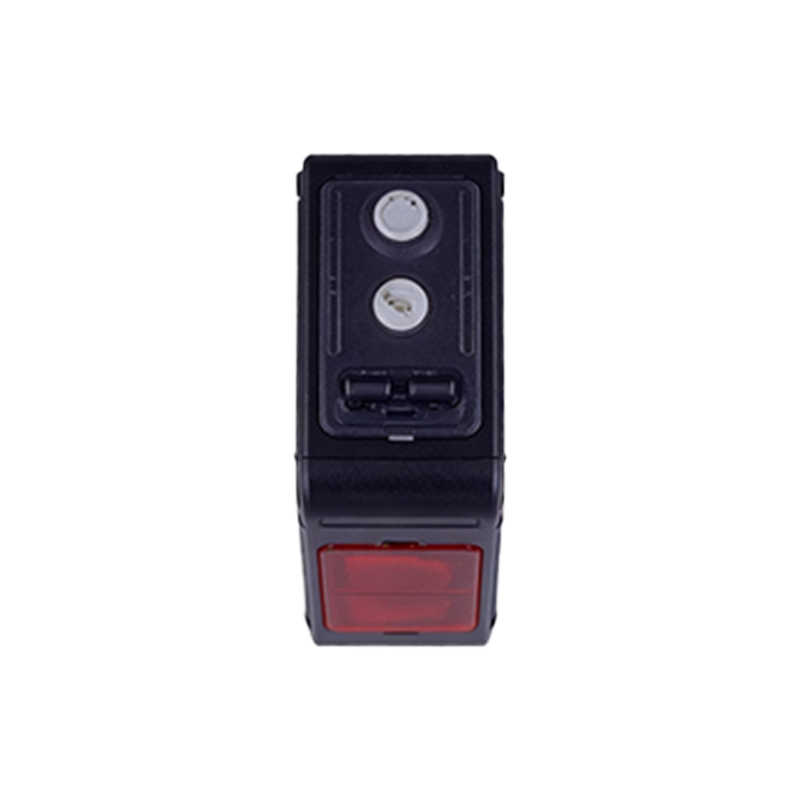
Components and Signal Processing
Key components include the light source (often infrared or visible LED), photodetector (such as a phototransistor or photodiode), and signal processing circuitry. The light source emits modulated pulses to reduce interference from ambient light. The photodetector converts incoming light into electrical current, which is then amplified and filtered by the circuitry. Output signals can be analog (proportional to distance or light intensity) or digital (on/off states). Modern sensors integrate microprocessors for functions like teach-in programming, allowing adjustment of sensitivity and response time. Proper selection of components ensures stable operation in harsh conditions like dust, humidity, or vibration.
Wiring Methods for Photoelectric Sensors
Correct wiring is vital for sensor performance and safety. Most photoelectric sensors have three or four wires: power supply, ground, output, and sometimes a separate control wire. For DC sensors, typically, brown wire connects to positive voltage (e.g., 12-24V DC), blue wire to negative or ground, and black wire as the output signal. In NPN (sinking) output configuration, the output connects to the load and then to positive voltage; for PNP (sourcing), the output links directly to the load and ground. AC sensors may use black and white wires for power, with output in red. Always refer to the datasheet for specific pinouts. Use shielded cables in noisy environments to prevent electromagnetic interference.
Installation and Alignment Tips
Install sensors securely using brackets to minimize vibration effects. For through-beam types, align emitter and receiver precisely; a built-in alignment indicator (like an LED) can assist. Retro-reflective sensors require proper reflector positioning, ensuring the beam is perpendicular to the surface. Diffuse sensors should be angled to avoid false triggers from shiny objects. Maintain a clean lens free of dirt or debris, and consider environmental factors: avoid direct sunlight, which can saturate the receiver, and use sensors with IP ratings for dust/water resistance. Regular testing with target objects verifies alignment and sensitivity settings.
Common Applications and Troubleshooting
Applications range from object counting on conveyor belts to edge detection in printing machines. In automated warehouses, sensors monitor inventory levels; in robotics, they guide arm movements. Troubleshooting often involves checking power connections, output signals with a multimeter, and lens cleanliness. If a sensor fails to detect, verify alignment, adjust sensitivity, or inspect for obstructions. Interference from other light sources can be mitigated by using modulated light or installing barriers. For persistent issues, consult manufacturer guidelines or replace faulty components. Regular maintenance extends sensor lifespan and ensures system reliability.
Advancements and Future Trends
Recent advancements include smart sensors with IO-Link communication, enabling real-time data exchange and remote configuration. Miniaturization allows integration into compact devices, while enhanced algorithms improve detection accuracy for transparent or colored objects. Energy-efficient designs reduce power consumption, supporting sustainable operations. Future trends may involve AI integration for predictive maintenance and adaptive sensing in Industry 4.0 setups. As automation evolves, photoelectric sensors will continue to play a pivotal role, driven by innovations in optics and electronics.