Introduction to Inductive Proximity Sensors
Inductive proximity sensors are fundamental components in modern industrial automation, renowned for their reliability and non-contact detection capabilities. These sensors operate on the principle of electromagnetic induction to detect the presence of metallic objects without any physical contact. At their core, they consist of an oscillator circuit that generates a high-frequency electromagnetic field from a coil wound around a ferrite core. When a conductive metal target enters this active field, eddy currents are induced on the surface of the target. This causes a change in the oscillation amplitude, which is then detected by the sensor's evaluation circuit, triggering a solid-state output signal. This robust operating principle makes them immune to environmental factors like dust, oil, and moisture, distinguishing them from optical or capacitive sensors. Their primary function is to provide precise, wear-free position sensing for machine parts, robotic arms, and conveyor systems, forming the backbone of countless control and safety sequences in manufacturing.
Key Operating Principles and Technology
The technology behind inductive sensors hinges on the interaction between a high-frequency electromagnetic field and a conductive material. The sensor's oscillator generates a fluctuating magnetic field that radiates from the sensing face. For ferrous metals (like iron and steel), the effect is twofold: eddy currents are generated, and the material's magnetic permeability concentrates the magnetic field lines, enhancing detection distance. For non-ferrous metals (such as aluminum, copper, or brass), detection relies primarily on the eddy current loss, which typically results in a shorter sensing range. A critical specification is the "nominal sensing distance" (Sn), defined under standardized conditions with a mild steel target. The "effective sensing distance" (Sr) accounts for manufacturing tolerances and temperature variations, ensuring reliable operation. Advanced models incorporate temperature compensation circuits to maintain a stable sensing distance despite ambient temperature fluctuations, a vital feature for harsh industrial environments.
Design Variations and Form Factors
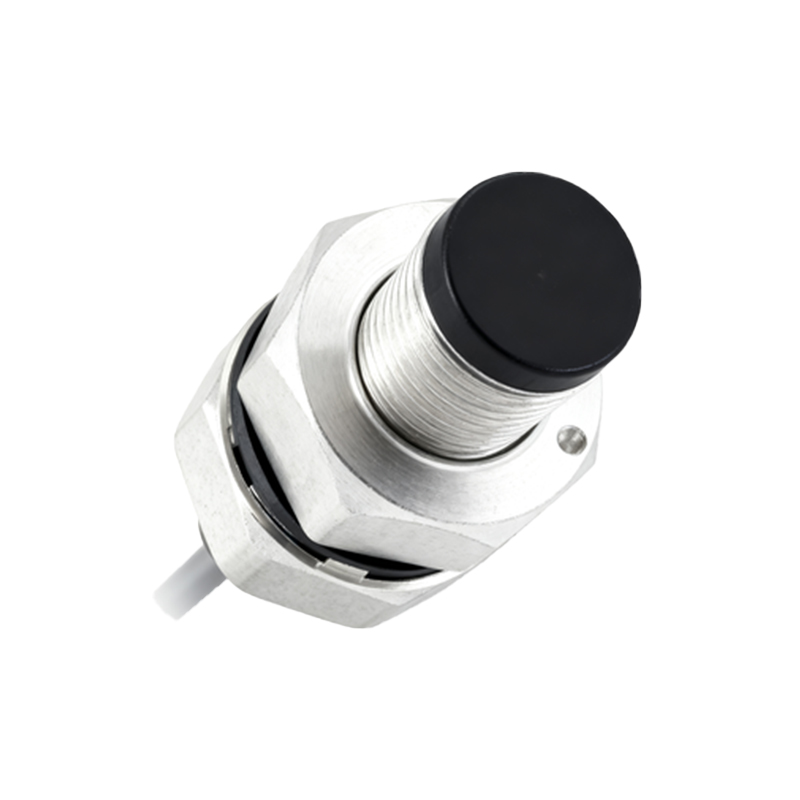
To suit diverse application needs, inductive proximity sensors are available in a wide array of designs. The most common housing shapes are cylindrical (threaded barrels) in sizes from M4 to M30, and rectangular or block-style housings. They are further classified by their mounting style: flush-mountable or non-flush. Flush-mountable sensors can be installed embedded in metal without a lateral clearance requirement, as their magnetic field is focused forward, making them ideal for space-constrained installations. Non-flush sensors offer a longer sensing range but require clearance from surrounding metal. Other specialized form factors include ring sensors for part counting, slot sensors for detecting small metal tabs, and analog output sensors that provide a continuous signal proportional to the target distance. The choice of housing material, typically nickel-plated brass, stainless steel, or PBT plastic, is dictated by the application's chemical and mechanical demands.
Electrical Output Configurations
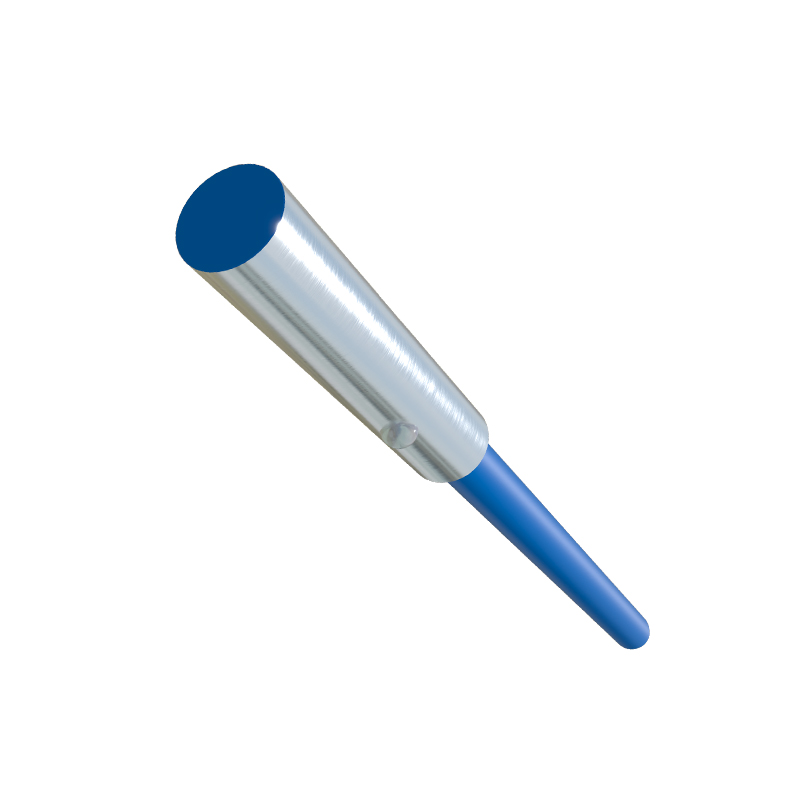
The output stage of an inductive sensor is a crucial selection criterion. Two-wire DC sensors are simple to wire, connecting in series with the load, but they exhibit a residual voltage drop when switched. Three-wire DC sensors are the industry standard, offering separate power, ground, and switched output wires (typically PNP-sourcing or NPN-sinking) for minimal voltage drop and high switching capacity. Four-wire sensors provide both a normally open (NO) and a normally closed (NC) contact from a single device. The output can be a switching signal from a transistor (for DC) or a triac (for AC), or a proportional analog voltage (0-10V) or current (4-20mA) signal. Key electrical specifications include the operating voltage range, switching frequency (how many on/off cycles per second), and current rating. High-speed models can switch at frequencies exceeding 5 kHz, enabling detection of very fast-moving parts on high-speed assembly lines.
Application Areas in Industrial Automation
The applications for inductive proximity sensors are virtually limitless within industrial settings. They are extensively used for position detection: verifying if a cylinder piston is retracted or extended, confirming the presence of a metal part in a fixture, or detecting the end position of a linear slide. On conveyor systems, they count metal parts, control sorting gates, and provide jam detection. In machine tools, they monitor tool presence, detect broken tools, and provide spindle orientation. They are indispensable in robotic automation for end-of-arm tooling confirmation and safe zone monitoring. Their robustness makes them perfect for harsh environments in metalworking, stamping, and automotive plants, where coolant, metal chips, and vibration are prevalent. Safety-related applications include monitoring guard door positions as part of a safety interlock circuit, though dedicated safety-rated devices are used for high-integrity functions.