Introduction to Photoelectric Sensors
Photoelectric sensors are versatile devices widely used in industrial automation for detecting the presence, absence, or distance of objects without physical contact. Their operation is fundamentally based on the interaction between light and matter. A typical sensor consists of a light emitter, usually a Light Emitting Diode (LED) or a laser diode, and a photodetector, such as a phototransistor or photodiode. The emitter projects a beam of light towards a target or into a sensing area. The photodetector then receives the light signal, which is subsequently processed by internal circuitry to generate an electrical output signal. This non-contact nature makes them ideal for applications involving fragile materials, high-speed production lines, or harsh environments where mechanical wear is a concern. The principle of displacement measurement using these sensors is an advanced application that leverages the precise characteristics of the emitted light beam.
Fundamental Operating Principles
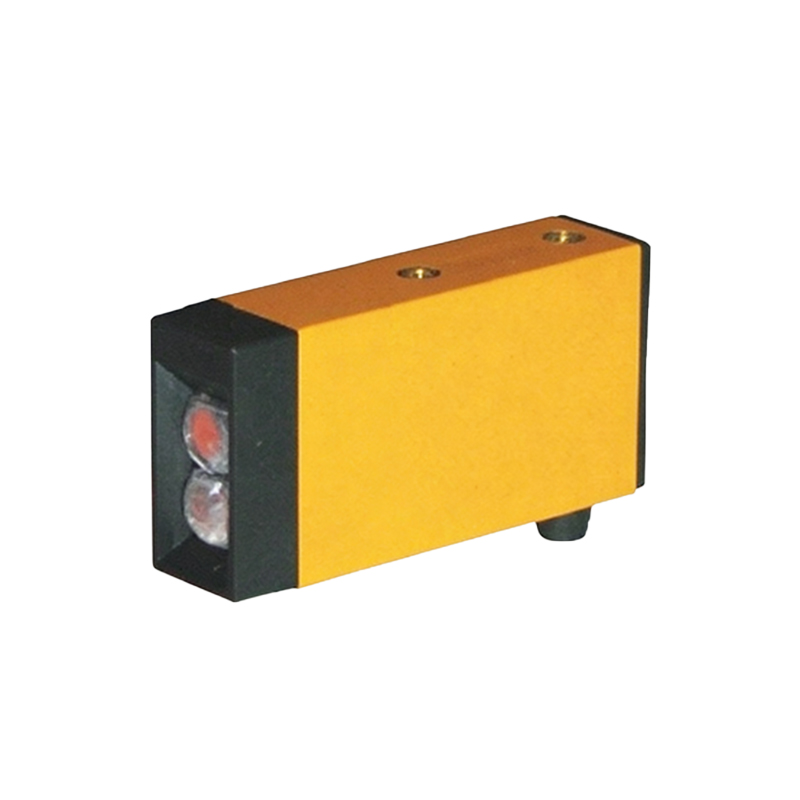
The core principle behind displacement measurement with photoelectric sensors involves triangulation. In a triangulation-based displacement sensor, the light emitter, the photodetector, and the target surface form a triangular geometric relationship. A focused beam of light, often from a laser diode for precision, is projected onto the target surface. The light spot on the target reflects diffusely in many directions. A portion of this reflected light is collected by a position-sensitive detector (PSD) or a Charge-Coupled Device (CCD) array within the sensor head. The key parameter is the angle or the position at which the reflected light strikes the detector. When the target moves closer to or farther from the sensor, the angle of the reflected beam changes. This change in angle causes the light spot to shift its position on the surface of the PSD or CCD.
Triangulation and Signal Processing
The position of the light spot on the detector is directly correlated to the distance of the target. The sensor's internal processor continuously calculates this distance based on the known geometry (the fixed baseline distance between the emitter and the detector) and the measured spot position. For instance, if the target moves closer, the reflected light hits the detector at a different point compared to when it is farther away. This positional data is converted into a high-resolution analog voltage or current output signal, or a digital value via protocols like IO-Link, which is proportional to the displacement. Advanced sensors incorporate microprocessors to compensate for factors like target color, reflectivity, and surface texture, ensuring stable and accurate measurements even on varying surfaces.
Types of Photoelectric Displacement Sensors
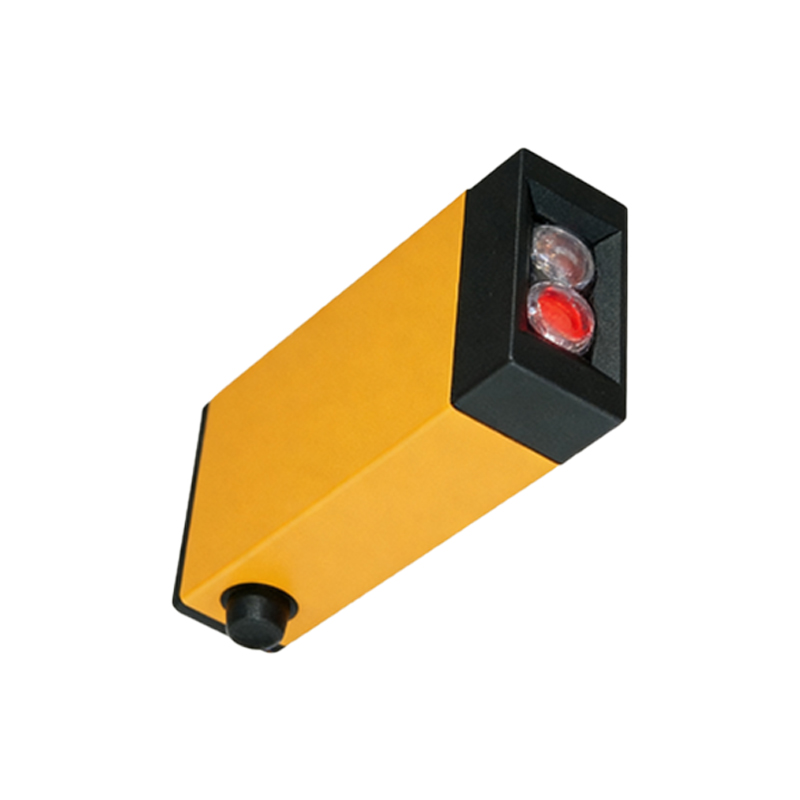
There are two primary configurations for these sensors: diffuse reflective type and through-beam type adapted for displacement. The diffuse reflective type, as described in the triangulation method, uses a single housing containing both the emitter and receiver. It measures the distance to the target by analyzing the reflected light from the target itself. The through-beam type, typically used for simple presence detection, can be configured for displacement by separating the emitter and receiver. In this setup, the target object passes between them, and the amount of light blocked or the shadow's position is measured to determine dimensions or edge position, which is a form of displacement measurement. Laser-based triangulation sensors offer the highest precision, suitable for micron-level measurements.
Key Performance Parameters
Understanding the specifications is crucial for selecting the right sensor. The measuring range defines the minimum and maximum distances over which the sensor can operate accurately. Resolution refers to the smallest detectable change in distance, critical for high-precision applications. Linearity error indicates the deviation of the sensor's output from a perfectly straight line when plotted against actual displacement; lower linearity error means higher accuracy. Response time is the speed at which the sensor can update its output, essential for dynamic or high-speed measurements. Additionally, factors like spot size (the size of the laser point on the target), and the sensor's ability to handle different surface materials (e.g., shiny, dark, transparent) significantly impact performance.
Common Industrial Applications
The applications of photoelectric displacement sensors are extensive across manufacturing and automation. They are employed for precise thickness measurement of materials like paper, metal sheets, or glass during production. In assembly lines, they verify the correct height or position of components on a PCB or an engine block. They control the gap and runout in precision machining and grinding operations. Vibration analysis on rotating machinery often utilizes these sensors for non-contact monitoring. Furthermore, they are integral in robotic guidance systems, ensuring accurate positioning of robotic arms for pick-and-place, welding, or dispensing tasks. Their robustness allows them to function reliably in demanding environments such as automotive plants, semiconductor fabrication, and packaging machinery.
Advantages and Limitations
The primary advantages of photoelectric displacement sensors include non-contact measurement, which eliminates mechanical wear and allows measurement of soft or delicate objects. They offer high speed, high resolution, and excellent repeatability. Modern sensors are compact, easy to integrate, and provide real-time analog or digital outputs compatible with PLCs and control systems. However, they also have limitations. Their performance can be affected by environmental conditions like ambient light interference, dust, fog, or steam, which may scatter or absorb the light beam. The target's optical properties—extreme darkness, high gloss, or transparency—can challenge the sensor's ability to obtain a reliable signal. Therefore, proper selection, installation, and sometimes environmental shielding are necessary for optimal operation.
Conclusion and Future Trends
Photoelectric sensors utilizing the triangulation principle for displacement measurement are indispensable tools in modern industrial automation, enabling precise, reliable, and non-contact dimensional control. As technology advances, future trends point towards sensors with even higher resolutions and faster response times. Integration of smart features, such as embedded diagnostics, pre-processing algorithms for complex surfaces, and enhanced connectivity through Industrial Internet of Things (IIoT) protocols, will make these sensors more intelligent and easier to deploy. The ongoing miniaturization of components will lead to smaller sensor heads capable of fitting into tighter spaces, further expanding their application scope in next-generation manufacturing and quality assurance systems.