Introduction to NPN Proximity Sensors
NPN proximity sensors are fundamental components in modern industrial automation and control systems. As a type of non-contact sensor, they detect the presence or absence of metallic objects without any physical contact, offering high reliability and long operational life. The term "NPN" refers to the type of transistor output used in the sensor's switching circuit. In an NPN configuration, the sensor acts as a sinking device, meaning it connects the load to ground (common negative) when activated. This characteristic is crucial for system design and wiring considerations. These sensors are widely favored for their robustness in harsh industrial environments, providing consistent performance in applications ranging from assembly line object detection to precise position sensing in machinery.
Operating Principle and Internal Circuitry
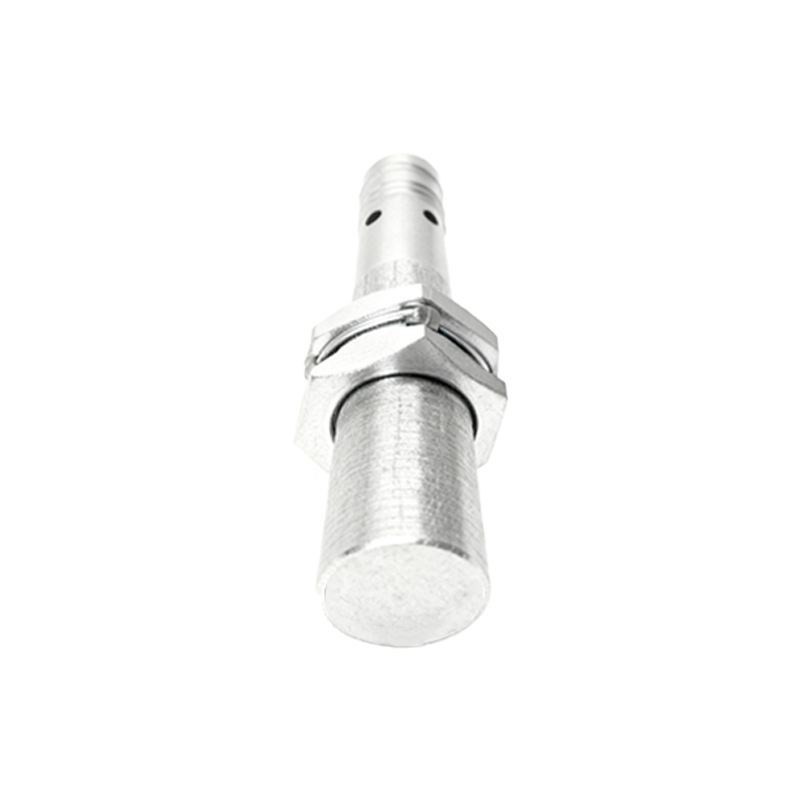
The core functionality of an NPN proximity sensor relies on electromagnetic induction or capacitive sensing, with inductive types being most common for metal detection. An oscillator circuit generates a high-frequency electromagnetic field at the sensor's active face. When a metallic target enters this field, eddy currents are induced in the target, causing a change in the oscillation amplitude. This change is detected by a threshold circuit, which then triggers the output switch. The output stage utilizes an NPN bipolar junction transistor. In its normal state (no target detected), the transistor is off, and the output is at a high impedance. Upon detection, the transistor saturates, allowing current to flow from the load, through the sensor's output terminal, and to the ground (0V), effectively "sinking" the current. This design requires the load (e.g., a PLC input, relay coil) to be connected between the positive supply voltage and the sensor's output wire.
Wiring Configuration and Sinking Logic
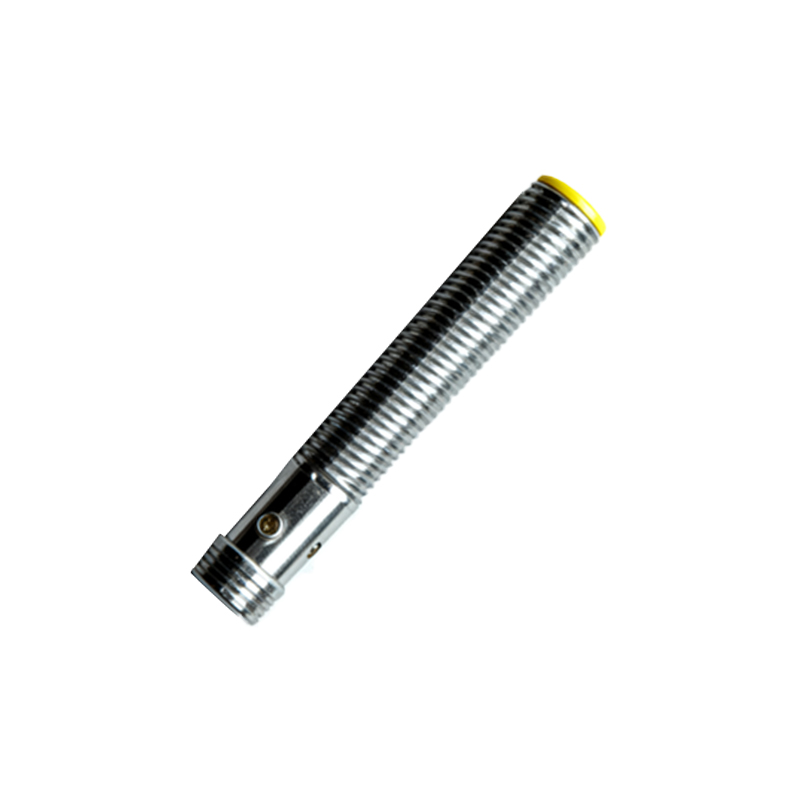
Correct wiring is paramount for the safe and effective operation of NPN sensors. A standard three-wire DC sensor has connections for Brown (positive supply, typically +24V DC), Blue (common ground, 0V), and Black (output signal). The load is connected with one terminal to the positive supply and the other terminal to the Black output wire. When the sensor activates, the internal NPN transistor closes the circuit between the Black wire and the Blue wire (ground), completing the path for current to flow through the load. This "sinking" configuration is sometimes described as "low-side switching." It is essential to verify the sensor's datasheet for voltage and current ratings to ensure compatibility with the control system's power supply and the load's requirements, preventing potential damage from overcurrent or incorrect polarity.
Key Advantages in Industrial Applications
The NPN output configuration offers several distinct advantages. It provides excellent compatibility with many programmable logic controllers (PLCs) and microcontrollers that are designed to accept sinking inputs on their digital input modules. This simplifies integration into existing control panels. Furthermore, NPN sensors often exhibit superior noise immunity in certain setups, as the active switching to ground can be less susceptible to voltage spikes. Their solid-state switching ensures fast response times, often in microseconds, which is critical for high-speed counting and positioning tasks. The non-contact nature eliminates mechanical wear, granting them a significantly longer service life compared to mechanical limit switches, especially in dirty, dusty, or wet environments where they are frequently housed in IP67 or higher-rated enclosures.
Comparison with PNP Proximity Sensors
A common point of discussion is the choice between NPN and PNP proximity sensors. While functionally similar in detection, their output logic is complementary. A PNP sensor uses a PNP transistor, acting as a sourcing device—it switches the positive voltage to the load when activated. The choice often depends on regional conventions and the specific controller's input circuit design. In many Asian and European systems, PNP (sourcing) sensors are prevalent. In contrast, NPN (sinking) sensors have been historically more common in North America and Japan. The decision hinges on whether the controller's input module is wired to be activated by a connection to ground (suitable for NPN) or a connection to positive voltage (suitable for PNP). Misapplication can lead to the control system failing to recognize the sensor signal.
Selection Criteria and Best Practices
Selecting the appropriate NPN proximity sensor requires careful consideration of several parameters. The sensing distance, or nominal range, must be suitable for the application, typically specified for a standard mild steel target. The sensor's housing material (e.g., brass, stainless steel) should be chosen based on the environmental conditions, including exposure to chemicals, weld slag, or physical impact. Output current capacity must not be exceeded. For inductive sensors, the target material (steel, aluminum, copper) affects the actual sensing range