Introduction to the LJ12A3-4-Z Sensor
The LJ12A3-4-Z is a widely recognized model in the realm of industrial inductive proximity sensors. As a non-contact detection device, it operates on the principle of electromagnetic induction to detect the presence of metallic objects. Its robust construction, consistent performance, and cost-effectiveness have made it a staple in factory automation, packaging machinery, and material handling systems. The "LJ12" typically denotes a cylindrical form factor with a 12mm diameter, "A3" often indicates a sensing distance of 4mm, and the "-Z" suffix commonly specifies a normally open (NO) output configuration. This sensor is engineered to deliver reliable operation in challenging industrial environments.
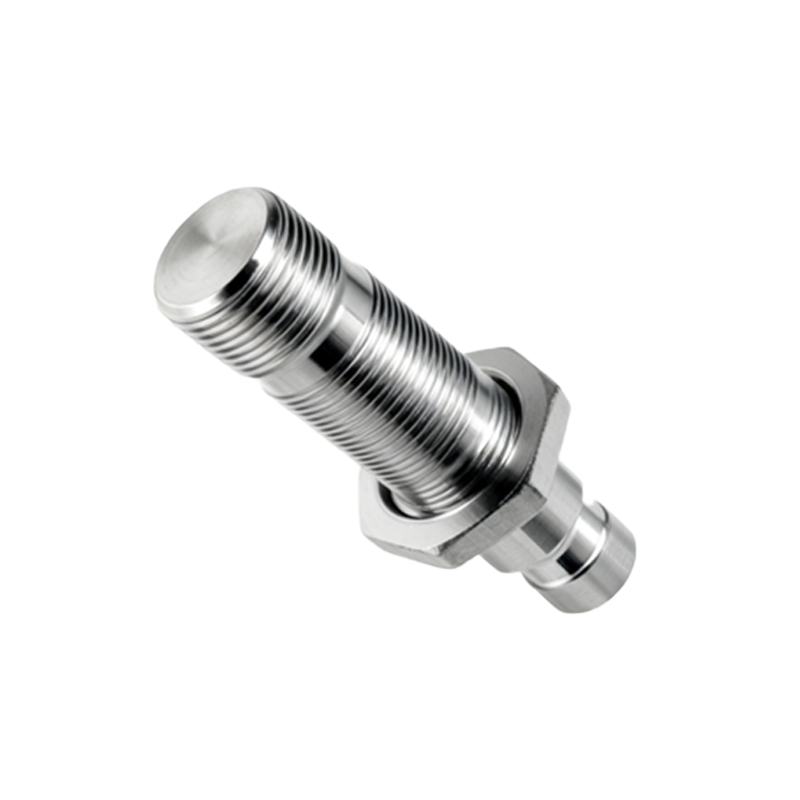
Core Operating Principle and Technology
At the heart of the LJ12A3-4-Z is an oscillating circuit that generates a high-frequency electromagnetic field at its active face. When a ferrous or non-ferrous metal target enters this detection field, eddy currents are induced on the surface of the target. This causes a change in the amplitude of the oscillation within the sensor's coil. An integrated evaluation circuit continuously monitors this amplitude. Once the change exceeds a predefined threshold, it triggers a solid-state switching output, signaling the detection of an object. This entire process occurs without any physical contact, eliminating mechanical wear and enabling high-speed, repeatable operation.
Detailed Technical Specifications and Parameters
Understanding the key specifications is crucial for proper integration. The LJ12A3-4-Z typically features a nominal sensing distance (Sn) of 4mm. It is critical to note the operational setup, where the effective sensing distance can be influenced by the target material, size, and shape. Standard targets are usually defined as mild steel squares. The sensor commonly operates on a DC supply voltage range, such as 6-36V DC, making it compatible with standard industrial control voltages. Its output is typically a 3-wire configuration (brown for V+, blue for V-, and black for signal output) with a PNP (sourcing) transistor switch. Key performance metrics include a high switching frequency, minimal hysteresis, and protection against short-circuit and reverse polarity.
Installation Considerations and Best Practices
Correct installation is paramount for optimal performance. The sensor should be mounted securely, ensuring the sensing face is parallel to the target's approach direction. Adequate clearance must be maintained around the sensor body, especially when mounting in metal, to prevent false triggering from the surrounding material—a practice known as flush or non-flush mounting according to the sensor's design. Environmental factors such as temperature extremes, humidity, dust, and the presence of cutting fluids or coolants should be considered. Many models, including variants of the LJ12 series, offer an IP67 ingress protection rating, safeguarding against dust and temporary immersion in water.
Common Industrial Applications and Use Cases
The versatility of the LJ12A3-4-Z sensor lends itself to a multitude of applications. It is frequently employed for position verification, such as detecting the presence of a metal part on a conveyor, confirming the end-of-travel of a pneumatic cylinder via a metal flag, or counting metallic objects. In machine tools, it can be used for tool breakage detection or monitoring workpiece position. Its robust nature makes it suitable for harsh environments like welding lines or stamping presses, where durability is essential. The sensor's fast response time is ideal for high-speed bottling or packaging lines where precise timing is critical.
Troubleshooting and Maintenance Guidelines
Despite their reliability, sensors may occasionally require troubleshooting. Common issues include failure to detect a target, constant output activation, or intermittent operation. Initial checks should always involve verifying the power supply voltage and polarity. The target material, size, and approach speed should be confirmed against the sensor's specifications. Inspect the sensor face for accumulation of metal chips or debris that could interfere with the electromagnetic field. Wiring integrity should be tested for loose connections or damage. Routine maintenance primarily involves keeping the sensing face clean and periodically checking mounting stability and cable conditions.
Comparison and Selection Criteria
When selecting a proximity sensor, the LJ12A3-4-Z is often compared against capacitive, ultrasonic, or photoelectric models. The primary advantage of this inductive type is its immunity to non-metallic substances like dust, dirt, or liquids, and its stable detection of metals. However, it is unsuitable for detecting plastics, wood, or glass. For these, capacitive sensors would be preferable. Key selection criteria include required sensing distance, target material, output type (PNP/NPN, NO/NC), housing material (often nickel-plated brass or